
Mukhyamantri Krishak Chhatravriti Yojana: seats doubled to 2,820, scholarship raised to ₹60,000 a year
Next story · 18 OctUP women in SHGs cross 1.2 crore: THR units, dairy companies and BC Sakhis explained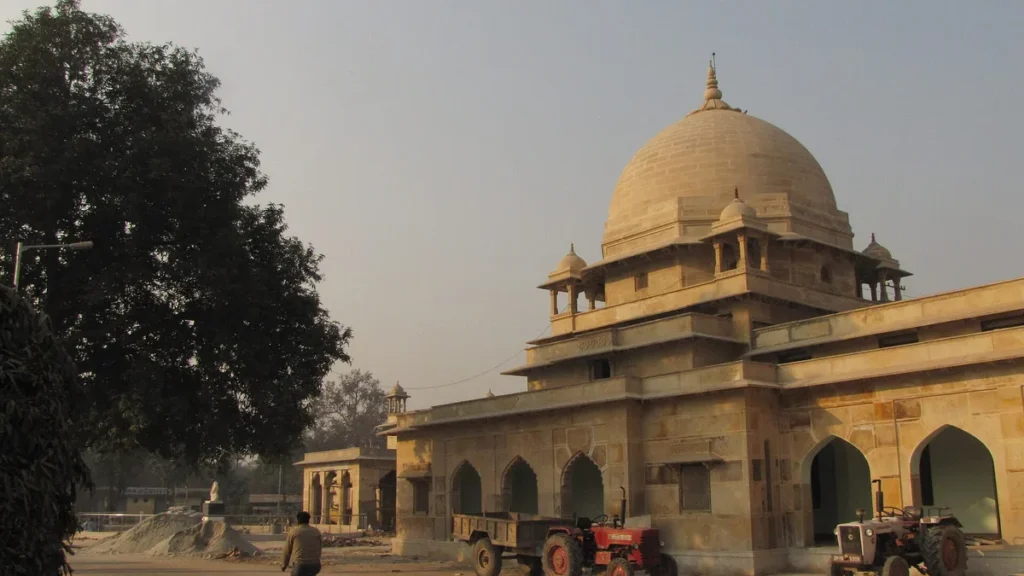
UP officials said on 18 October 2026 that the State has widened the Mukhyamantri Krishak Chhatravriti Yojana, run by the Rajya Krishi Utpadan Mandi Parishad, for children of farmers and farm labourers who study agriculture. Scholarship seats have been doubled from 1,410 to 2,820, and the amount has gone up from ₹3,000 to ₹5,000 a month, that is from ₹36,000 to ₹60,000 a year. For a bright student from a small farm family, this can decide whether a B.Sc. in agriculture is possible at all.
- Seats
- 1,410 → 2,820
- Per month
- ₹3,000 → ₹5,000
- Per year
- ₹36,000 → ₹60,000
- Run by
- UP Mandi Parishad
Farmers’ children scholarship: what happened?
Many of the best agriculture students in UP come from farming homes. They know the soil, but their families often cannot pay for hostel, books and fees in a distant university town. A scholarship that covers a good part of those costs can keep such a student in college and, later, bring that knowledge back to the village.
- 18 Oct 2026: officials announced that the Mukhyamantri Krishak Chhatravriti Yojana of the Rajya Krishi Utpadan Mandi Parishad has been expanded (IANS; ABP Live; IBC24).
- Seats per agricultural university or institute rise from 45 to 90, and per agricultural college from 15 to 30. Total seats rise from 1,410 to 2,820.
- The monthly amount rises from ₹3,000 to ₹5,000, so a student now gets ₹60,000 a year instead of ₹36,000, that is ₹24,000 more.
- From 2017-18 to 2025-26, 6,454 students received about ₹22.90 crore under the scheme, across 11 agricultural universities and institutes and 61 agricultural colleges.
What is the Krishak Chhatravriti Yojana?
- Who runs it: the Rajya Krishi Utpadan Mandi Parishad, the State agricultural marketing board that manages UP’s regulated mandis.
- Who can get it: sons and daughters of farmers and agricultural labourers who are residents of UP, and students fully dependent on them.
- Which courses: agriculture, home science, horticulture, forestry, animal husbandry and related subjects, at graduate and postgraduate level.
- Merit bar: for graduation, at least 70% in Intermediate from the UP Board or 85% from other boards; for postgraduation, at least 70% in graduation. Selection is on merit.
- Why the Mandi Parishad: it earns from mandi fees paid on farm trade, so the scheme returns part of that income to farm families.
How has the scheme changed?
| Point | Before | After (18 Oct 2026) |
|---|---|---|
| Seats per agri university / institute | 45 | 90 |
| Seats per agri college | 15 | 30 |
| Total seats | 1,410 | 2,820 |
| Monthly amount | ₹3,000 | ₹5,000 |
| Yearly amount | ₹36,000 | ₹60,000 |
Which constitutional and legal provisions apply?
- Article 46 (DPSP): the State shall promote the educational and economic interests of the weaker sections.
- State List Entry 14: agriculture, including agricultural education and research, is a State subject.
- Concurrent List Entry 25: education, including universities, is shared by the Centre and States.
- The Mandi Parishad works under the Uttar Pradesh Krishi Utpadan Mandi Adhiniyam, 1964, the State’s agricultural produce market law.
How are the new seats shared?
| Course (seats per institution) | Old | New |
|---|---|---|
| Agri universities / institutes: B.Sc. Agriculture | 25 | 50 |
| Agri universities / institutes: B.Sc. Home Science | 6 | 12 |
| Agri universities / institutes: M.Sc. Agriculture | 10 | 20 |
| Agri universities / institutes: M.Sc. Home Science | 4 | 8 |
| Agri colleges: graduation / postgraduation | 10 / 5 | 20 / 10 |
Check the arithmetic: 11 universities × 90 + 61 colleges × 30 = 990 + 1,830 = 2,820 seats.
Why does this matter?
| Angle | What to note |
|---|---|
| Education | Keeps meritorious rural students in higher agricultural education. |
| Agriculture | Builds trained human capital for farming, horticulture and dairy in UP. |
| Social justice | Targets farm labourers’ and small farmers’ families. |
| Governance | Uses mandi income for farm-family welfare. |
What are the challenges?
- High cut-offs (70% or 85%) may leave out students from weaker schools who still have talent.
- Payments must reach students on time; late scholarships push students to drop out.
- Graduates need jobs or start-up support in agriculture, or they will move to other sectors.
- Seats are fixed per institution, so demand may be higher in some colleges than others.
What should be done next?
- Pay the scholarship by direct benefit transfer on a fixed schedule.
- Track how many scholars later work in farming, extension or agri-business.
- Link scholars with Krishi Vigyan Kendras and FPOs for internships.
- Review cut-offs to reach first-generation learners from labourer families.
What can UPPCS Prelims ask?
- Scheme: Mukhyamantri Krishak Chhatravriti Yojana; run by Rajya Krishi Utpadan Mandi Parishad.
- Seats: 1,410 → 2,820; amount: ₹3,000 → ₹5,000 a month (₹60,000 a year).
- Coverage: 11 agricultural universities / institutes and 61 agricultural colleges.
- 2017-18 to 2025-26: 6,454 students, about ₹22.90 crore.
- Eligibility: children of UP farmers and farm labourers; 70% (UP Board) or 85% (other boards) for graduation.
- Agriculture and agricultural education: State List Entry 14.
How to write about this in UPPCS Mains
Practice question (UPPCS GS-VI, 8 marks): Discuss the role of scholarships in building human resources for agriculture in Uttar Pradesh, with reference to the Mukhyamantri Krishak Chhatravriti Yojana.
- Intro: UP’s farm economy needs trained people; farm families face cost barriers.
- Body 1: scheme basics and the October 2026 expansion with numbers.
- Body 2: benefits: access, retention, rural talent, knowledge returning to villages.
- Body 3: gaps: cut-offs, timely payment, jobs after graduation.
- Conclusion: scholarship plus internships plus start-up support.
Image: Kailash Bhavan, Chandra Shekhar Azad University of Agriculture and Technology, Kanpur. Mukerjee, via Wikimedia Commons, CC BY-SA 3.0
Read all of October 2026 in the monthly UP current affairs compilation →
How to use this in Mains
If asked: How can the State encourage rural youth to take up agriculture as a career? (UPPCS GS-VI)
Quote: “Under the scholarship scheme, run by the State Agricultural Produce Market Board (Mandi Parishad), 90 students, instead of the previous 45, at each agricultural university and institute, and 30 students—instead of the previous 15—at each agricultural college, will now receive an annual scholarship of Rs 60,000 based on merit.”
Use it: This line gives you a ready UP example with numbers. Follow it with the total of 2,820 seats and the need for jobs after graduation.
If asked: Evaluate the role of scholarships in reducing dropouts in higher education. (UPPCS GS-V)
Quote: “This increase is set to help more students from the economically disadvantaged farming families to pursue agricultural education.”
Use it: Use it to link scholarships with access for poor farm families. Add that the amount rose from ₹36,000 to ₹60,000 a year, and that timely payment matters as much as the amount.
Exam angle
GS-VI: UP agriculture and schemes; agricultural education; Mandi Parishad.
Practice MCQs
Original practice questions (not PYQs).
The Mukhyamantri Krishak Chhatravriti Yojana of Uttar Pradesh is run by
Answer (b) & explanation
The scheme belongs to the Rajya Krishi Utpadan Mandi Parishad (ABP Live, 18 Oct 2026).
After the October 2026 expansion, a selected student under the Mukhyamantri Krishak Chhatravriti Yojana gets
Answer (c) & explanation
The monthly amount was raised from ₹3,000 to ₹5,000, i.e. ₹60,000 a year.
Consider the following statements about the expanded scheme:
1. Total scholarship seats have been doubled to 2,820.
2. It covers students of agricultural universities, institutes and colleges in UP.
3. For graduation, a UP Board student needs at least 85% in Intermediate.
Which of the statements given above are correct?
Answer (a) & explanation
UP Board students need 70%; 85% applies to other boards.
Questions students ask about this
What has changed in the scheme?
Seats doubled from 1,410 to 2,820 and the scholarship raised to ₹5,000 a month (₹60,000 a year).
Who is eligible?
Children of UP-resident farmers and agricultural labourers studying agriculture and related subjects, selected on merit.
How many students have benefited so far?
6,454 students got about ₹22.90 crore from 2017-18 to 2025-26.
Who runs it?
The Rajya Krishi Utpadan Mandi Parishad.
Keep studying
Go deeper
facts from cited sources only; cross-checked; faculty review pending