
China to impose export controls on tunnel boring machines from 18 November: what it means for India
Next story · 19 OctCCPA acts against online sale of explosives: 3,940 sellers delisted from seven platforms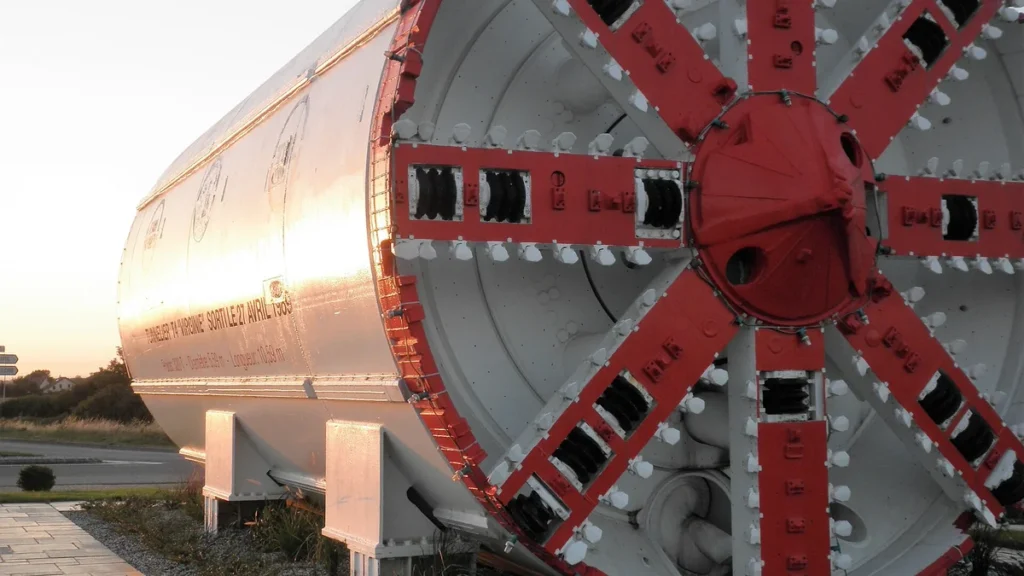
UPSC has already asked about this. Read the story with these questions in mind.
On 19 October 2026 China’s Commerce Ministry announced export controls on tunnel boring machines (TBMs) and related items from 18 November, calling them clearly dual-use. India imports TBMs for metro, rail and border tunnels and has faced customs delays on Chinese machines since 2024. China also announced controls on some drones.
- Announced
- 19 Oct 2026
- Effective
- 18 Nov 2026
- Items
- TBMs, related items
- Stated reason
- Dual-use, security
China’s TBM curbs: what happened?
Every metro line under a crowded city and every rail tunnel through the Himalaya needs a giant drilling machine. India still buys most of them from abroad, and many are built in China. Beijing has now put these machines under export control, and Indian projects could feel it.
- China’s Commerce Ministry said the curbs aim “to better safeguard national security and interests”; export controls on certain dredgers were also ‘optimised and adjusted’.
- China said it notified countries with which it has export-control dialogue mechanisms beforehand.
- Same day: controls on UAV autopilots, some UAV engines, and drones with 3+ hours endurance or 300+ km range.
- On 16 October Beijing released a draft to restrict exports of over 40 technologies, including advanced solar manufacturing (The Hindu).
What are TBMs and export controls?
- A TBM is a giant rotating cutterhead machine that digs a tunnel and lines its walls as it moves.
- India uses TBMs for metro rail, railway corridors and strategic tunnels, including in border areas.
- Export controls require licences for sensitive items, often dual-use goods with civil and military uses.
- In October 2024 Piyush Goyal told Germany’s Robert Habeck that China was blocking TBMs a German firm made there.
How does China’s regime compare with India’s?
| Point | China | India |
|---|---|---|
| Main law | Export Control Law, 2020 | FTDR Act, 1992 |
| Control list | Dual-use items list, ministry notices | SCOMET list |
| Wassenaar Arrangement | Not a member | Member since 2017 |
| MTCR and Australia Group | Not a member | Member |
| October 2026 moves | TBMs, drones; draft curbs on 40+ technologies | Faces TBM import delays since 2024 |
Which constitutional and legal provisions apply?
- Union List Entry 41: trade and commerce with foreign countries.
- Foreign Trade (Development and Regulation) Act, 1992 governs India’s exports and imports.
- WTO’s GATT Article XXI allows security exceptions to trade rules.
- Weapons of Mass Destruction Act, 2005 backs India’s dual-use controls.
How do export controls bite?
From notice to delay at the border
- Ministry lists items as controlled
- Exporter must seek a licence
- Authority checks end-user and end-use
- Licence granted, delayed or refused
- Importing projects face cost and time overruns
Which numbers should you remember?
| Number | What it means |
|---|---|
| 40+ | Technologies in China’s 16 Oct draft export curbs |
| 3 hours | Drone endurance threshold in the new controls |
| 300 km | Drone range threshold in the new controls |
The pattern matters more than one item: China is steadily turning its manufacturing lead into leverage. New curbs on solar manufacturing know-how could hurt India’s plan to move up that value chain.
Why does this matter?
| Angle | What to note |
|---|---|
| Infrastructure | Metro and rail tunnel timelines depend on imported TBMs. |
| India-China | Trade dependence can become strategic leverage. |
| Security | Border tunnels make TBMs a strategic import. |
| Make in India | Push to manufacture heavy machinery at home. |
What are the challenges?
- Few TBM makers worldwide; alternatives from Europe or Japan may cost more and take longer.
- Spare parts, cutter tools and service engineers for machines already working may also get delayed.
- Project delays raise costs for metro corporations, railways and highway agencies alike.
- Curbs on next-generation solar technology may slow India’s move up the manufacturing chain.
What should be done next?
- Diversify suppliers among European, Japanese and Indian plants for future tenders.
- Offer PLI-style support to build heavy tunnelling machinery and components in India.
- Stock critical spares and cutter tools for ongoing metro and rail tunnelling projects.
- Keep raising customs delays through bilateral trade dialogue with China and with partners.
What can Prelims ask on export controls?
- China’s TBM export controls take effect on 18 November 2026; dredger controls were also adjusted.
- China’s Export Control Law came into force in December 2020.
- India’s dual-use list is called SCOMET and is notified by the DGFT.
- India is in Wassenaar, MTCR and Australia Group; not yet in NSG.
- Foreign trade is Union List Entry 41.
How to write about supply-chain risk in Mains
Practice question (10 marks, 150 words): Dependence on China for critical capital goods is a strategic vulnerability for India. Examine with recent examples. (GS-III)
- Intro: China’s TBM export controls from 18 Nov 2026.
- Uses: metro, rail corridors, border tunnels.
- Pattern: drones, 40+ technologies, solar know-how.
- Impact: cost overruns, delays, leverage.
- Way out: diversify, manufacture at home, stock spares.
Image: Tunnel boring machine cutterhead on display, Coquelles, France. Bärbel Miemietz, Wikimedia Commons, CC BY-SA 4.0
How to use this in Mains
If asked: Discuss the strategic implications of India’s import dependence on China. (GS-II)
Quote: “The items covered by these measures have clear dual-use (civilian and military) characteristics.”
Use it: Use it to show how civil machinery becomes strategic; link to border tunnels and metro timelines.
If asked: Examine the need for indigenous manufacturing of heavy capital goods in India. (GS-III)
Quote: “India is dependent on imports for the machines.”
Use it: A short line to open your argument for domestic TBM manufacturing and supplier diversification.
Exam angle
Prelims: export control regimes, SCOMET, Wassenaar, MTCR. · Mains GS-II/III: China dependence and supply-chain resilience.
Practice MCQs
Original practice questions (not PYQs).
With reference to multilateral export control regimes, consider the following statements:
1. India is a member of the Wassenaar Arrangement.
2. China is a member of the Missile Technology Control Regime.
Which of the statements given above is/are correct?
Answer (a) & explanation
India joined Wassenaar in 2017 and MTCR in 2016. China is not an MTCR member.
India’s list of dual-use items requiring export authorisation is known as
Answer (a) & explanation
SCOMET stands for Special Chemicals, Organisms, Materials, Equipment and Technologies.
Which entry of the Union List covers trade and commerce with foreign countries?
Answer (a) & explanation
Union List Entry 41: trade and commerce with foreign countries; import and export across customs frontiers.
Questions students ask about this
What has China announced?
Export controls on tunnel boring machines and related items, effective 18 November 2026.
Why does it matter for India?
India imports TBMs for metro, rail and border tunnels and has faced delays since 2024.
What reason did China give?
It called the items clearly dual-use and cited national security and non-proliferation.
What else did China control?
Some drones and drone parts, and it proposed curbs on over 40 technologies.
Keep studying
Go deeper
Official source: DGFT: SCOMET export control
facts from cited sources only; faculty review pending