
Japan’s MMX mission lifts off for Mars to bring back a sample of Phobos by 2031
Next story · 21 OctIndia–New Zealand FTA: customs sign pact on electronic origin data exchange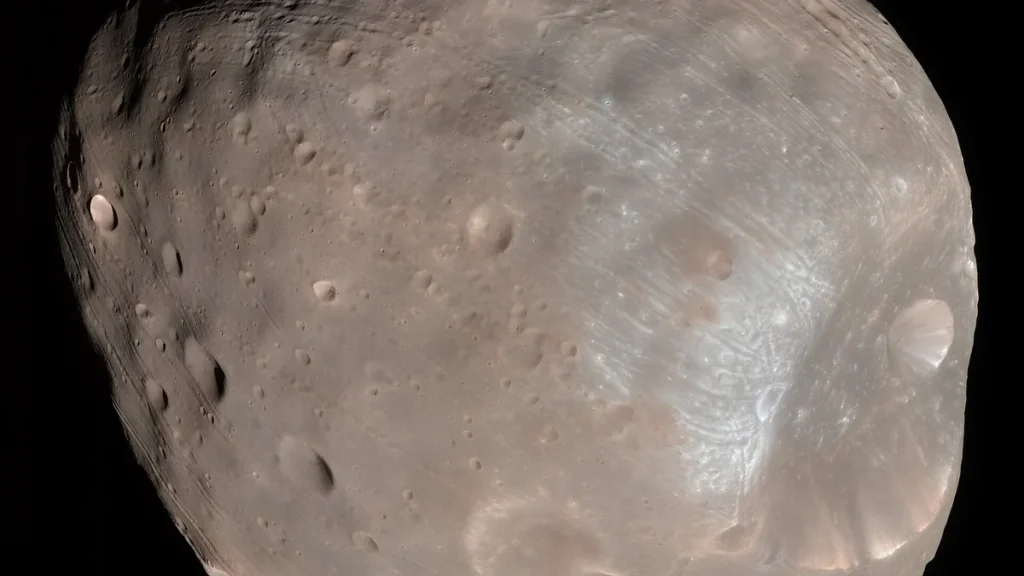
The Japan Aerospace Exploration Agency (JAXA) launched its Martian Moons eXploration (MMX) mission on an H3 rocket from the Tanegashima Space Center at about 1:11 am IST on 20 October 2026. It aims to collect at least 10 grams of material from Phobos, the larger moon of Mars, and return it to Earth in 2031. If it succeeds, Japan will be the first country to bring back samples from a Martian moon.
- Launch
- 20 Oct 2026, H3
- Target
- Phobos (and Deimos flyby)
- Sample
- At least 10 g
- Return
- 2031
JAXA’s MMX: what happened?
Landing on Mars and flying back is very hard because of its gravity. Phobos is tiny, with very weak gravity, so a spacecraft can touch down and lift off with far less fuel. That is why Japan chose the moon, not the planet, for its first trip to bring Martian-system material home.
- MMX lifted off on an H3 rocket from Tanegashima around 4:40 am JST (1:11 am IST) on 20 October 2026 (Indian Express).
- It should reach Mars around August 2027 and enter a quasi-satellite orbit around Phobos.
- It carries 13 instruments and the IDEFIX rover built by France’s CNES and Germany’s DLR.
- Partners include NASA, ESA, CNES, DLR and the Australian Space Agency.
Why study Phobos and Deimos?
- Both moons were discovered by Asaph Hall in 1877.
- One theory: they are captured asteroids, which fits their irregular shapes.
- Another: they formed from debris after a giant impact on Mars; then their rocks hold clues about Mars itself.
- Phobos may also serve as a future staging point for crewed Mars missions.
How does MMX compare with earlier sample-return missions?
| Mission | Agency | Target | Samples back |
|---|---|---|---|
| Hayabusa | JAXA | Asteroid Itokawa | 2010 |
| Hayabusa2 | JAXA | Asteroid Ryugu | 2020 |
| OSIRIS-REx | NASA | Asteroid Bennu | 2023 |
| MMX | JAXA | Phobos (Mars moon) | Planned 2031 |
Which international rules apply?
- Outer Space Treaty, 1967: space and celestial bodies are free for exploration and not subject to national appropriation.
- Article IX of the Treaty asks states to avoid harmful contamination of celestial bodies and of Earth.
- COSPAR planetary protection guidelines set handling rules for returned samples.
- India is party to the Outer Space Treaty; its Indian Space Policy, 2023 guides missions and private players.
What are the challenges?
- Landing and sampling in extremely weak gravity needs precise autonomous navigation.
- A five-year round trip leaves room for failure at many stages.
- Costs are high; NASA’s Mars Sample Return was scrapped this year by US budget action.
- Samples must be protected from Earth contamination to stay scientifically useful.
What does it mean for India?
- India reached Mars orbit with Mangalyaan (MOM) in September 2014; sample return is the next step up.
- Learn from Japan’s autonomous landing and sample-handling technology.
- Seek science partnerships so Indian labs can study returned samples.
- Build on ISRO’s docking and return skills from Chandrayaan and SpaDeX.
What can Prelims ask on MMX?
- MMX = Martian Moons eXploration, by JAXA.
- Launched 20 Oct 2026 on an H3 rocket from Tanegashima.
- Phobos is the larger and inner moon of Mars; Deimos the smaller, outer one.
- IDEFIX rover: CNES (France) and DLR (Germany).
- Sample: at least 10 g; return planned 2031.
How to write about sample-return missions in Mains
Practice question (10 marks, 150 words): Why are sample-return missions important for planetary science? Discuss with reference to Japan’s MMX mission. (GS-III)
- Intro: MMX launched 20 Oct 2026; Phobos sample by 2031.
- Science: origin of Martian moons, clues to Mars.
- Technology: weak-gravity landing, autonomous navigation.
- Cooperation: NASA, ESA, CNES, DLR partners.
- India: lessons after MOM and Chandrayaan.
Image: Phobos imaged by the HiRISE camera on NASA’s Mars Reconnaissance Orbiter, 23 March 2008. NASA/JPL-Caltech/University of Arizona, Wikimedia Commons, public domain
How to use this in Mains
If asked: What are the scientific and strategic goals of missions to the Martian system? (GS-III)
Quote: “Its weak gravity means that landing and taking off from the moon requires a fraction of the fuel needed for a descent onto the surface of Mars.”
Use it: Use it to explain why Phobos is a smart first target and a staging point.
If asked: Discuss the role of international cooperation in deep-space missions. (GS-III)
Quote: “The mission is essentially an exercise in leadership, technology autonomy and improving space cooperation between nations.”
Use it: Quote it, then list the partner agencies and the cost-sharing logic.
Exam angle
Prelims: MMX facts, Phobos vs Deimos, sample-return missions. · Mains GS-III: planetary exploration and cooperation.
Practice MCQs
Original practice questions (not PYQs).
Consider the following statements about the MMX mission:
1. It is a mission of the Japan Aerospace Exploration Agency.
2. It aims to return samples from Deimos.
3. It carries a rover developed by CNES and DLR.
How many of the statements given above are correct?
Answer (b) & explanation
Statements 1 and 3 are correct. Samples are to be taken from Phobos; Deimos will be observed during a flyby.
Which of the following missions returned samples from asteroid Ryugu?
Answer (c) & explanation
JAXA’s Hayabusa2 returned Ryugu samples in December 2020.
Phobos and Deimos are natural satellites of
Answer (b) & explanation
They are the two moons of Mars, discovered by Asaph Hall in 1877.
Questions students ask about this
What is MMX?
JAXA’s Martian Moons eXploration mission to study Phobos and Deimos and bring back a Phobos sample.
When was it launched?
On 20 October 2026, on an H3 rocket from Tanegashima.
When will samples return?
In 2031; at least 10 grams are planned.
Why Phobos and not Mars?
Its weak gravity makes landing and take-off far easier, and it may hold clues about Mars.
Keep studying
Go deeper
facts from cited sources only; faculty review pending