
UP voter list clean-up: ECI orders removal of duplicate entries before 12 November draft roll
Next story · 21 OctUP-AGREES: World Bank-backed farm project signs MoUs with Google, ITC and Aquabridge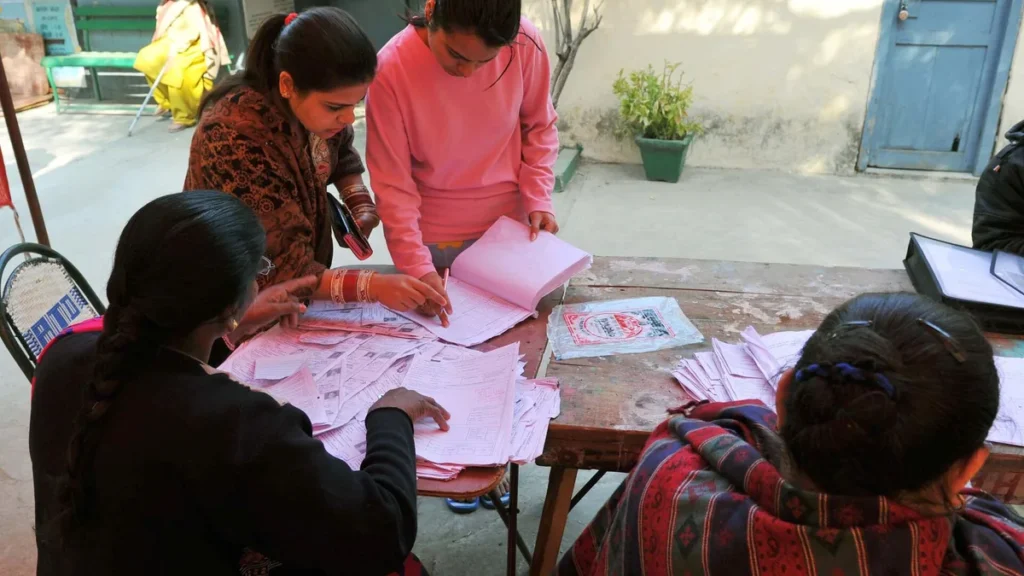
Uttar Pradesh’s Chief Electoral Officer Navdeep Rinwa has told district electoral officers and electoral registration officers to remove duplicate entries from the voter list and make it error-free before the draft roll comes out on 12 November under the Special Summary Revision. Booth level officers will get Form 7 filled for duplicates, and a special campaign day on 24 October will try to enrol eligible citizens who are still missing.
- Draft roll
- 12 Nov 2026
- Campaign day
- 24 Oct 2026
- Voters after SIR
- 13.40 crore
- Names dropped in SIR
- 2.04 crore
UP voter list clean-up: what happened?
A clean voter list is the first brick of a fair election. Even after a big revision earlier this year, political parties told the poll machinery in UP that duplicate names remain, and the State’s election office has now acted on it.
- In a virtual meeting on 19 October, CEO Navdeep Rinwa told DEOs and EROs to resolve duplicate entries on priority (HT, 20 Oct 2026).
- Duplicates often arose when one voter filed more than one application during the SIR.
- BLOs will identify such voters and get Form 7 filled; BLO supervisors, EROs and AEROs will monitor.
- Negligence at any level will bring action against the officials concerned.
What did the SIR in UP do?
- The Special Intensive Revision began in UP on 4 November 2025; the draft roll came on 6 January 2026.
- The draft marked 2.89 crore voters as uncollectible: 1.29 crore shifted, 46 lakh dead, 25.4 lakh duplicate, 79.5 lakh untraceable.
- The final roll of 10 April 2026 has 13,39,84,792 voters; 2.04 crore names were dropped in all.
- The Special Summary Revision now follows, with a draft roll on 12 November.
How do SIR and SSR differ?
| Point | Special Intensive Revision | Special Summary Revision |
|---|---|---|
| Method | Fresh house-to-house enumeration | Update of the existing roll |
| Scale | Whole roll rebuilt | Additions, deletions and corrections |
| In UP | Nov 2025 to Apr 2026 | Draft roll on 12 Nov 2026 |
| Main forms | Enumeration forms | Form 6 (add), Form 7 (delete), Form 8 (correct) |
Which laws apply?
- Article 324: the Election Commission superintends and controls the preparation of electoral rolls.
- Article 326: elections on the basis of adult suffrage; Article 325: one general roll for each constituency.
- Representation of the People Act, 1950: Sections 17 and 18 bar registration in more than one constituency or more than once in one constituency.
- Since the Election Laws (Amendment) Act, 2021, there are four qualifying dates a year: 1 January, 1 April, 1 July and 1 October.
What are the concerns?
- Duplicates survive when one person applies more than once or moves without deleting the old entry.
- Wrong deletions can disenfranchise genuine voters, so due notice matters.
- BLOs carry a heavy load in a State of over 13 crore voters.
- Young voters, women and persons with disabilities are often left out.
What should be done next?
- Use ERONET checks to flag look-alike entries, followed by field verification.
- Give every voter notice and a hearing before deletion.
- Make the 24 October campaign day count for first-time voters.
- Keep the roll updated through the four qualifying dates, not only in big drives.
What can Prelims ask?
- Form 6: inclusion; Form 7: objection or deletion; Form 8: correction or shifting.
- Article 324: Election Commission; Article 326: adult suffrage.
- RP Act, 1950 deals with electoral rolls; RP Act, 1951 with conduct of elections.
- Four qualifying dates a year since 2021.
- UP final roll after SIR: 13.40 crore voters.
How to write about clean electoral rolls in Mains
Practice question (10 marks, 150 words): Discuss the importance of accurate electoral rolls for free and fair elections, with reference to Uttar Pradesh. (UPPCS GS-V)
- Intro: draft roll due on 12 Nov 2026; duplicate clean-up ordered.
- Why it matters: one person, one vote; trust in results.
- UP data: SIR dropped 2.04 crore names; 13.40 crore voters remain.
- Concerns: duplicates versus wrongful deletions.
- Conclusion: technology plus due process plus voter awareness.
Image: Voters checking their names in the voter list, New Delhi, 7 February 2015. Election Commission of India, Wikimedia Commons, GODL-India
Read all of October 2026 in the monthly UP current affairs compilation →
How to use this in Mains
If asked: Examine the role of booth level officers in maintaining accurate electoral rolls. (UPPCS GS-V)
Quote: “Booth level officers should identify such voters and ensure prompt resolution of duplicate entries by getting Form 7 filled by such voters.”
Use it: Use it to show the BLO as the ground link between the voter and the roll.
If asked: How can the balance between removing ineligible names and protecting genuine voters be maintained? (UPPCS GS-V)
Quote: “A comprehensive campaign should be launched to educate such eligible citizens and get their names registered in the voter list.”
Use it: Pair deletion of duplicates with inclusion of missing voters.
Exam angle
UPPCS GS-V: election administration in UP; Prelims: Forms 6/7/8, Article 324, RP Act 1950, qualifying dates.
Practice MCQs
Original practice questions (not PYQs).
Which form is used to object to or seek deletion of a name in the electoral roll?
Answer (b) & explanation
Form 7 is for objection or deletion; Form 6 is for inclusion and Form 8 for correction or shifting.
Which Article of the Constitution vests the superintendence of the preparation of electoral rolls in the Election Commission?
Answer (b) & explanation
Article 324 gives the Election Commission superintendence, direction and control of electoral rolls and elections.
Consider the following statements:
1. A person can be registered in the electoral rolls of only one constituency.
2. There are four qualifying dates in a year for enrolment.
Which of the statements given above is/are correct?
Answer (c) & explanation
Section 17 of the RP Act, 1950 bars registration in more than one constituency, and the 2021 amendment created four qualifying dates.
Questions students ask about this
When will UP's draft voter list be published?
On 12 November 2026, under the Special Summary Revision.
Why are duplicate entries still there after the SIR?
Many arose when the same voter filed more than one application during the SIR.
How will duplicates be removed?
BLOs will identify such voters and get Form 7 filled, with supervisors and EROs monitoring.
What is happening on 24 October?
A special campaign day to enrol eligible citizens, especially first-time voters, women and persons with disabilities.
Keep studying
Go deeper
facts from cited sources only; cross-checked; faculty review pending