
UP makes BIS certification mandatory for packaged water after 78% of samples fail tests
Next story · 14 OctUP AI Mission: ₹225 crore plan to train 5 lakh youth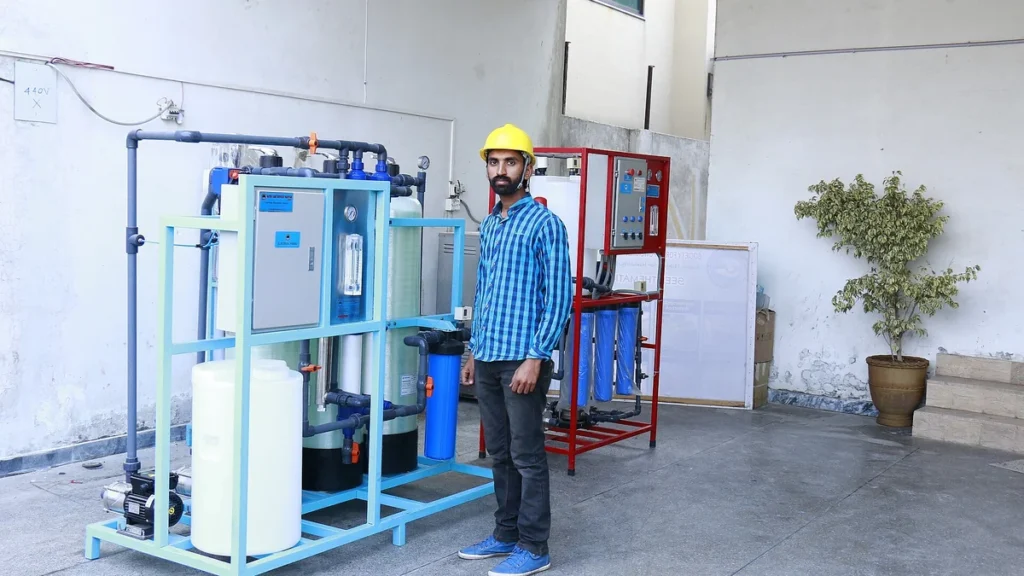
UPSC has already asked about this. Read the story with these questions in mind.
- Prelims 2017Consider the following statements: The Standard Mark of Bureau of Indian Standards (BIS) is mandatory for automotive tyres and tubes. …Solve with answer →
- Prelims 2026The Bureau of Indian Standard (BIS) recently introduced a national standard to test and assess bomb disposal system. Which of the following statements with…Solve with answer →
Uttar Pradesh’s Food Safety and Drug Administration (FSDA) has made Bureau of Indian Standards (BIS) certification compulsory for all packaged drinking water and mineral water makers, HT reported on 14 October 2026. No new unit will get a food safety licence without it, and the State’s 968 existing units must comply by 31 March 2027. The order came after almost 78% of 660 samples failed quality norms.
- Existing units
- 968
- Deadline
- 31 March 2027
- Samples failed
- 513 of 660
- Licences suspended
- 152
Packaged water in UP: what happened?
Most of us buy a sealed bottle because we trust it more than the tap. UP’s own tests suggest that trust was often misplaced. That is why the State has brought back a quality mark as a condition for selling packaged water at all.
- FSDA Commissioner Roshan Jacob issued the order under the Food Safety and Standards Act, 2006 (HT, 14 Oct 2026).
- 811 units were inspected over a year; of 660 samples, 176 were unsafe and 337 substandard.
- Labs found E. coli, coliform bacteria, yeast and mould; units had weak filtration, UV and ozonation systems.
- 152 licences or registrations were suspended, and suspension of 55 central licences was recommended.
Why did the rule change?
- Under FSSAI’s 2011 regulations, ISI (BIS) certification was needed to sell packaged water.
- FSSAI removed this requirement from 18 October 2024 and placed packaged water in the high-risk food category instead.
- After that, the number of units in UP grew to 968.
- A separate FSDA drive found 203 of 242 samples unsafe or substandard (TOI, 13 Oct 2026).
Unsafe or substandard: what is the difference?
| Category | Meaning | Count (660 samples) |
|---|---|---|
| Unsafe | A direct health risk, such as harmful microbes | 176 |
| Substandard | Fails one or more quality requirements | 337 |
| Total failing | Both categories together | 513 (about 78%) |
Which laws and standards apply?
- Food Safety and Standards Act, 2006: licensing of food businesses and action against unsafe food.
- BIS standards: IS 14543 (packaged drinking water) and IS 13428 (packaged natural mineral water).
- Bureau of Indian Standards Act, 2016: certification and the ISI mark.
- Article 47: the State shall improve public health.
What are the concerns?
- Small units may struggle with the cost of BIS certification and testing.
- Fewer units could mean higher prices for poor buyers.
- A certificate is only as good as regular follow-up checks.
- Many unlicensed jar suppliers work outside the formal system.
What should be done next?
- Run regular random sampling, not one-off drives.
- Help small units upgrade filtration and hygiene.
- Publish lists of licensed and suspended brands for buyers.
- Improve piped drinking water under Jal Jeevan Mission so people depend less on bottles.
What can Prelims ask?
- IS 14543: packaged drinking water; IS 13428: natural mineral water.
- FSSAI: set up under the FSS Act, 2006; works under the Health Ministry.
- FSSAI dropped mandatory BIS certification for packaged water from 18 Oct 2024.
- Article 47: nutrition, standard of living and public health.
How to write about food safety in UP in Mains
Practice question (10 marks, 150 words): Examine the challenges of ensuring food safety in Uttar Pradesh, with reference to packaged drinking water. (UPPCS GS-V)
- Intro: FSDA order, 14 Oct 2026; 78% samples failed.
- Causes: rule change in 2024, weak plants, poor hygiene.
- Action: BIS mandatory, 152 licences suspended.
- Concerns: cost for small units, enforcement, unlicensed sellers.
- Conclusion: certification plus testing plus safe tap water.
Image: A reverse osmosis water treatment plant (representative image). Watercareservice, Wikimedia Commons, CC BY-SA 4.0
Read all of October 2026 in the monthly UP current affairs compilation →
How to use this in Mains
If asked: How can food safety enforcement be strengthened at the State level? (UPPCS GS-V)
Quote: “The latest order seeks to make certification a mandatory condition for market entry and continued manufacturing, rather than relying solely on routine inspections and subsequent enforcement action.”
Use it: Use HT’s line to contrast prevention with after-the-fact action.
If asked: Discuss the public health risks of unregulated packaged water. (UPPCS GS-V)
Quote: “Of the 660 samples tested, 176 were classified as unsafe, while 337 were categorised as substandard.”
Use it: Quote the figures, then explain the difference between the two categories.
Exam angle
UPPCS GS-V: health and food safety governance in UP; Prelims: BIS standards, FSSAI.
Practice MCQs
Original practice questions (not PYQs).
The Indian Standard for packaged drinking water (other than mineral water) is
Answer (b) & explanation
IS 14543 covers packaged drinking water; IS 13428 covers natural mineral water; IS 10500 is for drinking water in general.
Under UP FSDA’s October 2026 order, existing packaged water units must get BIS certification by
Answer (b) & explanation
The deadline for the 968 existing units is 31 March 2027.
Which Directive Principle asks the State to improve public health?
Answer (c) & explanation
Article 47 covers nutrition, standard of living and public health.
Questions students ask about this
What has UP ordered?
BIS certification is now compulsory for licences of packaged drinking and mineral water units.
What is the deadline for existing units?
31 March 2027; units without it will have licences suspended.
Why was this done?
Nearly 78% of 660 samples failed quality tests, and 176 were unsafe.
What changed in 2024?
FSSAI removed the BIS/ISI requirement for packaged water from 18 October 2024.
Keep studying
Go deeper
facts from cited sources only; cross-checked; faculty review pending