
Sauj Jheel becomes UP’s 14th Ramsar site, making Mainpuri the only district with two
Next story · 15 OctUP Sustainable Aviation Fuel Policy 2026: crop residue to jet fuel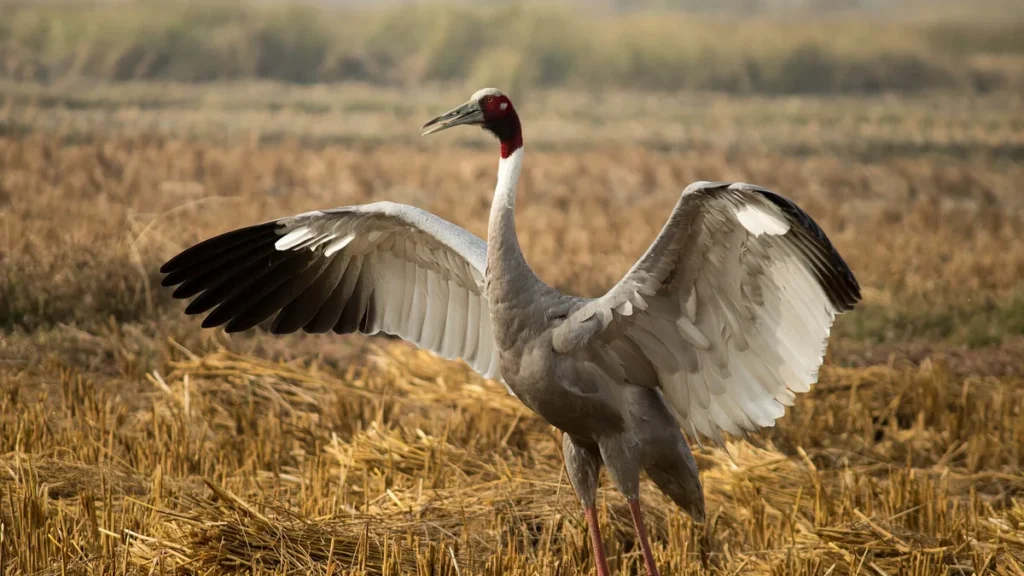
Sauj Jheel in Mainpuri district was declared a Wetland of International Importance on 15 October 2026, making it Uttar Pradesh’s 14th Ramsar site. Mainpuri already has the Saman Bird Sanctuary, so it is now, in the words of PCCF (Wildlife) Anuradha Vemuri, “the only district in the country with two Ramsar sites”. UP’s Ramsar sites now cover 43,147.15 hectares.
- UP Ramsar sites
- 14
- District
- Mainpuri
- Area under UP sites
- 43,147.15 ha
- Share of UP wetland area
- About 3.47%
Sauj Jheel: what happened?
Mainpuri is not a name most people link with birds. Yet this district in the Ganga plain now has two wetlands with global recognition. It shows how much of UP’s natural wealth lies in ordinary-looking village lakes.
- Sauj Jheel and Chandigarh’s Sukhna Wetland were added on the same day (HT, 16 Oct 2026; PIB).
- Sauj is a shallow lake surrounded by farmland in the Ganga floodplain and is part of a larger wetland network.
- It has lotus and other wetland plants that give birds nesting sites, shelter and food.
- Vulnerable sarus crane and greater spotted eagle have been recorded here.
How has UP’s Ramsar list grown?
- Saman Bird Sanctuary (Mainpuri) was declared on 2 December 2019.
- Surha Tal (Jay Prakash Narayan Bird Sanctuary), Ballia, was added on 5 June 2026.
- Others: Upper Ganga River, Nawabganj (Unnao), Sarsai Nawar (Etawah), Samaspur (Rae Bareli), Sandi (Hardoi), Parvati Arga (Gonda).
- Also: Sur Sarovar (Agra), Haiderpur (Muzaffarnagar), Bakhira (Sant Kabir Nagar), Patna Bird Sanctuary (Etah), Shekha Jheel (Aligarh).
UP’s Ramsar network at a glance
| Item | Figure |
|---|---|
| Ramsar sites in UP | 14 |
| Area under them | 43,147.15 ha |
| UP’s total wetland area (National Wetland Atlas) | 12,42,530 ha |
| Share protected as Ramsar sites | About 3.47% |
Which laws apply?
- Ramsar Convention, 1971: India joined in 1982; sites must be managed for ‘wise use’.
- Wetlands (Conservation and Management) Rules, 2017: State Wetland Authorities notify and protect wetlands.
- Wild Life (Protection) Act, 1972: sarus crane is protected; it is UP’s State bird.
- Article 48A: the State shall protect the environment and wildlife.
What are the threats?
- Farmland around the lake can bring pesticide run-off and encroachment.
- Silt and weeds make shallow lakes shrink.
- Farmers may see waterbirds as crop pests, especially near the edges.
- Only about 3.47% of UP’s wetland area has Ramsar status.
What should be done next?
- Prepare a management plan with the village panchayats around Sauj.
- Mark wetland boundaries in land records to stop encroachment.
- Link Sauj and Saman as one bird circuit for eco-tourism under Amrit Dharohar.
- Pay or reward farmers who protect sarus nests.
What can Prelims ask?
- Mainpuri: Saman Bird Sanctuary and Sauj Jheel, the only district with two Ramsar sites.
- Sarus crane: UP’s State bird; tallest flying bird; IUCN Vulnerable.
- UP’s 13th Ramsar site: Surha Tal, Ballia (5 June 2026).
- Wetlands Rules: 2017.
How to write about wetlands in UP in Mains
Practice question (10 marks, 150 words): Uttar Pradesh has many wetlands but few are protected. Discuss the importance of wetland conservation in the State. (UPPCS GS-VI)
- Intro: Sauj Jheel, UP’s 14th Ramsar site, Oct 2026.
- Value: birds, groundwater, floods, livelihoods.
- Data: 43,147.15 ha, about 3.47% of UP’s wetlands.
- Threats: farm run-off, encroachment, silt.
- Conclusion: village-led wise use.
Image: A sarus crane at Dhanauri Wetlands, Uttar Pradesh (representative image; not Sauj Jheel). Ashish Bal Dikshit, Wikimedia Commons, CC BY-SA 4.0
Read all of October 2026 in the monthly UP current affairs compilation →
How to use this in Mains
If asked: How significant are Ramsar designations for wetland conservation in UP? (UPPCS GS-VI)
Quote: “Sauj is our latest and 14th Ramsar site in state, which was declared today. With this, Mainpuri got the distinction of the only district in the country with two Ramsar sites.”
Use it: Quote the PCCF, then ask what follows on the ground.
If asked: Discuss the role of wetlands in biodiversity conservation. (UPPCS GS-VI)
Quote: “These habitats provide nesting and breeding sites, as well as shelter and food resources, for a variety of animal species.”
Use it: Use it with the sarus crane example.
Exam angle
UPPCS GS-VI: UP environment; Prelims: Ramsar sites and districts, State bird.
Practice MCQs
Original practice questions (not PYQs).
Which district of Uttar Pradesh has two Ramsar sites?
Answer (b) & explanation
Mainpuri has Saman Bird Sanctuary and Sauj Jheel.
Consider the following pairs:
1. Surha Tal — Ballia
2. Bakhira — Sant Kabir Nagar
3. Shekha Jheel — Aligarh
How many of the above pairs are correctly matched?
Answer (c) & explanation
All three pairs are correct.
The State bird of Uttar Pradesh, recorded at Sauj Jheel, is the
Answer (b) & explanation
The sarus crane is UP’s State bird.
Questions students ask about this
When did Sauj Jheel become a Ramsar site?
On 15 October 2026, as UP’s 14th Ramsar site.
Why is Mainpuri special now?
It is the only district in India with two Ramsar sites: Saman and Sauj.
What birds are found at Sauj?
Vulnerable sarus crane and greater spotted eagle have been recorded, among others.
How much of UP’s wetland area is under Ramsar sites?
About 3.47%, or 43,147.15 ha.
Keep studying
Go deeper
Official source: PIB, 15 Oct 2026: Ramsar sites announcement
facts from cited sources only; cross-checked; faculty review pending