
UP proposes mandatory re-testing of blood bought in bulk after lapses at blood centres
Next story · 22 OctLucknow Development Authority seeks to add 662 revenue villages: what it means for planned growth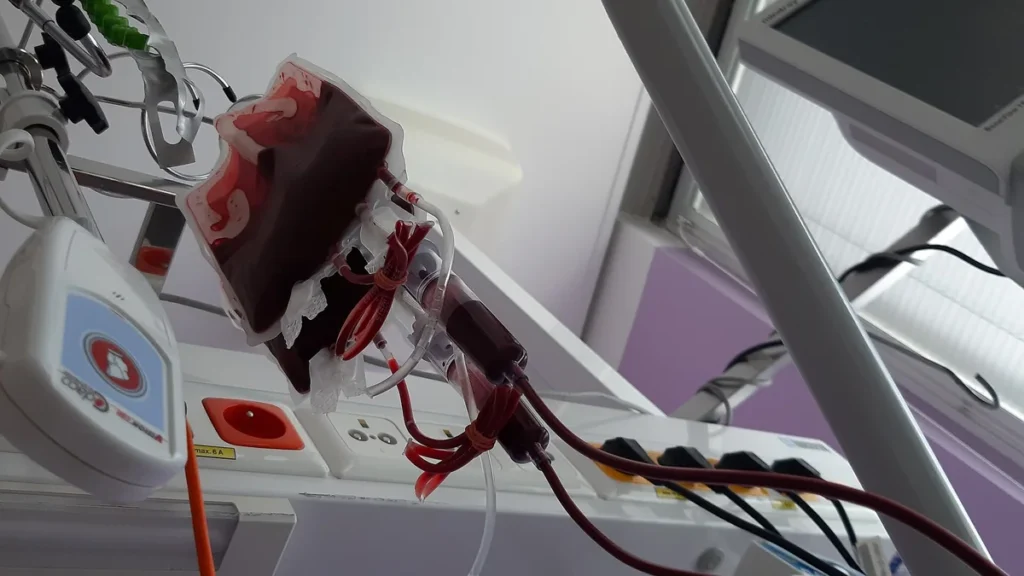
Uttar Pradesh’s Food Safety and Drug Administration (UPFSDA) has asked the National Blood Transfusion Council (NBTC) to make quality checks compulsory on blood units brought in bulk from other States. It proposes testing at least 1% of every consignment, or one unit, at a government blood centre in a drug inspector’s presence. The move follows inspections of 208 blood centres in March 2026 that led to 55 licences being suspended.
- Proposed by
- UPFSDA
- Sent to
- NBTC
- Test sample
- 1% of consignment
- Licences suspended
- 55 of 208 checked
UP’s blood-safety proposal: what happened?
A patient on a hospital bed cannot check where a blood bag came from. That is why the paper trail behind each unit matters as much as the blood itself.
- Inspectors found missing infection-test reports, donor forms and transport temperature records, and poor labelling (HT, 22 Oct 2026).
- Proposal: test at least 1% of each bulk consignment, or a minimum of one unit, whichever is higher.
- Also: advance notice to drug inspectors, clear labels, temperature logs and donor-to-recipient traceability.
- Pilot-tube segments and patient samples to be kept for at least seven days.
How does blood transfer work now?
- Under NBTC guidelines of 28 October 2015, the supplier centre does infection screening.
- The recipient centre does cross-matching for compatibility before transfusion.
- Transfers need proper storage and transport, donor consent and records.
- Unsafe blood can spread HIV, hepatitis B and hepatitis C.
What changes under UP’s proposal?
| Step | Now | Proposed |
|---|---|---|
| Infection testing | By supplier only | Plus 1% re-test by government centre |
| Oversight | Paper records | Drug inspector present; advance intimation |
| Traceability | Varies | Donor-to-recipient record with Aadhaar details |
| Samples | — | Kept for at least 7 days |
Which laws and bodies apply?
- Drugs and Cosmetics Act, 1940 and its Rules: blood is a ‘drug’; blood centres need a licence.
- Licensing is joint: State drug controller and the Central Drugs Standard Control Organisation (CDSCO).
- NBTC: apex policy body under the Union Health Ministry, set up after the Supreme Court’s Common Cause judgment (1996).
- Health is a State subject (State List Entry 6); Article 47 asks the State to improve public health.
What are the challenges?
- Bulk inter-State transfers make it hard to trace the source of a unit.
- Too few drug inspectors for the number of blood centres.
- Extra testing adds cost and time in emergencies.
- Private centres may resist new paperwork.
What should be done next?
- NBTC to issue national rules so all States follow the same checks.
- Use e-RaktKosh for digital tracking of every unit.
- Hire and train more drug inspectors.
- Promote voluntary, non-remunerated donation to cut dependence on transfers.
What can Prelims ask on blood safety?
- NBTC: under the Ministry of Health and Family Welfare.
- Blood regulated as a drug under the Drugs and Cosmetics Act, 1940.
- Common Cause v. Union of India (1996): SC directions on blood safety.
- e-RaktKosh: national blood bank management system.
- National Blood Policy: 2002.
How to write about health regulation in UPPCS Mains
Practice question (10 marks, 150 words): Weak regulation of blood centres puts patients at risk. Examine with reference to recent steps in Uttar Pradesh. (UPPCS GS-V)
- Intro: UPFSDA proposal to NBTC; 55 licences suspended.
- Gaps: missing tests, records, cold chain.
- Law: Drugs and Cosmetics Act, NBTC, Common Cause case.
- Fixes: re-testing, traceability, inspectors, e-RaktKosh.
- Conclusion: safe blood is a right under Article 21.
Image: A blood bag during processing (representative image). 26RIJNA2020, Wikimedia Commons, CC0
Read all of October 2026 in the monthly UP current affairs compilation →
How to use this in Mains
If asked: Discuss the regulatory challenges in ensuring safe blood transfusion. (UPPCS GS-V)
Quote: “Inspectors found missing infection-test reports, donor forms, transportation temperature records and inadequate labelling.”
Use it: Use it to list the gaps found on the ground.
If asked: How can technology improve health regulation in Uttar Pradesh? (UPPCS GS-V)
Quote: “Documentation tracing each unit from donor to recipient.”
Use it: Quote it and link to e-RaktKosh.
Exam angle
UPPCS Prelims: NBTC, Drugs and Cosmetics Act, e-RaktKosh. · Mains GS-V: health regulation in UP.
Practice MCQs
Original practice questions (not PYQs).
In India, blood and blood products are regulated as ‘drugs’ under the
Answer (b) & explanation
Blood centres are licensed under the Drugs and Cosmetics Act, 1940 and its Rules.
The National Blood Transfusion Council functions under the
Answer (b) & explanation
NBTC is the apex policy body under the Union Health Ministry.
Which Supreme Court case led to major directions on blood safety in India?
Answer (b) & explanation
Common Cause (1996) led to directions including setting up NBTC.
Questions students ask about this
What has UP proposed?
Re-testing at least 1% of bulk blood consignments from other States at a government centre.
Why?
Inspections found missing test reports, donor forms and temperature records.
How many licences were suspended?
55 of the 208 blood centres inspected in March 2026.
Who will decide?
The National Blood Transfusion Council.
Keep studying
Go deeper
facts from cited sources only; cross-checked; faculty review pending