
UPSC Mains 2020 GS Paper 1 Q4: model answer
Discuss the geophysical characteristics of Circum-Pacific Zone.
What the question wants
Describe the geophysical characteristics of the Circum-Pacific Zone.
How to structure it
Discuss the geophysical characteristics: features with reasons.
- Location
- Plate setting
- Volcanoes
- Earthquakes and tsunamis
- Landforms
How to think it through
The Ring of Fire is a 40,000-km horseshoe where the Pacific floor is being swallowed. Swallowing makes trenches; melting makes volcanoes; grinding makes earthquakes. Three verbs, one belt.
Model answer
The Circum-Pacific Zone, or Ring of Fire, is a horseshoe-shaped belt about 40,000 km long around the Pacific Ocean, from New Zealand through Indonesia, Japan, the Aleutians and down the Americas to Chile.
Geophysical characteristics
- Plate boundaries: mostly convergent; the Pacific, Nazca and other oceanic plates
subduct under continental and oceanic plates.
- Deep trenches: the Mariana Trench (about 11 km) is the deepest point on Earth.
- Volcanoes: about 75% of the world's active volcanoes, including Mount Fuji, Pinatubo and Mount St Helens.
- Earthquakes: about 90% of earthquakes, including the largest recorded, Chile 1960 (magnitude 9.5), and Japan 2011.
- Tsunamis: triggered by undersea quakes, as in Japan 2011.
- Fold mountains and island arcs: Andes, Rockies, Japan, Aleutians.
- Transform faults: the San Andreas Fault, where plates slide past each other.
- High heat flow: geothermal energy in New Zealand, Indonesia and the Philippines.
- Mineral wealth: copper in Chile and Peru, formed by subduction-related magma.
- Rapid crustal change: new land appears and disappears, as with volcanic islands off Japan.
The zone shows plate tectonics at its most active.
Draw: Pacific map with the horseshoe of volcanoes and trenches.
Keywords, cases and data to drop in
Ring of Fire, subduction, Mariana Trench, Benioff zone, island arc, San Andreas, Chile 1960.
Where most answers lose marks
- Writing only 'volcanoes and earthquakes'. Add trenches, arcs and plate types.
Related Mains PYQs
- Describe the characteristics and types of primary rocks. UPSC 2022 · GS-I
- Discuss the meaning of colour-coded weather warnings for cyclone prone areas given by India Meteorological Department. UPSC 2022 · GS-I
- What are the forces that influence ocean currents? Describe their role in fishing industry of the world. UPSC 2022 · GS-I
- The troposphere is a very significant atmospheric layer that determines weather processes. How? UPSC 2022 · GS-I
Fresh examples from current affairs
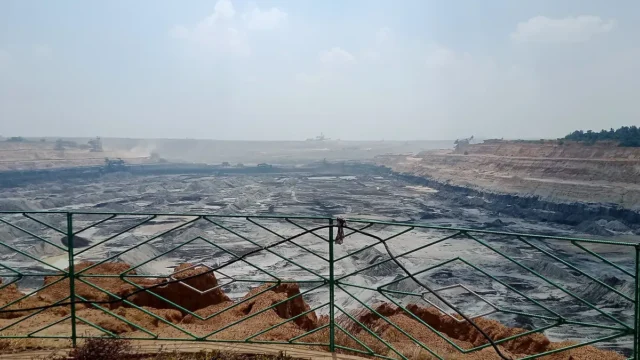
Neyveli, Tiruchirappalli and Atacama: Indian scientists identify Martian analogue sites
Scientists at the University of Kerala, using a laser Raman spectrometer funded under DST-FIST, have identified two minerals that make some places on Earth useful ‘Martian analogue’ sites, DST said on 16 October 2026. Melanterite was found in the lignite of Neyveli, Tamil Nadu. Gypsum was found in the Atacama Desert of Chile and in the Tiruchirappalli Badlands. Both are hydrous sulphates that record how water and rock interacted.
UPSC angle: Prelims: minerals, Raman effect, Atacama. · Mains GS-III: space science and research capacity.
16 Oct 2026
Ancient Gondwana wildfires recorded in Indian coal
BSIP (DST) researchers reported molecular evidence of massive wildfires in Gondwana forests nearly 250 million years ago. Using palynofacies analysis with Raman and FTIR spectroscopy on Godavari Valley Coalfield sediments, they separated high- and low-intensity fire-derived microcharcoal from other opaque particles. The study is in Geological Journal (Wiley).
UPSC angle: Prelims: Gondwana vs Tertiary coal.
25 May 2026
Aravalli Hills: Centre explains move to a uniform definition
The definition decides which hills can be mined. That is why environmental groups are watching closely.
UPSC angle: Prelims: Aravallis. · Mains: Mining vs ecology.
21 Dec 2025Learn the concept
Question text as printed in the official UPSC Civil Services (Main) question paper. The model answer is original Battle IAS work; use it to learn structure, not to memorise.
Want every PYQ in one place? See the Battle IAS PYQ Book.