
Neyveli, Tiruchirappalli and Atacama: Indian scientists identify Martian analogue sites
Next story · 16 OctCAQM orders PTZ cameras at all polluting industries in NCR by 30 November 2026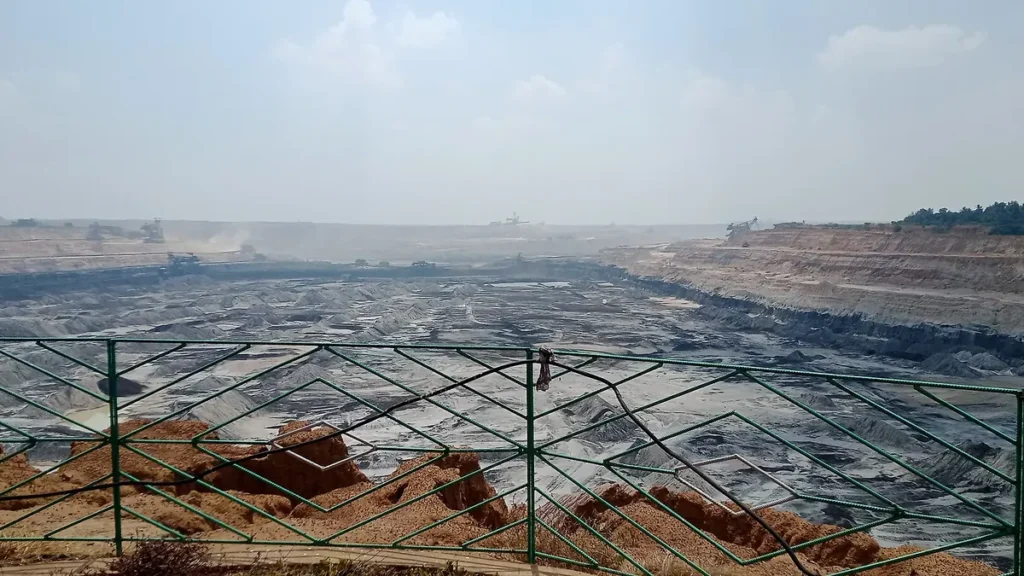
Scientists at the University of Kerala, using a laser Raman spectrometer funded under DST-FIST, have identified two minerals that make some places on Earth useful ‘Martian analogue’ sites, DST said on 16 October 2026. Melanterite was found in the lignite of Neyveli, Tamil Nadu. Gypsum was found in the Atacama Desert of Chile and in the Tiruchirappalli Badlands. Both are hydrous sulphates that record how water and rock interacted.
- Minerals
- Melanterite, gypsum
- Indian sites
- Neyveli, Tiruchirappalli
- Instrument
- Laser Raman spectrometer
- Journal
- JGR: Planets
Martian analogue sites: what happened?
We cannot yet walk on Mars, so scientists look for places on Earth that behave like it. If a mineral forms on Earth only when water comes and goes, finding the same mineral on Mars tells us water was once there too. These are the clues the Kerala team has been studying.
- The team was led by Dr Sajin Kumar K.S., Project Coordinator, DST-FIST, Department of Geology, University of Kerala (PIB).
- Melanterite forms when marcasite in Neyveli’s lignite is oxidised, showing short-lived wet, acidic and oxidising conditions.
- Gypsum records past water activity and can preserve biosignatures (signs of life) inside its crystals.
- The results appeared as two papers in the Journal of Geophysical Research: Planets.
What is a planetary analogue site?
- A place on Earth whose geology, chemistry or climate resembles that of another planet.
- Orbital data alone cannot fully identify Martian minerals, so ground tests on Earth help read satellite and rover data.
- The Atacama in Chile is among the driest places on Earth and is widely used for Mars studies.
- In India, Ladakh’s cold desert has hosted ISRO’s analogue mission HOPE (2024).
What do the two minerals tell us?
| Mineral | Composition | Found at | What it records |
|---|---|---|---|
| Melanterite | Hydrated iron sulphate | Neyveli lignite, Tamil Nadu | Brief wet, acidic, oxidising conditions |
| Gypsum | Hydrated calcium sulphate | Atacama; Tiruchirappalli Badlands | Past water; can trap biosignatures |
Which institutions and rules are relevant?
- DST-FIST (Fund for Improvement of S&T Infrastructure) funds lab equipment in universities.
- Anusandhan National Research Foundation Act, 2023 aims to widen research funding to State universities.
- Outer Space Treaty, 1967, Article IX: avoid harmful contamination of other celestial bodies (planetary protection).
- ISRO works under the Department of Space and plans India’s planetary missions.
What are the limits?
- No analogue is a perfect copy of Mars, because Earth has life, a thick atmosphere and plate tectonics.
- Few Indian universities have advanced instruments like laser Raman spectrometers.
- Analogue sites such as mines and badlands can be lost to mining or construction.
- Planetary science gets a small share of India’s research budget.
What should be done next?
- Build a national catalogue of Indian planetary analogue sites.
- Protect key sites as geo-heritage areas.
- Share instruments across universities through FIST and ANRF.
- Link analogue studies to the design of instruments for future Indian Mars missions.
What can Prelims ask?
- Melanterite: hydrated iron sulphate (Neyveli). Gypsum: hydrated calcium sulphate.
- Raman effect: discovered by C.V. Raman on 28 February 1928, now observed as National Science Day.
- Atacama Desert: Chile; among the driest non-polar deserts.
- Tiruchirappalli Badlands: a semi-arid terrain in Tamil Nadu.
How to write about planetary science in Mains
Practice question (10 marks, 150 words): How can terrestrial analogue sites support India’s planetary exploration programme? (GS-III)
- Intro: Neyveli, Tiruchirappalli and Atacama identified as Martian analogues, Oct 2026.
- Science: hydrous sulphates record water and possible biosignatures.
- Value: test instruments, train teams, read orbital data.
- Gaps: instruments, funds, protecting sites.
- Conclusion: low-cost ground science makes costly missions more productive.
Image: Open-cast lignite mine at Neyveli, Tamil Nadu. Shanmathi Moorthi, Wikimedia Commons, CC0
How to use this in Mains
If asked: Why should India invest in planetary science research? (GS-III)
Quote: “Identifying minerals capable of recording water activity and preserving biosignatures can also help guide future planetary missions toward the most promising locations in the search for evidence of life beyond Earth.”
Use it: Quote it, then link it to mission planning and research spending.
If asked: Discuss the role of research infrastructure in State universities. (GS-III)
Quote: “Such facilities supported by the DST-FIST can advance planetary science by improving our understanding of past habitable environments on Mars and other planetary bodies.”
Use it: Use it to argue for shared instruments in universities.
Exam angle
Prelims: minerals, Raman effect, Atacama. · Mains GS-III: space science and research capacity.
Practice MCQs
Original practice questions (not PYQs).
Melanterite, recently identified at a Martian analogue site in India, is
Answer (a) & explanation
Melanterite is a hydrated iron(II) sulphate.
Which of the following pairs is correctly matched?
Answer (b) & explanation
Gypsum was identified in the Atacama and the Tiruchirappalli Badlands; melanterite at Neyveli.
The Raman effect, used in the laser Raman spectrometer, relates to
Answer (a) & explanation
Raman scattering changes the wavelength of light in a way that identifies molecules.
Questions students ask about this
What is a Martian analogue site?
A place on Earth whose geology or chemistry resembles conditions on Mars.
Which sites were identified?
Neyveli (melanterite), and the Atacama Desert and Tiruchirappalli Badlands (gypsum).
Why do these minerals matter?
They form through water–rock interaction, and gypsum can preserve signs of life.
Who did the study?
A University of Kerala team using a DST-FIST laser Raman spectrometer.
Keep studying
Go deeper
Official source: PIB, 16 Oct 2026: Indian scientists identify a few Martian analogue sites
facts from cited sources only; faculty review pending