
UPSC Mains 2015 GS Paper 2 Q1: model answer
Discuss the possible factors that inhibit India from enacting for its citizen a uniform civil code as provided for in the Directive Principles of State Policy.
What the question wants
Discuss why India has not yet enacted a Uniform Civil Code as directed by Article 44.
How to structure it
Discuss the possible factors: list and explain obstacles with examples, then a way forward.
- Article 44
- Factors
- Developments since
- Way forward
How to think it through
Goa has had a common civil code since Portuguese times, and Uttarakhand passed one in 2024. So it is possible. The real question is why not nationally. Answer with politics, diversity and trust, not only religion.
Model answer
Article 44 says 'The State shall endeavour to secure for the citizens a uniform civil code throughout the territory of India.' Seven decades on, only Goa and, since 2024, Uttarakhand have one.
Factors that inhibit a UCC
- Religious and cultural diversity: personal laws on marriage, divorce, inheritance and adoption differ across Hindus, Muslims, Christians, Parsis and tribal communities.
- Fear among minorities that a UCC means imposing majority customs; Article 25 protects religious freedom.
- Tribal customary laws protected by the Fifth and Sixth Schedules and Article 371A for Nagaland.
- Political sensitivity: parties fear vote-bank backlash; it is seen as a communal issue.
- No draft: there has never been an agreed national text to debate, so fears fill the gap.
- Federal question: personal law is in the Concurrent List (Entry 5), so states could also legislate differently.
- Directive Principles are non-justiciable (Article 37), so courts cannot force it.
- Reforms within communities (Hindu Code Bills 1955–56, triple talaq ban 2019) have reduced pressure.
- Law Commission (2018) said a UCC is 'neither necessary nor desirable at this stage', advising reform of personal laws instead.
Courts' nudges
Shah Bano (1985) and Sarla Mudgal (1995) urged a UCC. The 22nd Law Commission reopened consultation in 2023.
Way forward
Build consensus gradually: a gender-just code drafted with communities, starting with common areas like marriage registration, adoption and maintenance.
Draw: Balance: 'equality and gender justice' vs 'diversity and religious freedom'.
Keywords, cases and data to drop in
Article 44, Article 37, Article 25, Goa civil code, Uttarakhand UCC 2024, Shah Bano, Sarla Mudgal, Law Commission 2018.
Where most answers lose marks
- Arguing for or against a UCC; the question asks for factors.
Related Mains PYQs
- “Right of movement and residence throughout the territory of India are freely available to the Indian citizens, but these rights are not… UPSC 2022 · GS-II
- Critically examine the procedures through which the Presidents of India and France are elected. UPSC 2022 · GS-II
- 'Constitutional Morality' is rooted in the Constitution itself and is founded on its essential facets. Explain the doctrine of 'Constitutional Morality' with… UPSC 2021 · GS-II
- Analyze the distinguishing features of the notion of Right to Equality in the Constitutions of the USA and India. UPSC 2021 · GS-II
Fresh examples from current affairs
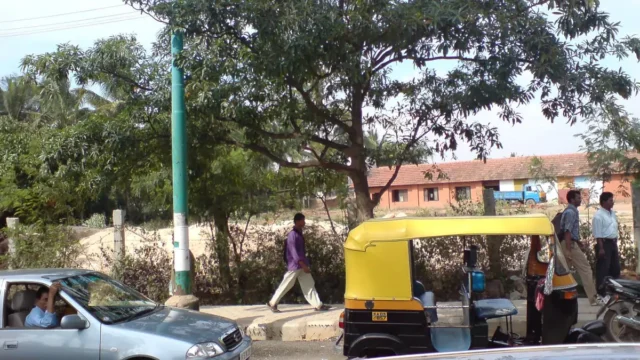
Vehicle data sold for ₹5: Centre orders CERT-In audit of VAHAN, SARATHI and e-Challan portals
The Ministry of Road Transport and Highways has asked CERT-In, India’s cyber-security agency, for a forensic audit of its VAHAN, SARATHI, e-Challan and pollution-certificate portals. A security firm found that owners’ names, addresses and phone numbers were being sold through apps and a Telegram channel for as little as ₹5. On the same day, The Hindu reported a separate leak of film certification records. For you, this connects cyber security, the right to privacy and the Digital Personal Data Protection Act, 2023.
UPSC angle: Prelims: CERT-In, Section 70B IT Act, VAHAN/SARATHI, Puttaswamy, DPDP Act 2023, GDPR. · Mains GS-III: cyber security and data protection.
25 Oct 2026
Census 2027: can private teachers be made enumerators? The Census Rules amendment and Article 23
Census 2027 needs over 30 lakh enumerators, the people who go door to door counting everyone. This month the Centre amended the Census Rules, 1990 to name teachers of private schools and staff of banks and companies as possible enumerators. But two High Courts had already stopped governments from forcing private-school teachers into Census duty. For you, it raises a classic exam question: can a rule make private citizens do public work, and what do the Census Act and Article 23 allow?
UPSC angle: Prelims: Entry 69 Union List, Census Act 1948, Article 23, Committee on Subordinate Legislation. · Mains GS-II: delegated legislation; federal administration of the Census.
25 Oct 2026
Cauvery panel tells Karnataka to release 3,000 cusecs to Tamil Nadu: Article 262 and the inter-State water dispute
The Cauvery Water Regulation Committee has told Karnataka to ensure 3,000 cusecs of water a day at Biligundlu for 15 days, and the Cauvery Water Management Authority has endorsed it. Tamil Nadu wanted almost five times more, including a claimed backlog. Karnataka says a weak monsoon has left its four Cauvery reservoirs 55% short and most of its taluks in drought. For you, this is a live case study of Article 262, water tribunals and how a dry year turns sharing into a crisis.
UPSC angle: Prelims: Cauvery source and tributaries, Article 262, ISWD Act 1956, CWMA. · Mains GS-II: inter-State water disputes; cooperative federalism.
25 Oct 2026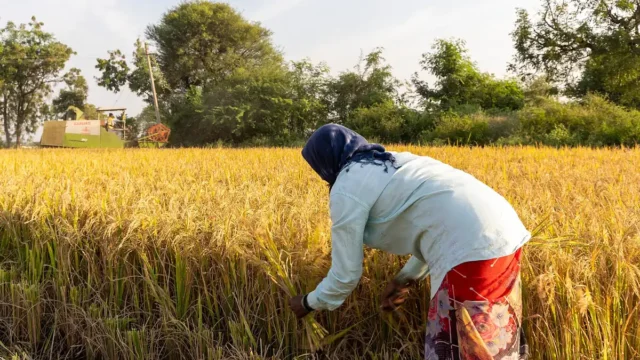
11 crore Farmer IDs created five months early under the Digital Agriculture Mission and Agri Stack
The Centre is building a digital register of farmers, so that each farmer has one verified identity for all schemes. Under the Digital Agriculture Mission, 11 crore Farmer IDs were created by the night of 23 October, five months before the March 2027 deadline. With this ID, farmers need not submit the same papers again and again for loans, crop insurance or relief. For you, this links Agri Stack, the Kisan Credit Card, PMFBY and land-record reform.
UPSC angle: Prelims: Digital Agriculture Mission, Agri Stack, KCC, PMFBY, DILRMP. · Mains GS-III: technology in agriculture; DBT.
25 Oct 2026Learn the concept
Question text as printed in the official UPSC Civil Services (Main) question paper. The model answer is original Battle IAS work; use it to learn structure, not to memorise.
Want every PYQ in one place? See the Battle IAS PYQ Book.