
UPSC Mains 2016 GS Paper 2 Q9: model answer
UpdatedProfessor Amartya Sen has advocated important reforms in the realms of primary education and primary health care. What are your suggestions to improve their status and performance?
What the question wants
Suggest how India can improve primary education and primary health care, in the light of Amartya Sen's proposed reforms.
How to structure it
Your suggestions: begin with Sen's diagnosis, then concrete proposals for each sector.
- Sen's argument
- Primary education
- Primary health
- Common enablers
How to think it through
Sen and Drèze, in 'An Uncertain Glory' (2013), argued that India tried to grow rich before becoming healthy and educated, unlike East Asia and Kerala. Use that, then give specific, current suggestions, not generalities.
Model answer
In An Uncertain Glory (2013), Jean Drèze and Amartya Sen pointed out that Bangladesh, with half India's income per head, had better child immunisation and female literacy. Their message: growth does not automatically buy health and learning; public action does.
Sen's core argument
- Public investment in basic education and health came first in Japan, South Korea and Kerala; growth followed.
- Primary schools and health centres need accountability to communities, not just buildings.
Suggestions for primary education
- Foundational learning first: the NIPUN Bharat mission's target of reading and numeracy by Grade 3; ASER surveys show many Class 5 children cannot read a Class 2 text.
- Teaching at the right level, as Pratham's model shows.
- Teacher accountability and support: fill vacancies, cut non-teaching duties, train continuously.
- Mother-tongue instruction in early years (NEP 2020).
- School management committees with parents' real power.
Suggestions for primary health
- Raise public spending towards 2.5% of GDP, with most of it for primary care.
- Ayushman Arogya Mandirs with doctors, medicines and diagnostics, not only signboards.
- Community health workers with fair pay: ASHAs remain 'volunteers' on incentives.
- Preventive care: nutrition, sanitation, immunisation.
- Free essential medicines (Tamil Nadu model).
Common enablers
Decentralised funds to panchayats, public data on outcomes, and women's participation in school and health committees.
Sen's lesson is that capability comes before prosperity; India's growth will last only if its children learn and stay healthy.
Draw: A staircase: health and education (base), productivity, growth; Kerala and East Asia on the steps.
Keywords, cases and data to drop in
Drèze and Sen 'An Uncertain Glory' 2013, capability approach, Kerala model, NIPUN Bharat, ASER, TaRL, NEP 2020, NHP 2017, Ayushman Arogya Mandirs, ASHA.
Where most answers lose marks
- Writing general suggestions without linking them to Sen.
Related Mains PYQs
- The Right of Children to Free and Compulsory Education Act, 2009 remains inadequate in promoting an incentive-based system for children’s education without… UPSC 2022 · GS-II
- “Besides being a moral imperative of a Welfare State, primary health structure is a necessary precondition for sustainable development.” Analyze. UPSC 2021 · GS-II
- In order to enhance the prospects of social development, sound and adequate health care policies are needed, particularly in the fields of… UPSC 2020 · GS-II
- National Education Policy 2020 is in conformity with the Sustainable Development Goal-4 (2030). It intends to restructure and reorient education system in… UPSC 2020 · GS-II
Fresh examples from current affairs
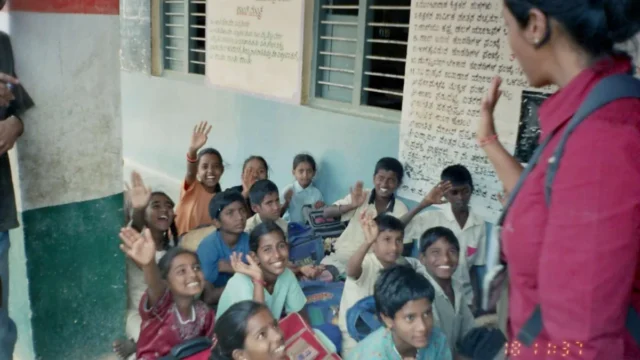
Why inclusion is key to the RTE Act
Getting a seat is one thing; feeling at home in the classroom is another. Under the Right to Education (RTE) Act, private schools keep 25% of entry-level seats for children from poor and disadvantaged families. A writer from Indus Action shows, through two Delhi children, that admission alone does not bring inclusion. Read it for Article 21A, Section 12(1)(c) and what makes a classroom truly open.
UPSC angle: Prelims: Article 21A, 86th Amendment, Section 12(1)(c), NCTE. · Mains GS-II: education, social justice, inclusion (Mains 2022 asked on the RTE Act).
27 Oct 2026
UP proposes school age-record rules after Allahabad HC flags POCSO misuse
The POCSO Act protects children below 18 from sexual offences, and a person's age decides whether it applies. The Allahabad High Court found cases where false school age certificates were used to show a girl as a minor, so that young men aged 19–20 were wrongly booked under POCSO. The U.P. government has now proposed rules on how schools record a child's age at admission. Read it for POCSO, age proof under the Juvenile Justice Act and the RTE Rules.
UPSC angle: Prelims: POCSO Act, JJ Act Section 94, Articles 15(3), 21A. · Mains GS-II: child rights, misuse of protective laws, judicial oversight.
27 Oct 2026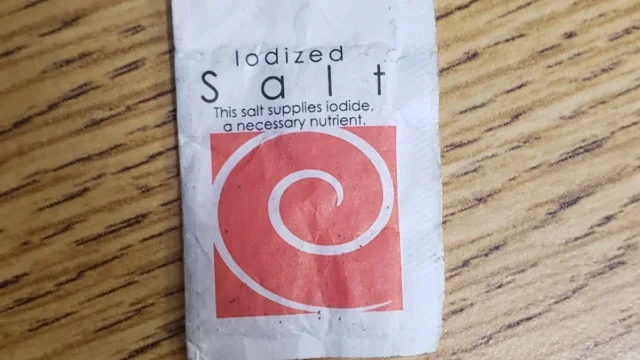
Double fortified salt: a ready answer to anaemia
Anaemia means the blood does not have enough healthy red cells or haemoglobin to carry oxygen, so a person feels tired and weak. Most of it in India comes from too little iron. Double Fortified Salt (DFS), ordinary salt that carries both iodine and iron, is a cheap fix already tested in India. A former Tata Trusts adviser argues it is being used unevenly. Read it for food fortification, Anaemia Mukt Bharat and ICDS.
UPSC angle: Prelims: Anaemia Mukt Bharat, food fortification, +F logo, ICDS, PM POSHAN. · Mains GS-II: malnutrition and welfare delivery.
27 Oct 2026
NCERT releases 20-hour AI and computational thinking module for Classes 9-12
NCERT has released a 20-hour, activity-based introductory module on computational thinking and artificial intelligence for Classes 9 to 12, developed with IIT-Madras and IIT-Jodhpur. It stresses safe and ethical use, including data privacy and spotting deepfakes. For you, this connects school education reform, digital literacy and AI governance.
UPSC angle: Prelims: NCERT, deepfakes, computational thinking. · Mains GS-II: education and human resources; GS-III: awareness in IT.
26 Oct 2026Learn the concept
Question text as printed in the official UPSC Civil Services (Main) question paper. The model answer is original Battle IAS work; use it to learn structure, not to memorise.
Want every PYQ in one place? See the Battle IAS PYQ Book.