
UPSC Mains 2017 GS Paper 2 Q12: model answer
UpdatedExamine the scope of Fundamental Rights in the light of the latest judgement of the Supreme Court on Right to Privacy.
What the question wants
Examine how the 2017 privacy judgment changed the scope of Fundamental Rights.
How to structure it
Examine the scope ... in the light of: what Puttaswamy held, then what it changed for rights, with later cases.
- The judgment
- What it held
- Effect on the scope of rights
- Later applications
- Limits
How to think it through
Before 2017, two old benches (M.P. Sharma 1954, Kharak Singh 1962) had said privacy wasn't a fundamental right. Nine judges overruled them. It's a rare case where the Court corrected its own history in one sitting, and its reasoning travels well beyond privacy.
Model answer
On 24 August 2017, a nine-judge bench in Justice K.S. Puttaswamy v Union of India unanimously declared privacy a Fundamental Right, overruling M.P. Sharma (1954) and Kharak Singh (1962) on this point.
What the Court held
- Privacy is intrinsic to life and personal liberty under Article 21 and also flows from the freedoms in Part III.
- It covers bodily autonomy, informational privacy and decisional autonomy (choices on family, sexuality, food).
- It is not absolute. Restrictions must pass a three-fold test: legality (a law), legitimate aim, and proportionality.
- The state must create a data protection regime.
How it widened the scope of Fundamental Rights
- Rights as a connected whole: following Maneka Gandhi and R.C. Cooper, rights in
Articles 14, 19 and 21 overlap and must be read together.
- Dignity at the centre: rights protect the individual's dignity, not only freedom from state action.
- Proportionality became the standard test for any restriction.
- Rights are not frozen: they evolve with technology and society, reflecting a living Constitution.
- Minority choices matter: the judgment criticised Suresh Koushal (2013) on Section 377.
Later applications
- Navtej Singh Johar (2018): decriminalised consensual same-sex relations.
- Joseph Shine (2018): struck down adultery as a crime.
- Puttaswamy (Aadhaar), 2018: upheld Aadhaar for welfare but struck down its mandatory use by private firms (Section 57).
- Common Cause (2018): right to die with dignity, living wills.
- Anuradha Bhasin (2020): proportionality for internet shutdowns.
- Digital Personal Data Protection Act, 2023.
Limits
Surveillance laws, broad state exemptions in the 2023 Act, and Pegasus allegations show gaps between the principle and practice.
Conclusion
Puttaswamy turned Fundamental Rights from a list into a philosophy of dignity and autonomy, which keeps the Constitution relevant in a digital age.
Draw: Three circles: bodily, informational, decisional privacy around Article 21.
Keywords, cases and data to drop in
Puttaswamy 2017, nine-judge bench, M.P. Sharma, Kharak Singh, three-fold test, proportionality, informational privacy, DPDP Act 2023.
Where most answers lose marks
- Describing only privacy and not the wider 'scope of Fundamental Rights'.
Related Mains PYQs
- “Right of movement and residence throughout the territory of India are freely available to the Indian citizens, but these rights are not… UPSC 2022 · GS-II
- Critically examine the procedures through which the Presidents of India and France are elected. UPSC 2022 · GS-II
- 'Constitutional Morality' is rooted in the Constitution itself and is founded on its essential facets. Explain the doctrine of 'Constitutional Morality' with… UPSC 2021 · GS-II
- Analyze the distinguishing features of the notion of Right to Equality in the Constitutions of the USA and India. UPSC 2021 · GS-II
Fresh examples from current affairs
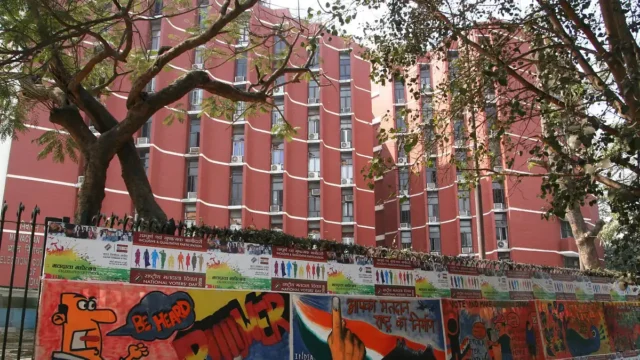
Bid to restrain CEC is against law, ECI tells SC
The Election Commission of India (ECI) is the umpire of our elections, the body that runs voting for Parliament, State Assemblies, the President and the Vice-President. Now the umpire itself is in court. Opposition leaders want the Supreme Court to stop Chief Election Commissioner (CEC) Gyanesh Kumar from acting alone, and all three members of the Commission have replied together that the plea is against the law. Read it to revise Article 324, how a CEC is removed and how the Commission takes decisions.
UPSC angle: Prelims: Article 324, removal of CEC and ECs, 2023 selection committee, State Election Commissions. · Mains GS-II: independence and credibility of constitutional bodies, electoral reforms.
27 Oct 2026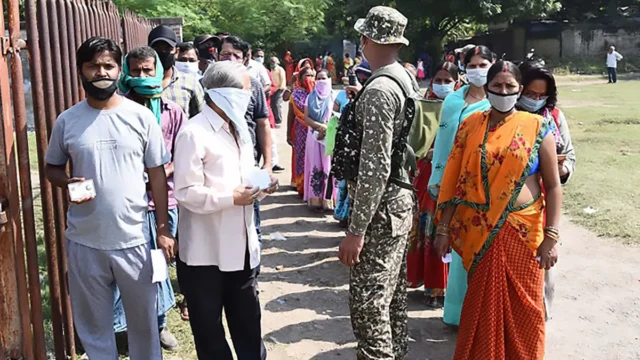
No prosecution for deleted voters filing Form 6: SC
Thousands of people in Mumbai and Pune lost their names from the voters' list because their old buildings were being rebuilt and they had moved out for a while. To get back on the list they must fill Form 6, the form for new voters, and they feared being punished for it. The Supreme Court has told them not to worry. Read it for Forms 6, 7 and 8, 'ordinary residence', and the difference between the two Representation of the People Acts.
UPSC angle: Prelims: Forms 6/7/8, Article 326, RP Act 1950 vs 1951, Section 33(7). · Mains GS-II: electoral rolls, exclusion and electoral reforms.
27 Oct 2026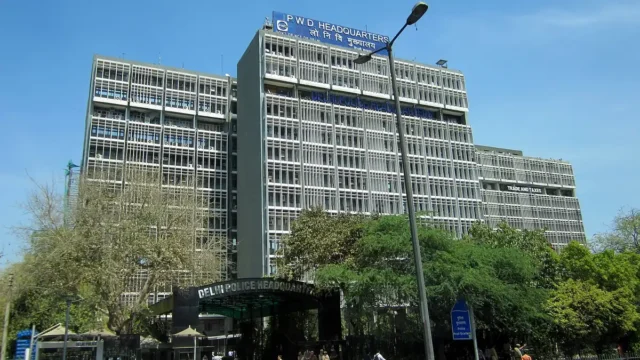
What are the powers of Special Executive Magistrates?
Not every 'magistrate' is a judge. In Delhi, a Special Executive Magistrate (SEM) court, run by a police officer of Assistant Commissioner rank, recently granted bail to two activists even though the police wanted them in custody longer. The case raises a simple question: what can an SEM do, and what can it not? Read it for the BNSS, 2023, Article 50 and the difference between executive and judicial magistrates.
UPSC angle: Prelims: Article 50, executive vs judicial magistrates, BNSS sections, Zero FIR. · Mains GS-II: separation of powers, police reforms, civil liberties.
27 Oct 2026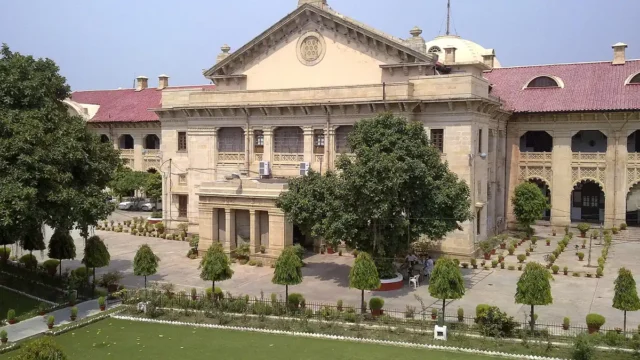
UP proposes school age-record rules after Allahabad HC flags POCSO misuse
The POCSO Act protects children below 18 from sexual offences, and a person's age decides whether it applies. The Allahabad High Court found cases where false school age certificates were used to show a girl as a minor, so that young men aged 19–20 were wrongly booked under POCSO. The U.P. government has now proposed rules on how schools record a child's age at admission. Read it for POCSO, age proof under the Juvenile Justice Act and the RTE Rules.
UPSC angle: Prelims: POCSO Act, JJ Act Section 94, Articles 15(3), 21A. · Mains GS-II: child rights, misuse of protective laws, judicial oversight.
27 Oct 2026Learn the concept
Question text as printed in the official UPSC Civil Services (Main) question paper. The model answer is original Battle IAS work; use it to learn structure, not to memorise.
Want every PYQ in one place? See the Battle IAS PYQ Book.