
UPSC Mains 2018 GS Paper 2 Q18: model answer
The Citizens' Charter is an ideal instrument of organizational transparency and accountability, but it has its own limitations. Identify the limitations and suggest measures for greater effectiveness of the Citizens' Charter.
What the question wants
Identify the limitations of the Citizens' Charter and suggest how to make it work better.
How to structure it
Two parts: limits, then measures.
- Purpose
- Limitations
- Measures
- Conclusion
How to think it through
You wrote on charters for 2013. Here the demand is cleaner: limits and fixes. Add 'Sevottam' and right-to-service laws, and mention a newer tool such as CPGRAMS reforms.
Model answer
A citizens' charter is a promise pinned to the wall: what service, by when, and whom to complain to. India adopted it in 1997, and nearly every ministry has one. Yet few citizens have read it, and fewer have used it to get anything done.
An ideal instrument
- Makes standards public, which creates transparency.
- Gives a basis for complaints, which creates accountability.
- Shifts the mindset from ruler to service provider.
Limitations
- Not legally enforceable; no penalty for breach.
- Drafted without consultation with citizens or frontline staff.
- Vague standards without timelines.
- Low awareness: charters rarely displayed in local languages at service points.
- No change in resources: staff shortages remain, so promises cannot be kept.
- Not reviewed or updated; many are years old.
- Uniform format ignoring local conditions, so a tribal district gets the same charter as a metro.
- Frontline staff are not consulted or trained on it.
- The 2nd ARC (12th Report) and DARPG reviews found most charters ineffective.
Measures for greater effectiveness
- Participatory drafting with users and civil society.
- Specific, measurable standards and timelines.
- Link to grievance redress: CPGRAMS with escalation and feedback.
- Statutory backing: Right to Public Services Acts in over 20 states, with penalties for delays.
- Sevottam compliance and third-party evaluation.
- Compensation for service failure, as in the UK charter.
- Capacity building of frontline staff.
- Publish performance against the charter regularly.
- Revive a central law like the lapsed Citizens' Charter and Grievance Redressal Bill, 2011.
Conclusion
The Charter is ideal in intent, but transparency on paper is not accountability in practice. A charter becomes real when it is backed by law, resources and the citizen's right to complain. Without these it remains a notice board.
Draw: A chain: promise, standard, display, complaint, penalty, with broken links marked in red.
Keywords, cases and data to drop in
Citizens' Charter 1997, 2nd ARC 12th Report, Sevottam, DARPG, CPGRAMS, RTS Acts, Citizens' Charter Bill 2011, UK Charter Mark.
Where most answers lose marks
- Describing the charter without limits and remedies.
Related Mains PYQs
- Analyse the advantages and limitations of the generalist structure of the Indian Civil Services in contemporary governance. UPSC 2026 · GS-II
- To what extent do pressure groups, social movements and corporate lobbies deepen pluralistic democracy in India by representing excluded interests? Analyse whether… UPSC 2026 · GS-II
- “Transparency and accountability in governance are not about controlling corruption but about creating the trust of stakeholders in the policy process by… UPSC 2026 · GS-II
- Can the constitutional mandate of rights-based welfare be effectively realised in the context of non-integrated governance and minimal public investment? Examine. UPSC 2026 · GS-II
Fresh examples from current affairs
DPDP Act and hospitals: why clinical staff need training before the data law bites
The Digital Personal Data Protection Rules come fully into force in May 2027, and hospitals that mishandle patient data face penalties of up to ₹250 crore. Training doctors and nurses matters more than buying software. For you, this connects Article 21 privacy, the DPDP framework and Ayushman Bharat Digital Mission.
UPSC angle: Prelims: DPDP Act terms, Data Protection Board, Puttaswamy, ABDM. · Mains GS-II: health governance, privacy and digital public infrastructure.
26 Oct 2026
Census 2027: can private teachers be made enumerators? The Census Rules amendment and Article 23
Census 2027 needs over 30 lakh enumerators, the people who go door to door counting everyone. This month the Centre amended the Census Rules, 1990 to name teachers of private schools and staff of banks and companies as possible enumerators. But two High Courts had already stopped governments from forcing private-school teachers into Census duty. For you, it raises a classic exam question: can a rule make private citizens do public work, and what do the Census Act and Article 23 allow?
UPSC angle: Prelims: Entry 69 Union List, Census Act 1948, Article 23, Committee on Subordinate Legislation. · Mains GS-II: delegated legislation; federal administration of the Census.
25 Oct 2026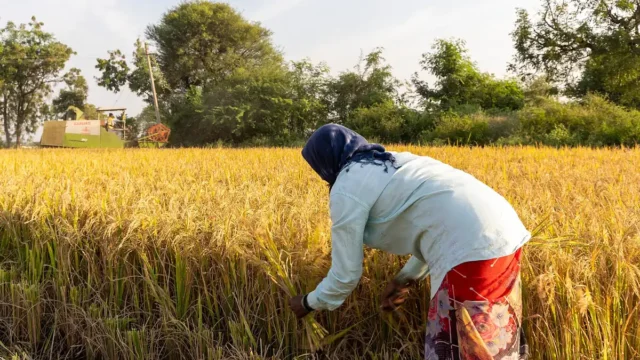
11 crore Farmer IDs created five months early under the Digital Agriculture Mission and Agri Stack
The Centre is building a digital register of farmers, so that each farmer has one verified identity for all schemes. Under the Digital Agriculture Mission, 11 crore Farmer IDs were created by the night of 23 October, five months before the March 2027 deadline. With this ID, farmers need not submit the same papers again and again for loans, crop insurance or relief. For you, this links Agri Stack, the Kisan Credit Card, PMFBY and land-record reform.
UPSC angle: Prelims: Digital Agriculture Mission, Agri Stack, KCC, PMFBY, DILRMP. · Mains GS-III: technology in agriculture; DBT.
25 Oct 2026
Vehicle data sold for ₹5: Centre orders CERT-In audit of VAHAN, SARATHI and e-Challan portals
The Ministry of Road Transport and Highways has asked CERT-In, India’s cyber-security agency, for a forensic audit of its VAHAN, SARATHI, e-Challan and pollution-certificate portals. A security firm found that owners’ names, addresses and phone numbers were being sold through apps and a Telegram channel for as little as ₹5. On the same day, The Hindu reported a separate leak of film certification records. For you, this connects cyber security, the right to privacy and the Digital Personal Data Protection Act, 2023.
UPSC angle: Prelims: CERT-In, Section 70B IT Act, VAHAN/SARATHI, Puttaswamy, DPDP Act 2023, GDPR. · Mains GS-III: cyber security and data protection.
25 Oct 2026Learn the concept
Question text as printed in the official UPSC Civil Services (Main) question paper. The model answer is original Battle IAS work; use it to learn structure, not to memorise.
Want every PYQ in one place? See the Battle IAS PYQ Book.