
UPSC Mains 2020 GS Paper 2 Q7: model answer
“Institutional quality is a crucial driver of economic performance.” In this context, suggest reforms in Civil Service for strengthening democracy.
What the question wants
Suggest civil service reforms that would strengthen democracy, given that strong institutions drive economic performance.
How to structure it
Context + suggest: link institutions to growth, then reforms that also deepen democracy.
- Link
- Reforms
- Conclusion
How to think it through
Acemoglu and Robinson's argument (Nobel 2024) is that inclusive institutions create prosperity. The civil service is the institution most citizens meet. Reforms should serve both efficiency and democratic accountability.
Model answer
The 2024 Economics Nobel went to Acemoglu, Johnson and Robinson for showing that inclusive institutions explain why some nations prosper. For most Indians the most visible institution is the civil servant at the tehsil, the police station or the hospital.
Why institutional quality matters
Predictable rules, honest officials and fast decisions attract investment and deliver welfare; weak ones breed rent-seeking. A democracy also needs officials who treat every citizen equally, whatever their caste, party or wealth.
Reforms for a stronger democracy
- Neutrality: Civil Services Boards and fixed tenure (T.S.R. Subramanian, 2013).
- Accountability to citizens: right-to-service laws, social audits and public grievance data.
- Competence: Mission Karmayogi and domain specialisation.
- Performance: outcome-based appraisal instead of confidential reports.
- Integrity: asset disclosure and quick, time-bound vigilance decisions.
- Diversity: more women and officers from rural, SC/ST backgrounds in senior roles.
- Decentralisation: more power to district and local officers.
Institutions grow strong when officials answer to rules and to people, not to patrons. That is good economics and good democracy at the same time.
Draw: An arrow chain: institutional quality, trust, investment and welfare, democratic legitimacy.
Keywords, cases and data to drop in
Acemoglu–Robinson, inclusive institutions, 2nd ARC 10th Report, Civil Services Boards, Mission Karmayogi, outcome budgeting, Sevottam.
Where most answers lose marks
- Listing reforms without linking them to democracy.
Related Mains PYQs
- Analyse the advantages and limitations of the generalist structure of the Indian Civil Services in contemporary governance. UPSC 2026 · GS-II
- To what extent do pressure groups, social movements and corporate lobbies deepen pluralistic democracy in India by representing excluded interests? Analyse whether… UPSC 2026 · GS-II
- “Transparency and accountability in governance are not about controlling corruption but about creating the trust of stakeholders in the policy process by… UPSC 2026 · GS-II
- Can the constitutional mandate of rights-based welfare be effectively realised in the context of non-integrated governance and minimal public investment? Examine. UPSC 2026 · GS-II
Fresh examples from current affairs
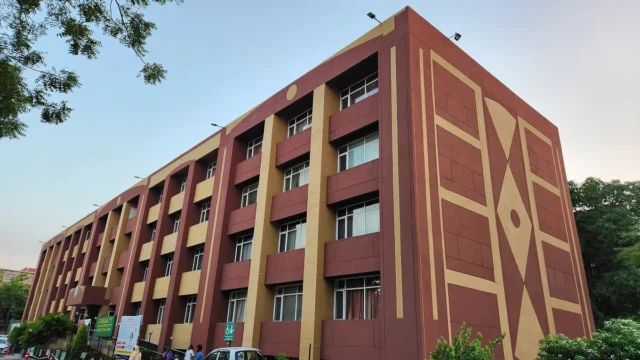
DPDP Act and hospitals: why clinical staff need training before the data law bites
The Digital Personal Data Protection Rules come fully into force in May 2027, and hospitals that mishandle patient data face penalties of up to ₹250 crore. Training doctors and nurses matters more than buying software. For you, this connects Article 21 privacy, the DPDP framework and Ayushman Bharat Digital Mission.
UPSC angle: Prelims: DPDP Act terms, Data Protection Board, Puttaswamy, ABDM. · Mains GS-II: health governance, privacy and digital public infrastructure.
26 Oct 2026
Census 2027: can private teachers be made enumerators? The Census Rules amendment and Article 23
Census 2027 needs over 30 lakh enumerators, the people who go door to door counting everyone. This month the Centre amended the Census Rules, 1990 to name teachers of private schools and staff of banks and companies as possible enumerators. But two High Courts had already stopped governments from forcing private-school teachers into Census duty. For you, it raises a classic exam question: can a rule make private citizens do public work, and what do the Census Act and Article 23 allow?
UPSC angle: Prelims: Entry 69 Union List, Census Act 1948, Article 23, Committee on Subordinate Legislation. · Mains GS-II: delegated legislation; federal administration of the Census.
25 Oct 2026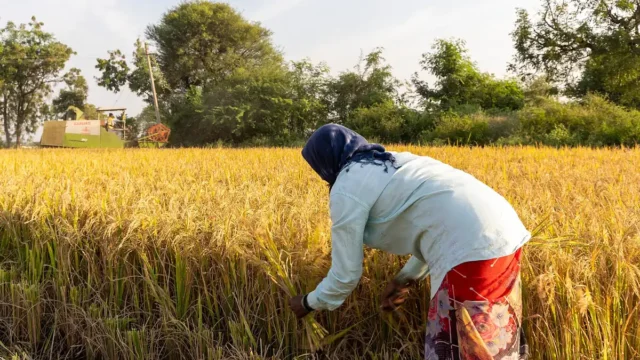
11 crore Farmer IDs created five months early under the Digital Agriculture Mission and Agri Stack
The Centre is building a digital register of farmers, so that each farmer has one verified identity for all schemes. Under the Digital Agriculture Mission, 11 crore Farmer IDs were created by the night of 23 October, five months before the March 2027 deadline. With this ID, farmers need not submit the same papers again and again for loans, crop insurance or relief. For you, this links Agri Stack, the Kisan Credit Card, PMFBY and land-record reform.
UPSC angle: Prelims: Digital Agriculture Mission, Agri Stack, KCC, PMFBY, DILRMP. · Mains GS-III: technology in agriculture; DBT.
25 Oct 2026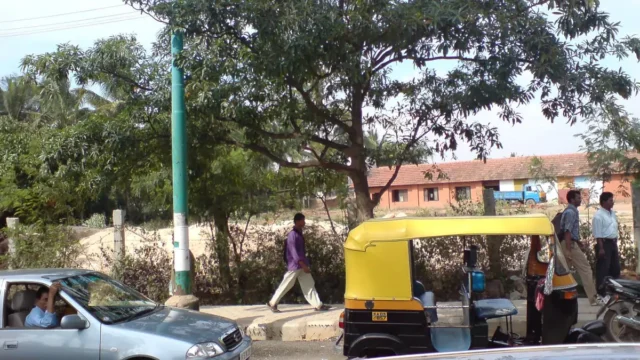
Vehicle data sold for ₹5: Centre orders CERT-In audit of VAHAN, SARATHI and e-Challan portals
The Ministry of Road Transport and Highways has asked CERT-In, India’s cyber-security agency, for a forensic audit of its VAHAN, SARATHI, e-Challan and pollution-certificate portals. A security firm found that owners’ names, addresses and phone numbers were being sold through apps and a Telegram channel for as little as ₹5. On the same day, a separate leak of film certification records was reported. For you, this connects cyber security, the right to privacy and the Digital Personal Data Protection Act, 2023.
UPSC angle: Prelims: CERT-In, Section 70B IT Act, VAHAN/SARATHI, Puttaswamy, DPDP Act 2023, GDPR. · Mains GS-III: cyber security and data protection.
25 Oct 2026Learn the concept
Question text as printed in the official UPSC Civil Services (Main) question paper. The model answer is original Battle IAS work; use it to learn structure, not to memorise.
Want every PYQ in one place? See the Battle IAS PYQ Book.