
UPSC Mains 2020 GS Paper 2 Q17: model answer
“Micro-Finance as an anti-poverty vaccine, is aimed at asset creation and income security of the rural poor in India.” Evaluate the role of the Self-Help Groups in achieving the twin objectives along with empowering women in rural India.
What the question wants
Evaluate how far SHGs have created assets and income security for the rural poor while empowering women.
How to structure it
Evaluate: twin objectives plus empowerment, with evidence and limits.
- The vaccine idea
- Asset creation
- Income security
- Empowerment
- Limits
- Verdict
How to think it through
The vaccine metaphor is a good hook: a vaccine prevents disease; microfinance should prevent falling into poverty. Does it? It smooths consumption well, builds small assets and some income, but rarely transforms. Evidence from studies of microcredit (Banerjee and Duflo, 2015) found modest effects.
Model answer
A vaccine does not cure; it prevents. Calling microfinance an 'anti-poverty vaccine' means it should stop poor households from falling into deeper poverty when a crop fails or a child falls sick. The question asks whether SHGs have given that protection, and whether they have also given women power.
Asset creation
- Loans buy cows, goats, sewing machines and small shops; dairy SHGs in Gujarat and Andhra Pradesh are an example.
- Under DAY-NRLM, community investment funds and bank loans have reached crores of women.
- Housing and toilet construction loans through SHG federations.
- Assets in women's names give them bargaining power at home.
Income security
- Group savings act as insurance: members borrow for emergencies instead of going to moneylenders.
- Diversified incomes from non-farm work.
- Lakhpati Didi: the target is to help 3 crore SHG women earn at least ₹1 lakh a year.
Women's empowerment
- Bank accounts and credit in women's names.
- Voice in households and gram sabhas; SHG women contest panchayat polls.
- Collective action: Kudumbashree's community kitchens during Covid; campaigns against alcohol in Andhra Pradesh.
Limits
- Most loans are small and used for consumption, not enterprise.
- Randomised studies across six countries (2015) found modest effects on income, though gains in flexibility.
- Over-indebtedness in some regions; the Andhra crisis of 2010.
- Weak market links, so products do not sell.
- Elite capture; the poorest often stay outside.
- Control of loans by male relatives.
Verdict
On the evidence, SHGs meet the income-security objective better than the asset-creation one, and empowerment is real but uneven across states. Microfinance is a good vaccine against shocks, but not a cure for poverty. To create lasting assets and income it needs markets, skills, infrastructure and social protection alongside credit.
Draw: Shield marked 'savings + credit' in front of a household, with 'shocks' arrows bouncing off; behind it, a ladder to 'enterprise' that needs markets and skills.
Keywords, cases and data to drop in
DAY-NRLM, SBLP, community investment fund, Lakhpati Didi, consumption smoothing, Banerjee–Duflo microcredit studies 2015, over-indebtedness, elite capture.
Where most answers lose marks
- Writing only about women's empowerment and forgetting asset creation and income.
Related Mains PYQs
- Analyse the advantages and limitations of the generalist structure of the Indian Civil Services in contemporary governance. UPSC 2026 · GS-II
- To what extent do pressure groups, social movements and corporate lobbies deepen pluralistic democracy in India by representing excluded interests? Analyse whether… UPSC 2026 · GS-II
- “Transparency and accountability in governance are not about controlling corruption but about creating the trust of stakeholders in the policy process by… UPSC 2026 · GS-II
- Can the constitutional mandate of rights-based welfare be effectively realised in the context of non-integrated governance and minimal public investment? Examine. UPSC 2026 · GS-II
Fresh examples from current affairs
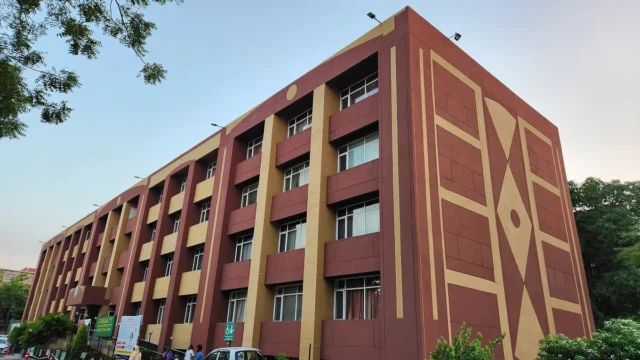
DPDP Act and hospitals: why clinical staff need training before the data law bites
The Digital Personal Data Protection Rules come fully into force in May 2027, and hospitals that mishandle patient data face penalties of up to ₹250 crore. Training doctors and nurses matters more than buying software. For you, this connects Article 21 privacy, the DPDP framework and Ayushman Bharat Digital Mission.
UPSC angle: Prelims: DPDP Act terms, Data Protection Board, Puttaswamy, ABDM. · Mains GS-II: health governance, privacy and digital public infrastructure.
26 Oct 2026
Census 2027: can private teachers be made enumerators? The Census Rules amendment and Article 23
Census 2027 needs over 30 lakh enumerators, the people who go door to door counting everyone. This month the Centre amended the Census Rules, 1990 to name teachers of private schools and staff of banks and companies as possible enumerators. But two High Courts had already stopped governments from forcing private-school teachers into Census duty. For you, it raises a classic exam question: can a rule make private citizens do public work, and what do the Census Act and Article 23 allow?
UPSC angle: Prelims: Entry 69 Union List, Census Act 1948, Article 23, Committee on Subordinate Legislation. · Mains GS-II: delegated legislation; federal administration of the Census.
25 Oct 2026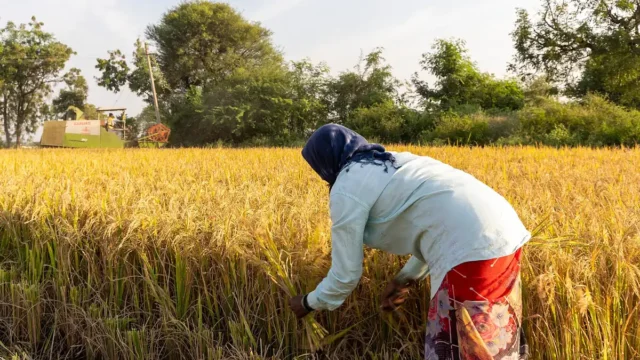
11 crore Farmer IDs created five months early under the Digital Agriculture Mission and Agri Stack
The Centre is building a digital register of farmers, so that each farmer has one verified identity for all schemes. Under the Digital Agriculture Mission, 11 crore Farmer IDs were created by the night of 23 October, five months before the March 2027 deadline. With this ID, farmers need not submit the same papers again and again for loans, crop insurance or relief. For you, this links Agri Stack, the Kisan Credit Card, PMFBY and land-record reform.
UPSC angle: Prelims: Digital Agriculture Mission, Agri Stack, KCC, PMFBY, DILRMP. · Mains GS-III: technology in agriculture; DBT.
25 Oct 2026
Vehicle data sold for ₹5: Centre orders CERT-In audit of VAHAN, SARATHI and e-Challan portals
The Ministry of Road Transport and Highways has asked CERT-In, India’s cyber-security agency, for a forensic audit of its VAHAN, SARATHI, e-Challan and pollution-certificate portals. A security firm found that owners’ names, addresses and phone numbers were being sold through apps and a Telegram channel for as little as ₹5. On the same day, a separate leak of film certification records was reported. For you, this connects cyber security, the right to privacy and the Digital Personal Data Protection Act, 2023.
UPSC angle: Prelims: CERT-In, Section 70B IT Act, VAHAN/SARATHI, Puttaswamy, DPDP Act 2023, GDPR. · Mains GS-III: cyber security and data protection.
25 Oct 2026Learn the concept
Question text as printed in the official UPSC Civil Services (Main) question paper. The model answer is original Battle IAS work; use it to learn structure, not to memorise.
Want every PYQ in one place? See the Battle IAS PYQ Book.