
UPSC Mains 2022 GS Paper 2 Q1: model answer
“The most significant achievement of modern law in India is the constitutionalization of environmental problems by the Supreme Court.” Discuss this statement with the help of relevant case laws.
What the question wants
Discuss, with cases, how the Supreme Court made environmental protection a constitutional matter.
How to structure it
Discuss with case laws: the textual base, the doctrines invented, then an assessment.
- Text
- Key cases and doctrines
- Assessment
How to think it through
The Constitution as written in 1950 didn't say 'environment' at all; Articles 48A and 51A(g) came only in 1976. The Court built the rest through Article 21. Arrange cases by doctrine, not by year, and the answer looks organised.
Model answer
In 1986 a gas leak at Shriram Foods in Delhi led the Supreme Court in M.C. Mehta v Union of India to create 'absolute liability' for hazardous industries, a rule stricter than English law.
The text
Articles 48A (state to protect environment) and 51A(g) (citizens' duty) were added by the 42nd Amendment, 1976. Both are nonjusticiable.
How the Court constitutionalised it
- Right to life includes a clean environment: Subhash Kumar (1991); Rural Litigation (Dehradun quarrying, 1985).
- Absolute liability: M.C. Mehta (Oleum gas, 1986).
- Polluter pays and precautionary principle: Vellore Citizens' Welfare Forum (1996).
- Public trust doctrine: M.C. Mehta v Kamal Nath (1997).
- Continuing mandamus: T.N. Godavarman (forests, from 1995), Delhi's CNG buses (1998).
- Inter-generational equity and sustainable development.
- Right against climate change: M.K. Ranjitsinh (2024), protecting the Great Indian Bustard.
- Led to the National Green Tribunal Act, 2010.
Assessment
It filled a legislative gap and gave citizens a remedy. Critics say courts lack technical expertise and orders are poorly implemented. Still, it ranks among the most important achievements of Indian law.
Draw: Tree with Article 21 as trunk and each doctrine as a branch.
Keywords, cases and data to drop in
Article 21, 48A, 51A(g), absolute liability, polluter pays, precautionary principle, public trust, Godavarman, M.K. Ranjitsinh 2024, NGT.
Where most answers lose marks
- Listing cases without naming the doctrines they created.
Related Mains PYQs
- Right to privacy relating to self-identity is very dear to every human being and well protected under Article 21 of the Constitution.… UPSC 2026 · GS-II
- What is meant by judicial legislation? In this context, discuss the verdicts of the apex court allowing “passive euthanasia” and a “living… UPSC 2026 · GS-II
- Discuss the evolution of collegium system in India. Critically examine the advantages and disadvantages of the system of appointment of the Judges… UPSC 2025 · GS-II
- Comment on the need of administrative tribunals as compared to the court system. Assess the impact of the recent tribunal reforms through… UPSC 2025 · GS-II
Fresh examples from current affairs
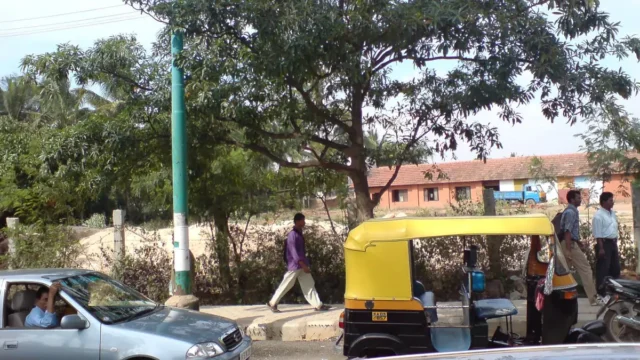
Vehicle data sold for ₹5: Centre orders CERT-In audit of VAHAN, SARATHI and e-Challan portals
The Ministry of Road Transport and Highways has asked CERT-In, India’s cyber-security agency, for a forensic audit of its VAHAN, SARATHI, e-Challan and pollution-certificate portals. A security firm found that owners’ names, addresses and phone numbers were being sold through apps and a Telegram channel for as little as ₹5. On the same day, The Hindu reported a separate leak of film certification records. For you, this connects cyber security, the right to privacy and the Digital Personal Data Protection Act, 2023.
UPSC angle: Prelims: CERT-In, Section 70B IT Act, VAHAN/SARATHI, Puttaswamy, DPDP Act 2023, GDPR. · Mains GS-III: cyber security and data protection.
25 Oct 2026
Census 2027: can private teachers be made enumerators? The Census Rules amendment and Article 23
Census 2027 needs over 30 lakh enumerators, the people who go door to door counting everyone. This month the Centre amended the Census Rules, 1990 to name teachers of private schools and staff of banks and companies as possible enumerators. But two High Courts had already stopped governments from forcing private-school teachers into Census duty. For you, it raises a classic exam question: can a rule make private citizens do public work, and what do the Census Act and Article 23 allow?
UPSC angle: Prelims: Entry 69 Union List, Census Act 1948, Article 23, Committee on Subordinate Legislation. · Mains GS-II: delegated legislation; federal administration of the Census.
25 Oct 2026
‘Sentencing shall not be a lottery’: why India needs a Sentencing Council and guidelines
In India, two people convicted of the same crime can get very different punishments depending on which judge hears the case. An Indian Express ‘Experts Explain’ piece on 24 October 2026 argues for a Sentencing Council with guidelines, pointing to the Supreme Court’s words in Sunita Devi v. State of Bihar (2024) that ‘sentencing shall not be a mere lottery’. The Centre has asked the Law Commission to examine a national sentencing policy. This topic connects Articles 14 and 21 with criminal justice reform.
UPSC angle: Prelims: Probation of Offenders Act 1958, BNSS hearing on sentence, Concurrent List. · Mains GS-II: judicial reforms, criminal justice.
24 Oct 2026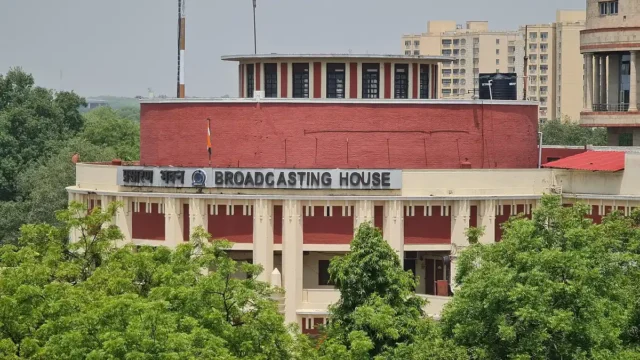
Prasar Bharati at 29: why India’s public broadcaster still lacks the autonomy its law promised
A lead article in The Hindu on 23 October 2026 argues that Prasar Bharati, set up to be a free public broadcaster, still works like a government department. The Prasar Bharati Act of 1990 came into force only in 1997, and its key safeguards, a parliamentary committee (Section 13) and a Broadcasting Council for complaints (Sections 14–15), were never set up, while Section 23 still lets the Centre give binding directions. For you, this is a neat case study of a law that promises autonomy but never builds the institutions that make it real.
UPSC angle: Prelims: Prasar Bharati Act 1990, Sections 13–15 and 23, Cricket Association of Bengal (1995). · Mains GS-II: autonomy of statutory bodies; media and democracy.
23 Oct 2026Learn the concept
Question text as printed in the official UPSC Civil Services (Main) question paper. The model answer is original Battle IAS work; use it to learn structure, not to memorise.
Want every PYQ in one place? See the Battle IAS PYQ Book.