
UPSC Mains 2022 GS Paper 2 Q2: model answer
“Right of movement and residence throughout the territory of India are freely available to the Indian citizens, but these rights are not absolute.” Comment.
What the question wants
Comment on the limits on citizens' freedom of movement and residence.
How to structure it
Comment: the right, its permitted limits, examples and judicial balance.
- Right
- Grounds of restriction
- Examples
- Courts' balance
How to think it through
You can travel to any state, but try entering Nagaland without an Inner Line Permit. That single example shows the limit and its purpose.
Model answer
A citizen from Delhi needs an Inner Line Permit to visit Arunachal Pradesh, Nagaland, Mizoram or Manipur, under the Bengal Eastern Frontier Regulation of 1873. That shows freedom of movement has limits.
The rights
Article 19(1)(d) protects movement throughout India and 19(1)(e) the right to reside and settle anywhere. They foster national unity and single citizenship.
Grounds for restriction
Article 19(5) permits reasonable restrictions in the interests of the general public or to protect Scheduled Tribes.
Examples
- Tribal protection: Inner Line Permits; Fifth and Sixth Schedule areas; restrictions on land purchase.
- Public order and health: externment of habitual offenders; Covid-19 lockdowns (2020); quarantine of patients.
- Security: curfews; restricted border areas.
- Special provisions: Article 371 protections; domicile rules for land in Himachal Pradesh.
- Sex workers: restrictions upheld under immoral traffic laws (State of UP v Kaushaliya, 1964).
Courts' balance
Courts test restrictions for reasonableness and proportionality. In Maneka Gandhi (1978), the right to travel abroad (Article 21) was protected against arbitrary passport seizure.
These limits protect vulnerable groups and public safety; they must stay narrow so they do not erode national unity.
Draw: Map highlighting ILP states.
Keywords, cases and data to drop in
Article 19(1)(d), (e), 19(5), Inner Line Permit, Sixth Schedule, Kaushaliya 1964, Maneka Gandhi, proportionality.
Where most answers lose marks
- Forgetting the Scheduled Tribes ground.
Related Mains PYQs
- Critically examine the procedures through which the Presidents of India and France are elected. UPSC 2022 · GS-II
- 'Constitutional Morality' is rooted in the Constitution itself and is founded on its essential facets. Explain the doctrine of 'Constitutional Morality' with… UPSC 2021 · GS-II
- Analyze the distinguishing features of the notion of Right to Equality in the Constitutions of the USA and India. UPSC 2021 · GS-II
- The judicial systems in India and UK seem to be converging as well as diverging in recent times. Highlight the key points… UPSC 2020 · GS-II
Fresh examples from current affairs
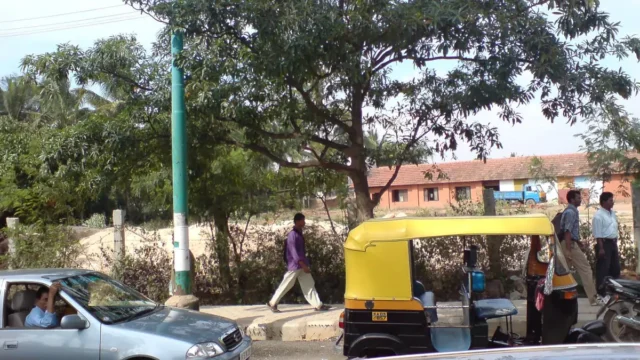
Vehicle data sold for ₹5: Centre orders CERT-In audit of VAHAN, SARATHI and e-Challan portals
The Ministry of Road Transport and Highways has asked CERT-In, India’s cyber-security agency, for a forensic audit of its VAHAN, SARATHI, e-Challan and pollution-certificate portals. A security firm found that owners’ names, addresses and phone numbers were being sold through apps and a Telegram channel for as little as ₹5. On the same day, The Hindu reported a separate leak of film certification records. For you, this connects cyber security, the right to privacy and the Digital Personal Data Protection Act, 2023.
UPSC angle: Prelims: CERT-In, Section 70B IT Act, VAHAN/SARATHI, Puttaswamy, DPDP Act 2023, GDPR. · Mains GS-III: cyber security and data protection.
25 Oct 2026
Census 2027: can private teachers be made enumerators? The Census Rules amendment and Article 23
Census 2027 needs over 30 lakh enumerators, the people who go door to door counting everyone. This month the Centre amended the Census Rules, 1990 to name teachers of private schools and staff of banks and companies as possible enumerators. But two High Courts had already stopped governments from forcing private-school teachers into Census duty. For you, it raises a classic exam question: can a rule make private citizens do public work, and what do the Census Act and Article 23 allow?
UPSC angle: Prelims: Entry 69 Union List, Census Act 1948, Article 23, Committee on Subordinate Legislation. · Mains GS-II: delegated legislation; federal administration of the Census.
25 Oct 2026
Cauvery panel tells Karnataka to release 3,000 cusecs to Tamil Nadu: Article 262 and the inter-State water dispute
The Cauvery Water Regulation Committee has told Karnataka to ensure 3,000 cusecs of water a day at Biligundlu for 15 days, and the Cauvery Water Management Authority has endorsed it. Tamil Nadu wanted almost five times more, including a claimed backlog. Karnataka says a weak monsoon has left its four Cauvery reservoirs 55% short and most of its taluks in drought. For you, this is a live case study of Article 262, water tribunals and how a dry year turns sharing into a crisis.
UPSC angle: Prelims: Cauvery source and tributaries, Article 262, ISWD Act 1956, CWMA. · Mains GS-II: inter-State water disputes; cooperative federalism.
25 Oct 2026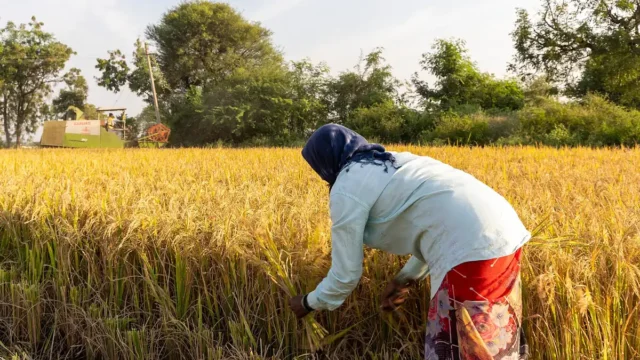
11 crore Farmer IDs created five months early under the Digital Agriculture Mission and Agri Stack
The Centre is building a digital register of farmers, so that each farmer has one verified identity for all schemes. Under the Digital Agriculture Mission, 11 crore Farmer IDs were created by the night of 23 October, five months before the March 2027 deadline. With this ID, farmers need not submit the same papers again and again for loans, crop insurance or relief. For you, this links Agri Stack, the Kisan Credit Card, PMFBY and land-record reform.
UPSC angle: Prelims: Digital Agriculture Mission, Agri Stack, KCC, PMFBY, DILRMP. · Mains GS-III: technology in agriculture; DBT.
25 Oct 2026Learn the concept
Question text as printed in the official UPSC Civil Services (Main) question paper. The model answer is original Battle IAS work; use it to learn structure, not to memorise.
Want every PYQ in one place? See the Battle IAS PYQ Book.