
UPSC Mains 2016 GS Paper 3 Q6: model answer
UpdatedComment on the challenges for inclusive growth which include careless and useless manpower in the Indian context. Suggest measures to be taken for facing these challenges.
What the question wants
Comment on how a poorly skilled, poorly employed workforce challenges inclusive growth, and suggest measures.
How to structure it
Comment and suggest.
- Read the phrase
- Challenges it creates
- Root causes
- Measures
- Conclusion
How to think it through
The phrase is harsh; reframe it. The workforce is not useless; it is under-skilled, under-nourished and under-employed. ASER and PLFS give you the evidence. Then fix it at three stages: school, skill, job.
Model answer
'Careless and useless manpower' is a harsh phrase. A fairer one is under-prepared manpower: ASER surveys have repeatedly found that only about half of Class 5 children can read a Class 2 text. A workforce built on that base struggles to share in growth.
Challenges for inclusive growth
- Low productivity: most workers are in farming or petty services earning little.
- Skill gap: very few workers have formal vocational training, unlike most workers in Germany or South Korea.
- Unemployable graduates alongside firms that cannot find skilled staff.
- Poor health: stunting and anaemia lower adult capacity.
- Low female participation wastes half the talent.
- Work culture: weak accountability in some public services.
Root causes
- Rote-based schooling and teacher shortages.
- Vocational training seen as second-rate.
- Weak link between colleges and employers.
- Nutrition gaps in the first 1,000 days.
- Weak public spending on education and health compared with peer economies.
Measures
- Foundational learning: NIPUN Bharat and NEP 2020.
- Vocational education from Class 6 and internships, as NEP proposes.
- Apprenticeships in industry and the PM Internship Scheme (2024).
- Health and nutrition: Poshan 2.0, Anaemia Mukt Bharat.
- Women's work: safe transport, hostels and childcare.
- Public sector accountability: Mission Karmayogi for civil servants.
Conclusion
People are not born careless or useless; systems make them so. Fix school, skill and health, and the same workforce becomes India's biggest asset.
Draw: A three-step staircase: learning, skill, job, with a missing step marked at each level.
Keywords, cases and data to drop in
human capital, ASER, NIPUN Bharat, NEP 2020, PMKVY, PM Internship Scheme, Poshan 2.0, Mission Karmayogi, female LFPR.
Where most answers lose marks
- Repeating the question's phrase as if it were a fact. Show you can reframe it respectfully.
Related Mains PYQs
- Examine the view that financial inclusion is an integral part of social and economic inclusion in a country like India. Also throw… UPSC 2026 · GS-III
- How are startups in India promoting entrepreneurship, innovation and employment? Discuss the global and domestic challenges in their working and suggest suitable… UPSC 2026 · GS-III
- Distinguish between the Human Development Index (HDI) and the Inequality-adjusted Human Development Index (IHDI) with special reference to India. Why is the… UPSC 2025 · GS-III
- Examine the pattern and trend of public expenditure on social services in the post-reforms period in India. To what extent this has… UPSC 2024 · GS-III
Fresh examples from current affairs
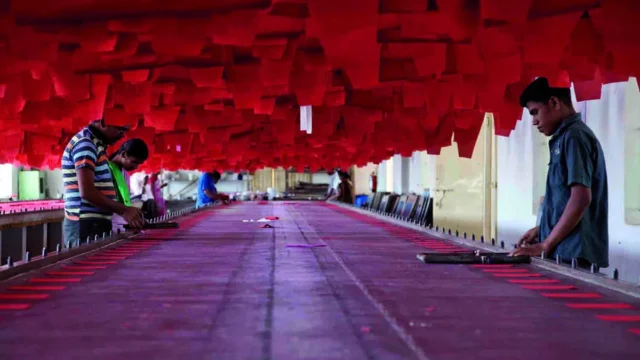
PM opens Arvind’s ₹150-crore garment plant in Varanasi, its first in UP
Prime Minister Narendra Modi inaugurated a garment factory of Arvind Limited, an Ahmedabad-based textile company, at Khochwan in Mirzamurad, Varanasi, on 25 October. Built for about ₹150 crore, it is Arvind's first manufacturing unit in Uttar Pradesh, and most of its jobs are meant for local women. Read it for U.P.'s textile push, PM MITRA parks and why garments create so many jobs.
UPSC angle: Prelims: PM MITRA, PLI for textiles. · Mains GS-III: labour-intensive manufacturing, women's employment.
27 Oct 2026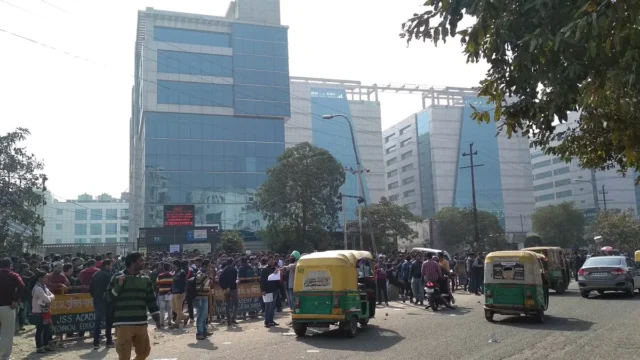
UP sets target of 500 Global Capability Centres by 2031
Uttar Pradesh wants big global companies to run their in-house technology, finance and research offices from its cities. At the UP GCC Innovation Summit 2026 in Lucknow on 26 October, Chief Minister Yogi Adityanath set a target of 500 Global Capability Centres (GCCs) in the State by 2031. Read it for what a GCC is, what the UP GCC Policy 2024 offers and why it matters for jobs.
UPSC angle: Prelims: meaning of GCC vs outsourcing. · Mains GS-III: services-led growth, employment, regional balance.
27 Oct 2026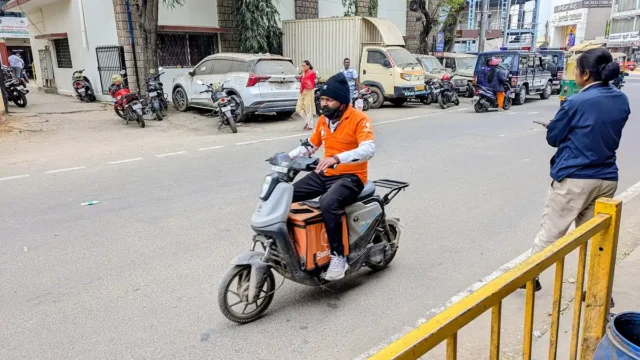
PLFS changes from January 2027: new stratum for platform workers and unpaid work questions
The National Statistics Office announced on 23 October 2026 changes to the Periodic Labour Force Survey from January 2027. A new sampling stratum will capture digital platform (gig) workers, who were under-counted, fresh samples will be drawn from an updated frame, and new questions will measure unpaid household, care and volunteer work. The public has 15 days to comment on the concept note.
UPSC angle: Prelims: PLFS, NSO, LFPR/WPR/UR, Code on Social Security 2020. · Mains GS-III: employment, gig economy, data quality.
23 Oct 2026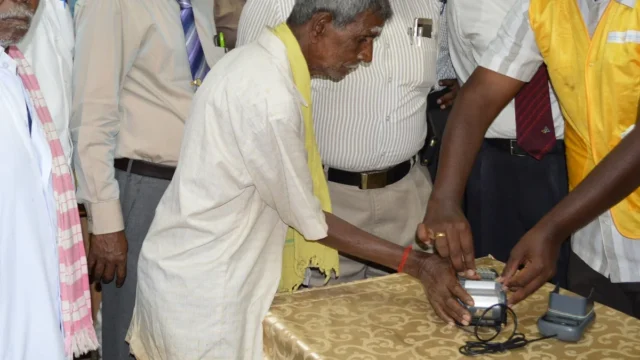
Financial inclusion saturation campaign in 2.70 lakh panchayats and ULBs from 21 October
The Department of Financial Services will run a nationwide campaign from 21 October to 31 December 2026 to saturate financial inclusion schemes in 2.70 lakh gram panchayats and urban local bodies. Bank camps will enrol people in PMJJBY, PMSBY and APY, open Jan Dhan accounts, finish re-KYC and nominations, and spread awareness on digital frauds and unclaimed deposits.
UPSC angle: Prelims: scheme parameters of PMJJBY, PMSBY, APY, PMJDY. · Mains GS-III: inclusive growth and financial inclusion.
20 Oct 2026Learn the concept
Question text as printed in the official UPSC Civil Services (Main) question paper. The model answer is original Battle IAS work; use it to learn structure, not to memorise.
Want every PYQ in one place? See the Battle IAS PYQ Book.