
UPSC Mains 2018 GS Paper 3 Q2: model answer
Comment on the important changes introduced in respect of the Long-term Capital Gains Tax (LCGT) and Dividend Distribution Tax (DDT) in the Union Budget for 2018-2019.
What the question wants
Comment on the main changes made to long-term capital gains tax and dividend distribution tax in the 2018–19 Budget.
How to structure it
Before, change, comment.
- Background
- LTCG change
- DDT change
- Comment
- What followed
How to think it through
Before 2018, long-term gains on listed equity held over a year were exempt (STT was paid instead). The 2018 Budget taxed such gains above ₹1 lakh at 10% without indexation, grandfathered to 31 January 2018. It levied a 10% DDT on equity mutual fund dividends to level the field with growth options.
Model answer
Since 2004, long-term gains on listed shares held for over a year had been fully exempt; the Securities Transaction Tax was collected instead. The 2018–19 Budget ended that exemption.
Changes in LTCG
- Long-term gains on listed equity and equity mutual funds above ₹1 lakh a year taxed at 10%, without indexation.
- Grandfathering: gains made up to 31 January 2018 stayed exempt, so the tax applied only to future appreciation.
Changes in DDT
- A 10% dividend distribution tax on dividends from equity-oriented mutual funds.
- Aim: remove the bias towards dividend options once growth gains became taxable.
Comment
- Equity: ends an exemption that mainly helped richer investors.
- Grandfathering protected past gains and avoided a market shock.
- Concerns: STT plus LTCG looked like double taxation; DDT taxed all unit-holders at one rate regardless of their income slab, hurting small investors.
What followed
The 2020 Budget abolished DDT and taxed dividends in investors' hands at slab rates. From July 2024, LTCG on equity rose to 12.5% with the exemption raised to ₹1.25 lakh.
The 2018 changes widened the base without shaking the market.
Draw: A before/after table: LTCG (exempt → 10%), DDT on equity MF (nil → 10%).
Keywords, cases and data to drop in
LTCG 10% above ₹1 lakh, grandfathering (31 January 2018), STT, indexation, DDT on equity mutual funds, dividend option, 2020 DDT abolition, 12.5% LTCG (2024).
Where most answers lose marks
- Mixing up DDT on company dividends (which already existed at 15%) with the new tax on equity mutual funds.
Related Mains PYQs
- Distinguish between Capital Budget and Revenue Budget. Explain the components of both these Budgets. UPSC 2021 · GS-III
- Explain the rationale behind the Goods and Services Tax (Compensation to States) Act of 2017. How has COVID-19 impacted the GST compensation… UPSC 2020 · GS-III
- Enumerate the indirect taxes which have been subsumed in the Goods and Services Tax (GST) in India. Also, comment on the revenue… UPSC 2019 · GS-III
- The public expenditure management is a challenge to the Government of India in the context of budget making during the post-liberalization period.… UPSC 2019 · GS-III
Fresh examples from current affairs
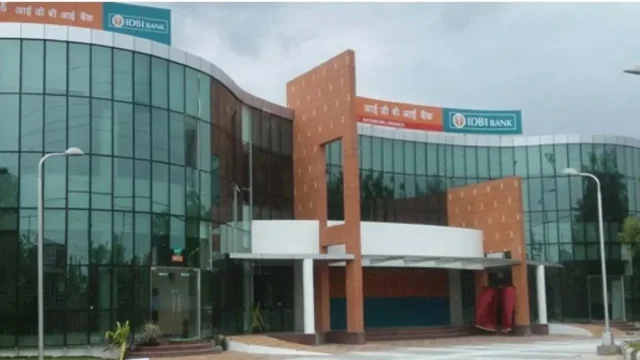
IDBI Bank strategic sale: Fairfax arm wins 60.72% stake for ₹52,878 crore
On 14 October 2026 the Cabinet Committee on Economic Affairs approved 10955230 Canada Inc., a Fairfax Financial Holdings entity, as strategic buyer of 60.72% of IDBI Bank for about Rs. 52,878 crore. The Government sells 30.48% and LIC 30.24%. The winning bid of Rs. 81 a share beat the Rs. 75.99 benchmark.
UPSC angle: Prelims: stake split, residual holdings, PCA dates, valuation methods. · Mains GS-III: disinvestment, bank privatisation, FDI in financial services.
14 Oct 2026
NLMC’s first end-to-end e-auction of RINL land: ₹366.33 crore on Day 1
On 13 October 2026 the National Land Monetization Corporation held Day 1 of its first end-to-end e-auction of surplus RINL land in Visakhapatnam. Buyers took 150 plots for ₹366.33 crore against a ₹312.48 crore reserve. Phase 2, covering 216 plots, is set for 30 October 2026.
UPSC angle: Prelims: NLMC, RINL, auction figures. · Mains GS-III: asset monetisation and CPSE reform.
13 Oct 2026
MoSPI drafts first guideline for States to estimate GSDP by the expenditure approach (base 2022-23)
The National Statistics Office has released a draft guideline for States and UTs to estimate Gross State Domestic Product from the expenditure side, with base year 2022-23. Today some States compile government consumption and capital formation, but none estimates private consumption. Comments are invited till 28 October 2026.
UPSC angle: Prelims: GDP measurement concepts. · Mains GS-III: national income accounting.
9 Oct 2026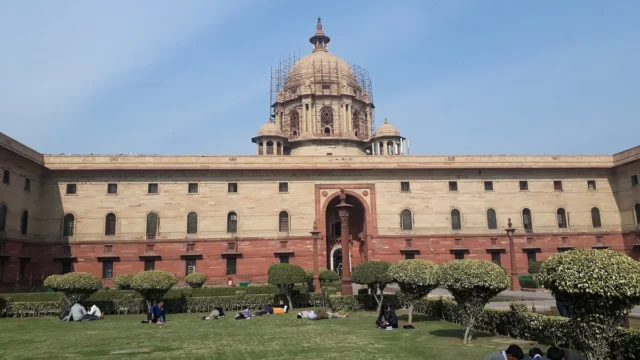
57th GST Council: arrest provisions to go, prosecution threshold raised to ₹5 crore
The 57th GST Council meeting on 8 October 2026 focused on process reform rather than rates. It recommended removing arrest powers under GST, raising the prosecution threshold from ₹1 crore to ₹5 crore, cutting the general penalty from ₹25,000 to ₹10,000, no notices below ₹10,000 tax, wider input tax credit and refunds, and limits on interception of goods in transit.
UPSC angle: Prelims: GST Council structure, Article 279A. · Mains GS-III: indirect tax reform; GS-II: fiscal federalism.
8 Oct 2026Learn the concept
Question text as printed in the official UPSC Civil Services (Main) question paper. The model answer is original Battle IAS work; use it to learn structure, not to memorise.
Want every PYQ in one place? See the Battle IAS PYQ Book.