
Bengaluru start-up plans India’s first private fusion reactor
Today’s nuclear plants split heavy atoms like uranium; this is fission. Fusion joins light atoms, the way the Sun makes energy, and leaves little long-lived waste. A Bengaluru start-up, Pranos Fusion, has built a small test machine called PRAGYA and plans to finalise the design of a bigger reactor, PRANIK, by 2027. Read it to revise fusion, tokamaks and ITER.
- Company
- Pranos Fusion, Bengaluru
- Test machine
- PRAGYA (small tokamak)
- Planned reactor
- PRANIK, design by 2027
- Heat needed
- About 100 million °C
UPSC has already asked about this. Read the story with these questions in mind.
Private fusion in India: what happened?
Fusion has been called the energy of the future for decades because it is so hard to control. Now private companies around the world, and one in India, are trying to speed it up.
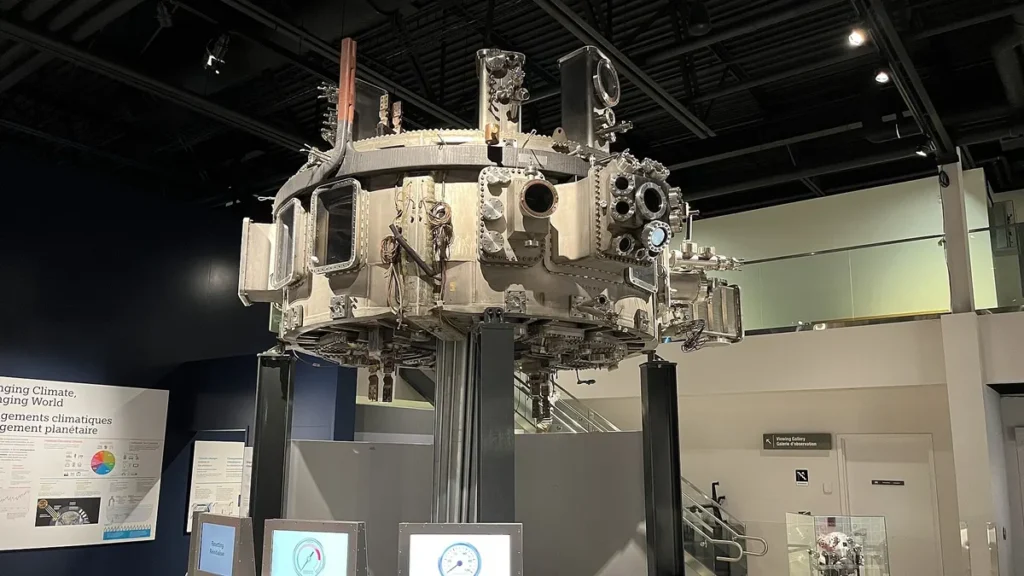
- Pranos Fusion, a Bengaluru start-up, has built PRAGYA, a small doughnut-shaped tokamak to test plasma control and superconducting magnets.
- It plans a larger tokamak, PRANIK, with plasma hotter than the Sun’s interior. Its blueprint is due by 2027.
- This makes it India’s first private company aiming at a fusion power reactor.
How is fusion different from fission?
In fission, a heavy nucleus like uranium-235 splits into smaller ones and releases energy. All of India’s nuclear power plants use fission.
In fusion, light nuclei join. The most common plan joins deuterium and tritium (forms of hydrogen) to make helium and a fast neutron, releasing huge energy.
Fusion needs about 100 million °C. At this heat, matter becomes plasma, and strong magnets in a doughnut-shaped machine called a tokamak keep it away from the walls.
ITER, being built in Cadarache, France, is the main global fusion project. India joined it in 2005. India’s Institute for Plasma Research in Gandhinagar runs the Aditya and SST-1 tokamaks.
How do fission and fusion compare?
| Point | Fission | Fusion |
|---|---|---|
| Process | Heavy atom splits | Light atoms join |
| Fuel | Uranium, plutonium | Deuterium, tritium |
| Waste | Long-lived radioactive waste | Little long-lived waste |
| Status | Used in power plants | Still experimental |
Which laws and Articles apply?
- Atomic Energy Act, 1962: nuclear power is controlled by the Centre.
- Department of Atomic Energy and the Atomic Energy Regulatory Board oversee nuclear work.
- Nuclear Energy Mission (2025): opening space for private players in nuclear power.
- ITER: India is one of seven members (with the EU, US, Russia, China, Japan and South Korea).
Why does private fusion in India matter?
| Angle | What to note |
|---|---|
| Clean energy | Fusion could give steady power with no carbon emissions. |
| Science | Needs advances in magnets, materials and plasma control. |
| Private sector | Shows start-ups entering deep-tech energy. |
| Safety | No chain reaction, so no runaway accident. |
What are the problems with private fusion in India?
- No fusion machine anywhere yet makes more usable power than it uses.
- Very high costs and long timelines.
- Tritium is rare and must be bred.
- India’s laws on private nuclear work are still changing.
What should be done next on private fusion in India?
- Fund basic fusion research and testing facilities.
- Create clear rules for private fusion firms.
- Link start-ups with the Institute for Plasma Research and ITER work.
- Train scientists and engineers in plasma physics.
What can Prelims ask on private fusion in India?
Prelims probability: Expect a question on fusion versus fission: fusion joins light nuclei such as deuterium and tritium; ITER in France is the global project, with India a member.
- Fusion joins light nuclei (deuterium, tritium) into helium.
- Fission splits heavy nuclei (uranium-235).
- Tokamak: doughnut-shaped machine using magnets to hold plasma.
- ITER: Cadarache, France; India a member since 2005.
- Indian tokamaks: Aditya and SST-1 at the Institute for Plasma Research, Gandhinagar.
How to write about private fusion in India in Mains
Practice question (15 marks, 250 words): What is nuclear fusion? Discuss its promise and challenges for India’s energy future.
- Intro: Pranos Fusion’s PRAGYA and PRANIK.
- Fusion vs fission; tokamak basics.
- Promise: clean, safe, abundant energy.
- Challenges: cost, technology, tritium, rules.
- Conclusion: long-term research with public-private partnership.
Ready lines for your answer
- Fusion is the Sun's power in a bottle.
- Private innovation can speed up clean energy research.
Quotable data pointFusion needs about 100 million °C to work.
Photo: Maury Markowitz, CC0, via Wikimedia Commons
Exam angle
Prelims: fusion vs fission, tokamak, ITER, Indian tokamaks. · Mains GS-III: nuclear energy and technology.
Practice MCQs
Original practice questions (not PYQs).
Consider the following statements:
1. Nuclear fusion joins light nuclei such as deuterium and tritium.
2. ITER is located in France and India is one of its members.
3. A tokamak uses powerful magnets to hold hot plasma.
How many of the above statements are correct?
Answer (c) & explanation
All three are correct. Fusion needs about 100 million degrees Celsius, so magnets keep the plasma away from the walls.
The function of heavy water in a nuclear reactor is to:
Answer (d) & explanation
Heavy water acts as a moderator: it slows neutrons so that they can split more uranium nuclei.
Questions students ask about this
What is nuclear fusion?
Joining light atoms, such as deuterium and tritium, to make a heavier atom and release energy, as in the Sun.
What is PRAGYA?
A small test tokamak built by Bengaluru start-up Pranos Fusion.
What is a tokamak?
A doughnut-shaped machine that uses strong magnets to hold very hot plasma for fusion.
Is India a member of ITER?
Yes. India joined ITER in 2005.