
Karnataka finds 2,500 acres for Mekedatu dam land swap
Mekedatu is a gorge on the Cauvery river in Karnataka, close to the Tamil Nadu border. Karnataka wants to build a big reservoir there, but the project needs forest land, so it must give other land to the Forest Department. The Chief Minister says 2,500 acres have been found. Tamil Nadu opposes the project. Read it to revise the Cauvery dispute and how water disputes are settled.
- Land found
- 2,500 acres
- Storage
- 66 tmc
- Power
- About 400 MW
- Location
- Near Kanakapura, Karnataka
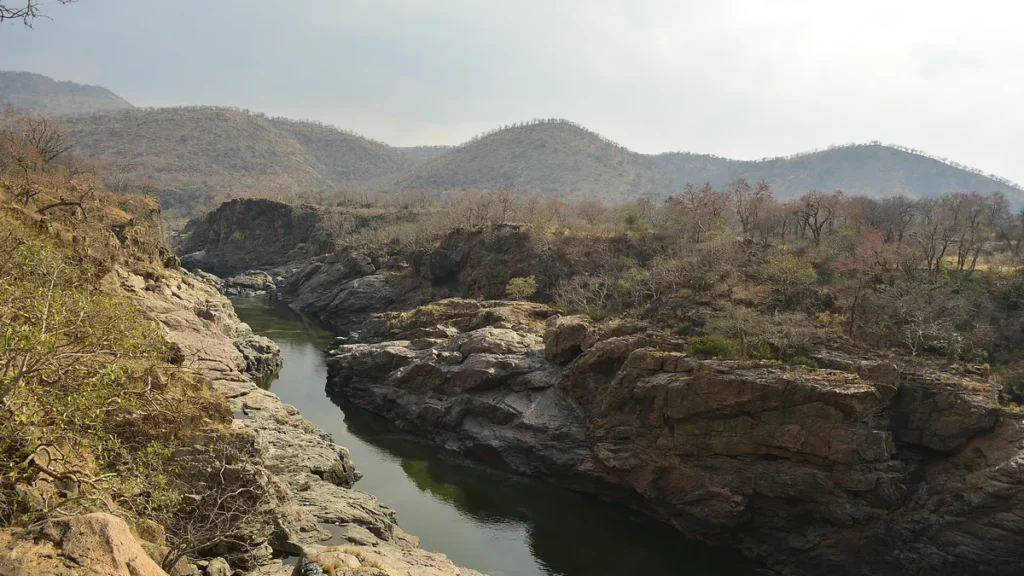
The Mekedatu project: what happened?
Bengaluru needs more drinking water. Tamil Nadu fears a new dam upstream will cut its share. The Cauvery has been the centre of this tug of war for over a century.
- Chief Minister D.K. Shivakumar said 2,500 acres, including forest land, have been identified as alternative land for the forest land the project needs.
- A committee headed by the Deputy Commissioner of Mandya district worked on the land.
- The reservoir would hold 66 tmc (thousand million cubic feet) of water.
- It is meant to supply drinking water to Bengaluru and nearby areas and make about 400 MW of power.
- Tamil Nadu opposes the project.
What is the Cauvery dispute?
The Cauvery rises at Talakaveri in Kodagu, Karnataka, and flows through Karnataka and Tamil Nadu into the Bay of Bengal. Kerala and Puducherry also share its waters.
The Cauvery Water Disputes Tribunal gave its final award in 2007. In 2018 the Supreme Court changed it slightly, giving Karnataka 284.75 tmc and Tamil Nadu 404.25 tmc, and ordered the Cauvery Water Management Authority to be set up.
Tamil Nadu says any new reservoir upstream needs its consent and could reduce flows. Karnataka says Mekedatu is for drinking water and will not affect Tamil Nadu’s share.
Under the Forest (Conservation) Act, 1980, forest land used for projects must be made up for by giving other land for compensatory afforestation. Part of the project area falls in the Cauvery Wildlife Sanctuary.
Which laws and Articles apply?
- Article 262: Parliament can make laws for inter-State river disputes and bar courts from hearing them.
- Inter-State River Water Disputes Act, 1956: sets up tribunals.
- Forest (Conservation) Act, 1980 (now Van (Sanrakshan Evam Samvardhan) Adhiniyam): forest land diversion and compensatory land.
- Cauvery Water Management Authority (2018): enforces water sharing.
Why does the Mekedatu project matter?
| Angle | What to note |
|---|---|
| Federalism | Shows tension between States over shared rivers. |
| Urban water | Bengaluru’s drinking water needs are growing. |
| Environment | Forest and wildlife habitat will be lost. |
| Law | Tests the role of tribunals and the Supreme Court. |
What are the problems with the Mekedatu project?
- Tamil Nadu has not agreed, so the project may face legal hurdles.
- Forest and wildlife areas will be drowned.
- Compensatory land is often not as rich as the forest lost.
- Water disputes drag on for decades.
What should be done next on the Mekedatu project?
- Discuss the project in the Cauvery Water Management Authority.
- Do a full environmental impact study with public hearings.
- Fix Bengaluru’s water leaks and reuse wastewater.
- Build trust through data sharing on river flows.
What can Prelims ask on the Mekedatu project?
Prelims probability: Expect a question on the Cauvery basin: protected areas such as Nagarhole and Sathyamangalam, or tributaries such as the Hemavathi and Kabini.
- Cauvery: rises at Talakaveri, Kodagu; tributaries include Hemavathi, Kabini, Bhavani.
- Protected areas in the basin: Nagarhole, Bandipur, Sathyamangalam, Cauvery Wildlife Sanctuary.
- Article 262 and Inter-State River Water Disputes Act, 1956.
- 2018 Supreme Court verdict: Karnataka 284.75 tmc, Tamil Nadu 404.25 tmc.
- Mekedatu reservoir: 66 tmc storage; about 400 MW power.
How to write about the Mekedatu project in Mains
Practice question (15 marks, 250 words): Inter-State river disputes in India remain unresolved for decades. Examine with reference to the Mekedatu project.
- Intro: 2,500 acres for land swap; Tamil Nadu’s objection.
- Cauvery dispute history; 2007 award; 2018 verdict.
- Article 262, tribunals, CWMA.
- Problems: delays, distrust, environment.
- Conclusion: basin-level planning and cooperation.
Ready lines for your answer
- Rivers do not follow State borders; neither should water planning.
- Trust and data matter as much as tribunals.
Quotable data pointThe Mekedatu reservoir would store 66 tmc and make about 400 MW.
Photo: Shridhar ht, CC BY-SA 4.0, via Wikimedia Commons
Exam angle
Prelims: Cauvery tributaries, protected areas, Article 262. · Mains GS-II: inter-State water disputes.
Practice MCQs
Original practice questions (not PYQs).
The Mekedatu balancing reservoir project, in the news, is proposed on which river?
Answer (b) & explanation
Mekedatu is a gorge on the Cauvery near Kanakapura in Karnataka, close to the Tamil Nadu border.
Which of the following pairs of protected areas lie in the Cauvery basin?
Answer (a) & explanation
Nagarhole, Sathyamangalam and Wayanad lie in the Cauvery basin. Papikonda is in the Godavari basin, Silent Valley drains west to the Arabian Sea and Kaziranga is in Assam.
Questions students ask about this
Where is Mekedatu?
A gorge on the Cauvery near Kanakapura in Karnataka, close to the Tamil Nadu border.
How much water will the Mekedatu reservoir store?
66 tmc (thousand million cubic feet).
Why does Tamil Nadu oppose the project?
It fears a new upstream reservoir will reduce the Cauvery water that reaches it.
Which Article deals with inter-State water disputes?
Article 262.