
UPSC Prelims 2017 · GS Paper I: 'Broad-based Trade and Investment Agreement (BTIA)' is sometimes seen in the news in the…
'Broad-based Trade and Investment Agreement (BTIA)' is sometimes seen in the news in the context of negotiations held between India and
Answer (a) & explanation
The BTIA was negotiated between India and the European Union (a). The Broad-based Trade and Investment Agreement was the name for the India–EU free trade talks that began in 2007. They stalled in 2013 over car and wine tariffs, data security and the movement of professionals. They were relaunched in 2022 as three tracks: a trade agreement, an investment protection agreement, and a geographical indications pact. India and the EU concluded the FTA on 27 January 2026 at the 16th India–EU Summit. The GCC (b), OECD (c) and SCO (d) are not linked to the BTIA.
The FTA still needs signing and ratification, and is expected to take effect around 2027. Notice the sticking point that remains: the EU's CBAM carbon border tax.
Answer as per the official UPSC answer key.
Same theme in UPSC Mains
- MAINS UPSC Mains 2026 · GS Paper III · Q14Discuss the different types of subsidies and supports provided by the Government of India to agricultural sector. Examine the related issues pertaining to Agreement on Agriculture…
- MAINS UPSC Mains 2025 · GS Paper III · Q18Write a review on India’s climate commitments under the Paris Agreement (2015) and mention how these have been further strengthened in COP26 (2021). In this direction,…
Related questions from other years
Which one of the following best describes the key objective of India's 'Open Network for Digital Commerce' (ONDC) initiative ?
Answer (c) & explanation
ONDC aims to break the dominance of large platforms (c). The Open Network for Digital Commerce, a DPIIT initiative (2021-22), is an open set of rules, like UPI for shopping. A buyer on one app can buy from a seller listed on another app. This interoperability lets small sellers reach buyers without joining a giant platform. Option (a) is wrong: it does not give the government control of transactions. Option (b) is wrong: private players can join; they are not replaced. Option (d) is wrong: it does not force UPI payments.
Notice ONDC's design: it is a not-for-profit company and part of India's Digital Public Infrastructure, along with Aadhaar, UPI and DigiLocker. It now covers food, groceries and mobility too.
options (a), (b) and (d) use strong words: "all", "replace", "mandate". A public digital platform usually opens a market; it does not take it over.
Answer as per the official UPSC answer key.
Which one of the following statements about Unified Payments Interface (UPI) and Central Bank Digital Currency (Digital Rupee) is not correct ?
Answer (d) & explanation
Statement (d) is not correct (d). Under UPI, money moves between bank accounts; the deposit is a liability of the bank. The Digital Rupee (e₹) is like a currency note in digital form, a direct liability of the RBI, not of users or banks. Option (a) is correct: UPI is a payment system, while the e-rupee is sovereign currency. Option (b) is correct: an e-rupee transfer moves value from wallet to wallet with no separate settlement. Option (c) is correct: e-rupee wallet transactions do not appear in bank statements.
Notice the legal base: the RBI Act was amended in 2022 to let the RBI issue a CBDC. Pilots began that year in wholesale (e₹-W) and retail (e₹-R) forms.
a "not correct" question. Look for the statement that puts the RBI's liability on someone else.
Answer as per the official UPSC answer key.
Which of the following statements about Real-World Assets (RWA) Tokenization are correct ?
- 1. Tokenization is the process of turning real world assets into digital tokens using blockchain technology.
- 2. Tokenization of real world assets offers 24x7 access, promoting financial inclusion.
- 3. Tokenization of real world assets will allow the access to high growth investment opportunities for individuals in India.
Select the answer using the code given below :
Answer (a) & explanation
All three statements are correct (a). Statement 1 is right: tokenization turns a real asset, like a building, bond or gold, into digital tokens recorded on a blockchain. Statement 2 is right: tokens can be traded 24x7, which widens financial inclusion. Statement 3 is right: small, fractional tokens let ordinary individuals get into high-growth investments that once needed crores. So options (b), (c) and (d) fail.
Notice the risks: unclear regulation, cyber threats and weak investor protection. In India, related steps include Fractional Ownership Platforms and REITs and InvITs, which already let small investors own slices of real estate and infrastructure. The RBI is also testing tokenized deposits and government securities in sandbox pilots.
Answer as per the official UPSC answer key.
A bond whose proceeds are used only to finance or refinance a combination of both environmental and social projects is called :
Answer (c) & explanation
This is a sustainability bond (c). Under the ICMA principles followed worldwide, a bond that funds a mix of environmental and social projects is a sustainability bond. Option (a) is wrong: a green bond funds only environmental projects, like solar power. Option (b) is wrong: a social bond funds only social projects, like affordable housing. Option (d) is wrong: a sovereign bond is any bond issued by a national government, whatever its use.
Notice India's practice: India has issued Sovereign Green Bonds since January 2023, with the money going to projects like metro rail and renewable energy. A sustainability-linked bond is different: its money can go anywhere, but its interest rate depends on meeting ESG targets.
"Green Bond" is the most familiar term. The words "both environmental and social" point to the combined label.
Answer as per the official UPSC answer key.
In the news since
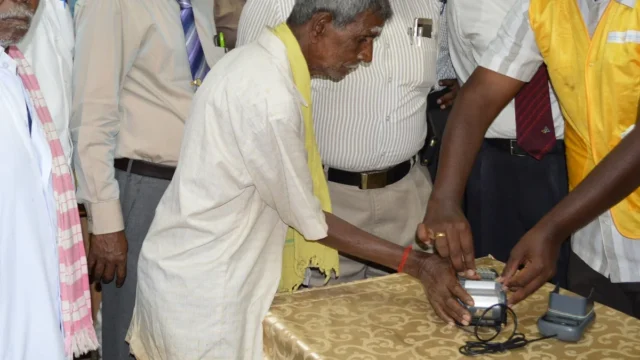
Financial inclusion saturation campaign in 2.70 lakh panchayats and ULBs from 21 October
The Department of Financial Services will run a nationwide campaign from 21 October to 31 December 2026 to saturate financial inclusion schemes in 2.70 lakh gram panchayats and urban local bodies. Bank camps will enrol people in PMJJBY, PMSBY and APY, open Jan Dhan accounts, finish re-KYC and nominations, and spread awareness on digital frauds and unclaimed deposits.
20 Oct 2026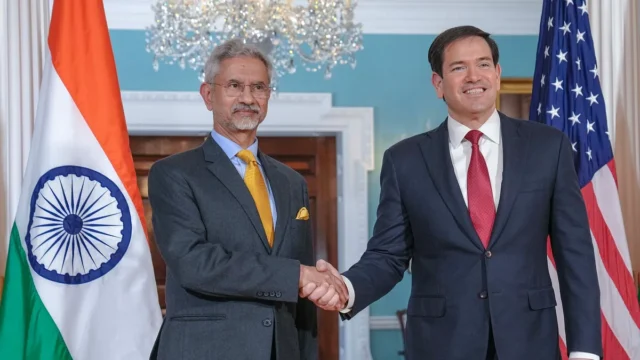
Rubio in Mumbai: India–US trade deal ‘very, very close’; energy and defence on the table
US Secretary of State Marco Rubio began his second India visit of the year in Mumbai on 20 October 2026 and met External Affairs Minister S. Jaishankar on trade, energy, technology and defence. Rubio said the two sides are ‘very, very close’ to a trade deal with ‘a small number of items left’, and praised India’s progress in diversifying energy supplies.
20 Oct 2026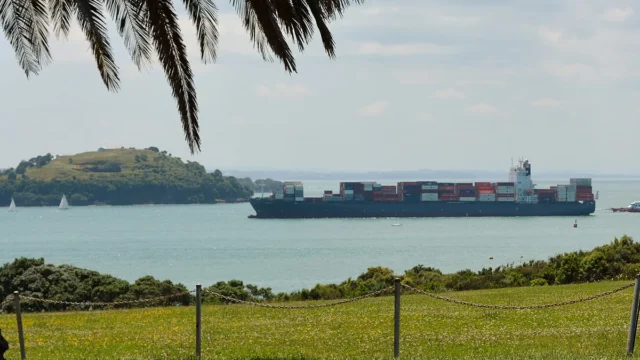
India–New Zealand FTA enters into force: zero duty on all Indian exports from day one
The India–New Zealand Free Trade Agreement came into force on 20 October 2026. From day one, New Zealand charges no customs duty on any Indian export, the first time India has got full duty-free access on all tariff lines at entry into force. New Zealand has also committed to facilitate USD 20 billion of investment into India, while dairy, sugar and edible oils stay protected.
20 Oct 2026