
Centre doubles open-market rice sale target; weekly stock disclosure ordered
The Centre has doubled the rice sale target under the Open Market Sale Scheme (Domestic) to 50 lakh tonnes for 2026-27. Traders must also disclose rice and paddy stocks every week. Read it to revise OMSS, the Essential Commodities Act and food security.
- New OMSS rice target
- 50 lakh tonnes (was 25)
- Sold by 31 October
- 25 lakh tonnes
- Same time last year
- 11 lakh tonnes
- Stock disclosure
- Every Friday, online
UPSC has already asked about this. Read the story with these questions in mind.
Rice sales: what happened?
Government godowns are full of rice. Now the Centre wants to sell more of it in the open market to keep prices calm.
- The OMSS (Domestic) rice target for 2026-27 was doubled from 25 to 50 lakh tonnes.
- 25 lakh tonnes were already sold by 31 October, against 11 lakh tonnes last year.
- Traders must post rice and paddy stocks every Friday on foodstock.dfpd.gov.in in six categories.
- Five southern States got the Centre’s nod to set stock limits till 31 January 2027 under Sections 6 and 7 of the Essential Commodities Act.
- More Bharat Rice will be sold through cooperatives.
What is the Open Market Sale Scheme?
The Food Corporation of India (FCI) buys grain from farmers at minimum support price and stores it.
Under OMSS, FCI sells extra wheat and rice in the open market to traders, processors and States. This adds supply and cools prices.
Stock disclosure helps the government spot hoarding early.
OMSS rice
| Item | Figure |
|---|---|
| Old target | 25 lakh tonnes |
| New target | 50 lakh tonnes |
| Sold by 31 Oct 2026 | 25 lakh tonnes |
| Sold by 31 Oct 2025 | 11 lakh tonnes |
Which laws and Articles apply?
- Essential Commodities Act, 1955: lets government control supply, set stock limits and stop hoarding.
- National Food Security Act, 2013: subsidised grain for up to 75% of rural and 50% of urban people.
- Food Corporation of India: set up in 1965 to buy, store and move grain.
- Department of Food and Public Distribution runs OMSS policy.
Why does the rice sale push matter?
| Angle | What to note |
|---|---|
| Prices | More supply keeps rice affordable. |
| Storage | Clears full godowns before new crop. |
| Hoarding | Weekly data stops stock games. |
| Prelims | OMSS, ECA, NFSA basics. |
What are the problems with the rice sale push?
- Too much stock costs a lot to store.
- Open sale may depress farm prices.
- Stock limits can hurt honest traders.
- Grain may be diverted from the poor.
What should be done next on the rice sale push?
- Match procurement with real need.
- Use surplus rice for ethanol and exports carefully.
- Keep stock rules simple and short-term.
- Improve storage to cut wastage.
What can Prelims ask on the rice sale push?
Prelims probability: High — Open Market Sale Scheme numbers and Essential Commodities Act / National Food Security Act static are classic Prelims territory.
- OMSS: FCI sells surplus grain in the open market.
- ECA 1955 allows stock limits.
- NFSA 2013 coverage: 75% rural, 50% urban.
- FCI set up in 1965.
- New OMSS rice target: 50 lakh tonnes.
How to write about the rice sale push in Mains
Practice question (15 marks, 250 words): Large grain stocks are both a strength and a burden for India’s food economy. Discuss with reference to OMSS.
- Intro: target doubled to 50 lakh tonnes.
- Why stocks pile up.
- OMSS and stock limits as tools.
- Risks to farmers and traders.
- Conclusion: balance buying and selling.
Ready lines for your answer
- A full godown is safety only if grain moves on time.
- Open-market sales turn surplus into price control.
Quotable data pointOMSS rice target doubled to 50 lakh tonnes for 2026-27.
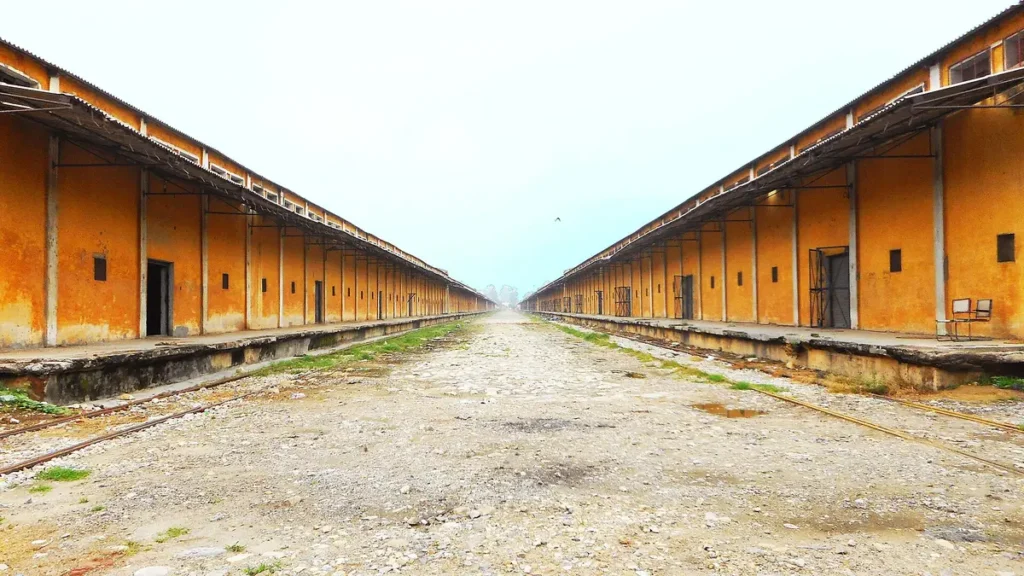
Photo: Prabhat1729, CC BY-SA 4.0, via Wikimedia Commons
Exam angle
Prelims: OMSS, ECA, NFSA, FCI. · Mains GS-III: food security and PDS.
Practice MCQs
Original practice questions (not PYQs).
The Open Market Sale Scheme (Domestic) rice target for 2026-27 was raised to:
Answer (d) & explanation
The Centre doubled the target from 25 lakh tonnes to 50 lakh tonnes; 25 lakh tonnes had already been sold by 31 October.
Consider the following statements:
Answer (b) & explanation
Statements 1 and 2 are correct. Weekly Friday disclosure is required on the Food Stock Portal; violators face action under Sections 6 and 7 of the Essential Commodities Act, 1955. Statement 3 is wrong — concurrence was for five southern States, not all States indefinitely.
Questions students ask about this
What did the Centre change?
It doubled the OMSS rice target to 50 lakh tonnes for 2026-27.
Why weekly stock disclosure?
To spot hoarding and keep rice prices stable.
Which law allows stock limits?
The Essential Commodities Act, 1955 (Sections 6 and 7 are cited).
Who sells the rice?
The Food Corporation of India, under OMSS.