
Path clears for Civil Services 2025 as Court pushes creamy-layer fix
The Supreme Court has refused to delay its March 2026 creamy-layer judgment any further. The Centre gets two more months to act, and service allocation for the Civil Services 2025 batch can now go ahead. The key idea: a parent’s salary alone cannot decide if a child is in the OBC creamy layer. Read it to revise Article 16(4), Indra Sawhney and the creamy-layer test.
- Bench
- Justices P. S. Narasimha and R. Mahadevan
- Judgment
- 11 March 2026
- CSE 2025 batch
- 958 selected, plus 148 for Indian Forest Service
- Income ceiling
- ₹8 lakh a year since 2017
The creamy-layer case: what happened?
About 100 OBC candidates cleared the toughest exam in India but lost their posts over a salary rule. The Supreme Court says that rule was read wrongly.
- The Supreme Court refused to put off its 11 March 2026 creamy-layer judgment any further.
- The Centre got two more months to carry it out.
- This clears the way for service allocation of the Civil Services 2025 batch (958 candidates) and 148 Indian Forest Service selectees.
- Nearly 100 OBC candidates whose certificates were rejected since 2016 may now get posts as per their merit.
- Past appointments that are already settled will not be reopened.
What is the creamy layer?
OBC reservation in central jobs is 27%. But the better-off among OBCs — the ‘creamy layer’ — cannot use it. This idea came from the Indra Sawhney case of 1992.
A 1993 government order (Office Memorandum) decides who is creamy layer. For children of government servants, it looks at the parent’s post (like Group A or B), not salary.
From 2016, the government used a 2004 clarification to count salary for children of PSU and private employees. Many candidates were rejected this way. The Court said salary alone cannot decide it.
Who is creamy layer?
| Parent’s job | How it is judged |
|---|---|
| Central or State government | By post category (Group A / B), not salary |
| PSU or private sector | Must match equivalent posts — salary alone is not enough |
| Business, farming, other income | Income test: above ₹8 lakh a year |
Which laws and Articles apply?
- Article 16(4): lets the State reserve posts for backward classes not adequately represented.
- Indra Sawhney v Union of India (1992): upheld 27% OBC quota and ordered creamy-layer exclusion.
- 1993 Office Memorandum of the Department of Personnel and Training (DoPT): the main creamy-layer rules.
- Article 338B: National Commission for Backward Classes, a constitutional body since 2018.
Why does the creamy-layer ruling matter?
| Angle | What to note |
|---|---|
| Equality | Fair reading of who needs the quota. |
| Exams | Unlocks CSE 2025 postings. |
| Governance | Shows how executive orders shape rights. |
| Polity Prelims | Article 16(4), Indra Sawhney, NCBC. |
What are the problems with the creamy-layer ruling?
- Salary vs post-category rules have confused candidates for years.
- The ₹8 lakh ceiling has not been revised since 2017.
- PSU and private posts lack clear equivalence to government grades.
- Long legal fights delayed careers of selected candidates.
What should be done next on the creamy-layer ruling?
- Finish the equivalence of PSU and private posts quickly.
- Review the income ceiling on a fixed schedule.
- Publish clear, simple rules for certificate checks.
- Settle the cases of the roughly 100 candidates within the two months.
What can Prelims ask on the creamy-layer ruling?
Prelims probability: High — fresh Supreme Court creamy-layer reading with crisp Group A or B versus salary-only test; strong polity Prelims and Mains hook.
- Creamy layer comes from Indra Sawhney (1992).
- OBC quota in central jobs: 27%.
- Income ceiling ₹8 lakh since 2017.
- For government servants’ children, post category matters, not salary.
- NCBC: constitutional status under Article 338B.
How to write about the creamy-layer ruling in Mains
Practice question (15 marks, 250 words): The creamy-layer test should separate the truly advanced from the backward among OBCs. Discuss in light of the recent Supreme Court ruling.
- Intro: the March 2026 ruling and refusal to defer.
- Origin: Indra Sawhney and the 1993 order.
- Problem: salary-only test for PSU/private parents.
- Way forward: equivalence, regular ceiling review.
- Conclusion: fair filter, faster jobs.
Ready lines for your answer
- Reservation works best when it reaches those who still need it.
- A rule read too strictly can punish merit as much as a rule read too loosely.
Quotable data pointCSE 2025: 958 selected; nearly 100 OBC candidates rejected since 2016 may get posts.
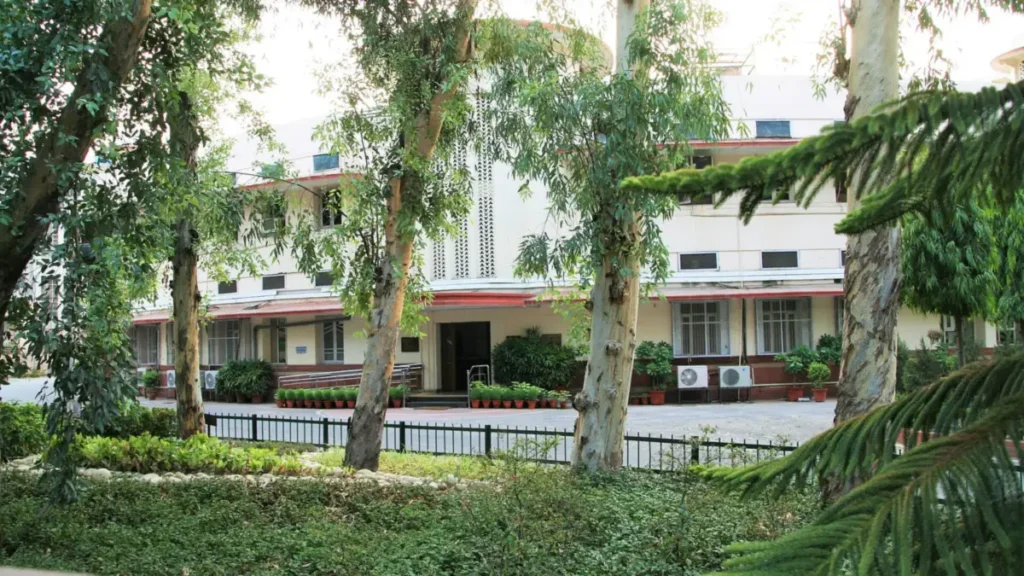
Photo: Ramesh lalwani, CC BY-SA 4.0, via Wikimedia Commons
Exam angle
Prelims: Article 16(4), Indra Sawhney, NCBC. · Mains GS-II: reservation and social justice.
Practice MCQs
Original practice questions (not PYQs).
Consider the following statements:
Answer (b) & explanation
Statements 1 and 3 are correct. The Court said salary alone cannot decide creamy-layer status when parents work in public sector undertakings or the private sector; past concluded appointments are not reopened. Statement 2 is wrong — the income ceiling has stood at ₹8 lakh since 2017, not ₹12 lakh.
The Supreme Court’s November 2026 order on creamy layer is expected to unlock service allocation for which of the following?
Answer (b) & explanation
Reports said the order unlocks service allocation and training for the Civil Services Examination 2025 batch of 958 candidates and 148 Indian Forest Service selectees. Past concluded appointments are not reopened.
With reference to Other Backward Classes creamy layer, which one of the following is correct?
Answer (b) & explanation
The Court restored the primacy of the 1993 Office Memorandum: a clarificatory letter such as the 2004 Department of Personnel and Training note cannot introduce a substantive condition missing from the parent policy.
Questions students ask about this
What did the Supreme Court decide now?
It refused to delay its March 2026 creamy-layer judgment further and gave the Centre two more months.
Can salary alone decide creamy layer?
No. For PSU and private employees' children, salary alone cannot decide it; the post must also be seen.
What is the income limit?
₹8 lakh a year, unchanged since 2017.
Who gains?
The Civil Services 2025 batch gets allocation, and nearly 100 OBC candidates rejected since 2016 may get posts.