
Petrol samples in Karnataka show ethanol as high as 31 percent
Petrol samples tested in six Karnataka districts showed up to 31.2% ethanol. The legal blend is 20% (E20). The State says company labs hid the real figures; oil companies dispute how the tests were done. Read it to revise E20, the National Policy on Biofuels and the pros and cons of ethanol.
- Highest sample
- 31.2% ethanol (Indian Oil)
- Allowed blend
- 20% (E20)
- Districts tested
- Six in Karnataka
- Tested by
- State Legal Metrology department
Ethanol in petrol: what happened?
You pay for petrol. Some Karnataka pumps may be giving you nearly one-third ethanol.
- Legal Metrology officials took petrol samples in six Karnataka districts.
- Ethanol went as high as 31.2% against the set 20% blend.
- Results: Indian Oil 31.2 and 20.8; Hindustan Petroleum 30.5, 27.0 and 22.4; Bharat Petroleum 24.2, 22.6 and 26.5; Mangalore Refinery 19.2; Nayara 26.1 and 20.6; Shell 25.5 and 13.5.
- Minister Rizwan Arshad said company labs hid the true ethanol share; accredited labs confirmed the high blends.
- Oil companies dispute the test method.
What is ethanol blending?
Ethanol is an alcohol made mostly from sugarcane juice, molasses, grains like maize and rice, and farm waste. Mixing it with petrol cuts oil imports and pollution.
India reached 20% blending (E20) in 2025, well ahead of the old 2030 target. The National Policy on Biofuels, 2018 (amended 2022) guides this.
Too much ethanol can hurt older engines, lower mileage and draw water into fuel. So the blend must be exact.
Petrol blends in India
| Blend | Meaning |
|---|---|
| E10 | 10% ethanol |
| E20 | 20% ethanol — current norm |
| Karnataka samples | Up to 31.2% found |
Which laws and Articles apply?
- National Policy on Biofuels, 2018 (amended 2022): set the E20 target and widened feedstock.
- Legal Metrology Act, 2009: State officials check that goods sold match what is promised.
- Bureau of Indian Standards: sets fuel quality specifications.
- Petroleum and Natural Gas Ministry: runs the Ethanol Blended Petrol programme.
Why does ethanol in petrol matter?
| Angle | What to note |
|---|---|
| Consumers | Wrong blend means less value and engine risk. |
| Energy security | Ethanol cuts crude imports. |
| Farmers | Cane and maize get a steady market. |
| Prelims | Biofuel policy and feedstock are favourites. |
What are the problems with ethanol in petrol?
- Weak testing at the pump level.
- Company labs and State labs give different numbers.
- Older vehicles are not built for high ethanol.
- Using food grains for fuel can raise food prices.
What should be done next on ethanol in petrol?
- Agree on one standard test method.
- Random, public testing at pumps.
- Clear labels showing the blend at each pump.
- Push farm-waste (second-generation) ethanol.
What can Prelims ask on ethanol in petrol?
Prelims probability: High — crisp E20 versus 31 percent contrast; National Policy on Biofuels is a proven Prelims favourite.
- E20 = 20% ethanol in petrol.
- National Policy on Biofuels: 2018, amended 2022.
- Feedstock: cane juice, molasses, grains, farm waste.
- Legal Metrology is a State check on fair sale.
- Second-generation ethanol uses crop waste.
How to write about ethanol in petrol in Mains
Practice question (15 marks, 250 words): Ethanol blending serves energy security and farm incomes but raises consumer and food-security concerns. Discuss with reference to the Karnataka tests.
- Intro: 31.2% found vs 20% norm.
- Benefits: imports, emissions, farmers.
- Concerns: engines, testing, food vs fuel.
- Way forward: standard testing, 2G ethanol.
- Conclusion: blend with trust.
Ready lines for your answer
- A green fuel loses public trust if the pump does not match the label.
- Energy security must not cost consumer safety.
Quotable data pointEthanol up to 31.2% found against the 20% E20 norm.
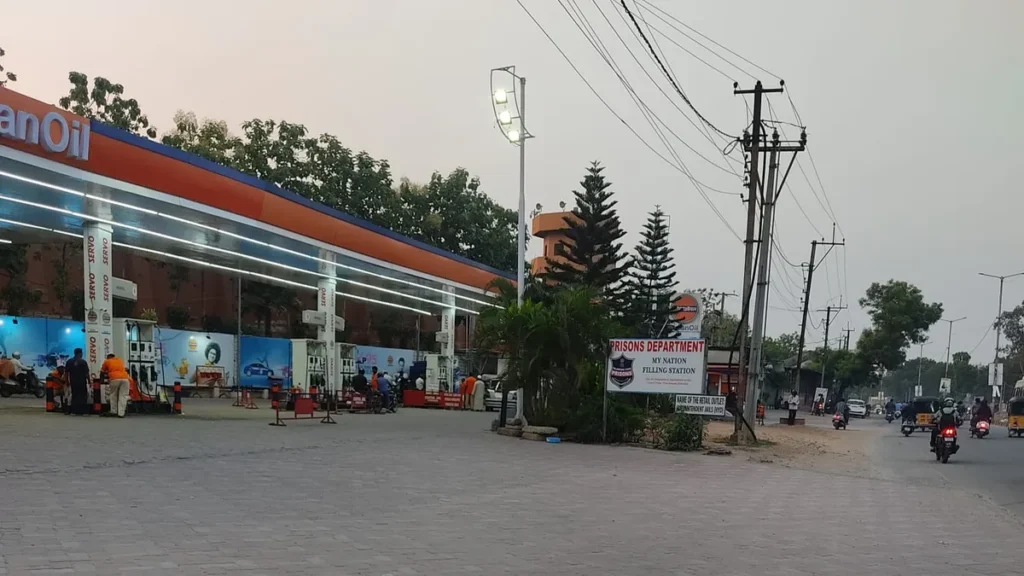
Photo: HyderabadEditor, CC BY-SA 4.0, via Wikimedia Commons
Exam angle
Prelims: E20, National Policy on Biofuels, feedstock. · Mains GS-III: energy security.
Practice MCQs
Original practice questions (not PYQs).
Petrol samples tested in Karnataka showed ethanol content as high as:
Answer (d) & explanation
Legal Metrology samples recorded ethanol as high as 31.2 percent against the prescribed 20 percent blend.
The prescribed ethanol blend for petrol in the Karnataka sampling story was:
Answer (c) & explanation
The prescribed blend cited in the report is 20 percent (E20).
According to India’s National Policy on Biofuels, which of the following can be used as raw materials for biofuels?
Answer (a) & explanation
UPSC Prelims 2020 tested the National Policy on Biofuels feedstock list; cassava, damaged foodgrains, rotten potatoes and sugar beet were among the allowed options in the correct choice.
Questions students ask about this
What did the Karnataka tests find?
Ethanol up to 31.2% in petrol, against the 20% norm.
What is E20?
Petrol with 20% ethanol, the current blend in India.
Why is too much ethanol a problem?
It can harm older engines, cut mileage and absorb water.
What do oil companies say?
They dispute the test procedure.