
Fertiliser subsidy for rabi jumps 64% as world prices rise
The Union Cabinet has approved a subsidy of about ₹62,370 crore on phosphate and potash fertilisers for the rabi season, from 1 October 2026 to 31 March 2027. That is ₹24,418 crore, or 64%, more than the ₹37,952 crore set aside for last year’s rabi season, after a sharp rise in world prices of urea, di-ammonium phosphate, potash and sulphur. Gas prices also rose after the Iran war, and spending has already crossed 70% of the year’s fertiliser-subsidy budget in six months. Read it to revise the Nutrient Based Subsidy scheme, urea pricing and the fiscal cost of cheap farm inputs.
- Rabi P&K subsidy
- About ₹62,370 crore, 1 October 2026 to 31 March 2027
- Rise over last rabi
- ₹24,418 crore, or 64%, above ₹37,952 crore
- Budget pressure
- Over 70% of the year’s subsidy budget spent in six months
- Full-year risk
- Bill could touch ₹3.5 lakh crore against ₹1.71 lakh crore budgeted
Rabi fertiliser subsidy: what happened?
Farmers will still get phosphatic and potassic fertilisers at affordable prices — but the bill for the rabi season has jumped by nearly two-thirds.
- The Union Cabinet has approved a subsidy of about ₹62,370 crore on phosphate and potash fertilisers for the rabi season, from 1 October 2026 to 31 March 2027.
- That is ₹24,418 crore, or 64%, more than the ₹37,952 crore set aside for last year’s rabi season. The reason is a sharp rise in world prices of urea, di-ammonium phosphate, potash and sulphur.
- Gas prices also shot up after the Iran war. Spending on fertiliser subsidy crossed 70% of the year’s budget in just six months, and the full-year bill could touch ₹3.5 lakh crore against ₹1.71 lakh crore budgeted.
- The government says farmers will still get 28 grades of fertilisers at affordable prices. One economist warns the fiscal deficit could rise by up to 0.3% of gross domestic product.
How does India subsidise fertilisers?
Phosphatic and potassic fertilisers are supported under the Nutrient Based Subsidy scheme, in force since 2010. The Centre fixes a subsidy for each nutrient — nitrogen, phosphorus, potash and sulphur — and companies sell about 28 grades, including di-ammonium phosphate, at a lower price to farmers.
Urea follows a separate pricing arrangement. Its main feedstock is natural gas, so a jump in gas prices quickly raises the subsidy bill. Neem-coated urea has been made the standard supply, to slow diversion and encourage more measured use.
Cheap urea relative to phosphorus and potash has long skewed use towards nitrogen, which hurts soil health. The Nutrient Based Subsidy scheme was meant to support a more balanced mix of nutrients.
Fertiliser subsidy is a large, volatile item in the Union Budget. When world prices rise, the government can either let farm prices climb or expand the subsidy and accept a higher fiscal deficit.
What the new subsidy means
| Marker | Figure |
|---|---|
| Rabi 2026-27 P&K subsidy | About ₹62,370 crore |
| Last year’s rabi allocation | ₹37,952 crore |
| Increase | ₹24,418 crore, or 64% |
| Budgeted fertiliser subsidy, full year | ₹1.71 lakh crore |
Which schemes and facts apply?
- Nutrient Based Subsidy scheme for phosphatic and potassic fertilisers, since 2010.
- A separate pricing arrangement for urea, with natural gas as the main feedstock.
- Neem-coated urea as the standard domestic supply.
- Union Budget provision for fertiliser subsidy, now under strain from world prices.
Why does the rabi fertiliser subsidy matter?
| Angle | What to note |
|---|---|
| Agriculture | Shows how world prices and gas costs land on the Indian farm bill. |
| Economy | A larger subsidy can widen the fiscal deficit by up to 0.3% of GDP. |
| Environment | Cheap urea can still unbalance the use of phosphorus and potash. |
| Prelims | Nutrient Based Subsidy since 2010, 28 grades, neem-coated urea, natural gas feedstock. |
What are the problems with the rabi fertiliser subsidy?
- The full-year bill may far exceed what was budgeted, leaving less room for other spending.
- A high subsidy on urea can still encourage over-use of nitrogen and neglect of other nutrients.
- Import dependence for potash and much of the phosphate leaves India exposed to world prices.
- Subsidy design has to keep farm prices affordable without locking in an open-ended fiscal risk.
What should be done next on the rabi fertiliser subsidy?
- Keep the rabi supply of all 28 grades steady at the notified prices.
- Use soil-health cards and extension to promote a more balanced mix of nutrients.
- Hedge and diversify import sources for potash and phosphate.
- Review the urea pricing arrangement so the subsidy does not quietly crowd out the rest of the Budget.
What can Prelims ask on the rabi fertiliser subsidy?
Prelims probability: High. Fertiliser questions recur (2016 neem-coated urea, 2020 fertiliser pricing; the State exam asked farm subsidies in 2022). Big fresh number: 64% jump in rabi subsidy. Testable facts: Nutrient Based Subsidy since 2010, 28 grades, natural gas as urea feedstock.
- Rabi P&K subsidy: about ₹62,370 crore, 64% higher than last year.
- Nutrient Based Subsidy scheme since 2010; about 28 grades of fertilisers.
- Urea uses natural gas as feedstock; neem-coated urea is the standard supply.
- Spending already over 70% of the year’s subsidy budget in six months.
- Full-year bill could touch ₹3.5 lakh crore against ₹1.71 lakh crore budgeted.
How to write about the rabi fertiliser subsidy in Mains
Practice question (15 marks, 250 words): India’s fertiliser subsidy bill has overshot the budget as world prices rise. Examine the problems of the present fertiliser subsidy regime and suggest measures for balanced nutrient use without an unsustainable fiscal burden.
- Intro: 64% jump in the rabi P&K subsidy to about ₹62,370 crore.
- Why the bill rose: world prices, gas costs and import dependence.
- NBS since 2010 versus the separate urea arrangement.
- Fiscal risk and the imbalance towards nitrogen.
- Way forward: balanced use, supply security and a clearer fiscal cap.
Ready lines for your answer
- Cheap fertiliser on the farm can become a costly line in the Budget.
- A subsidy that favours urea can still unbalance the soil.
Quotable data point₹62,370 crore rabi P&K subsidy, up 64%; full-year risk ₹3.5 lakh crore vs ₹1.71 lakh crore budgeted.
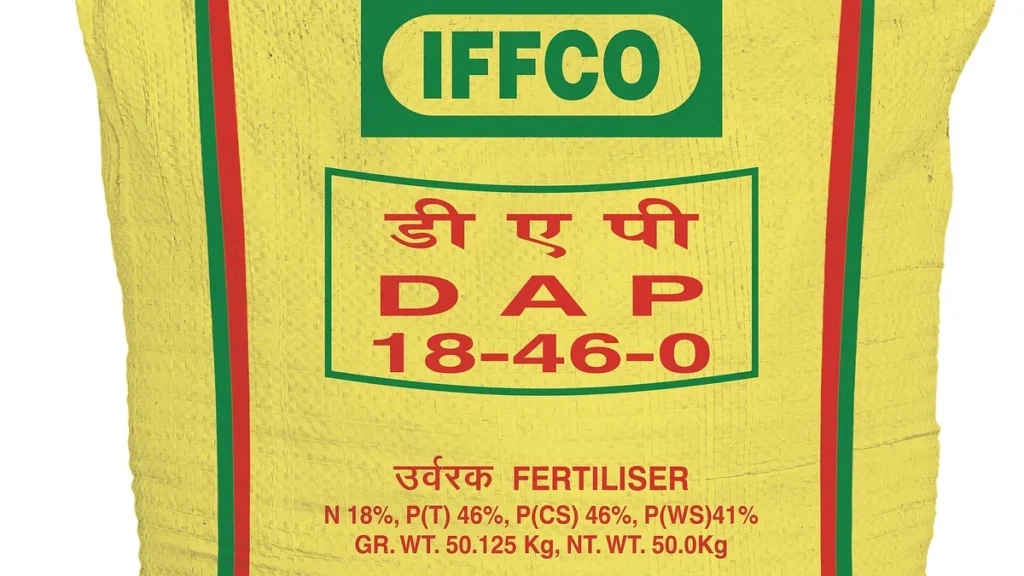
Photo: Iffco pr, CC BY-SA 4.0, via Wikimedia Commons
Exam angle
Prelims: Nutrient Based Subsidy since 2010, 28 grades, neem-coated urea. · Mains GS-III: farm subsidies and fiscal cost.
Practice MCQs
Original practice questions (not PYQs).
Consider the following statements:
1. Urea is covered under the Nutrient Based Subsidy scheme.
2. Under the Nutrient Based Subsidy scheme, a fixed subsidy is given per kilogram of nutrient for phosphate and potash fertilisers.
3. Ammonia used for making urea is produced from natural gas.
How many of the above statements are correct?
Answer (b) & explanation
Statements 2 and 3 are correct. Urea is outside the Nutrient Based Subsidy scheme; its price is fixed by the government.
Questions students ask about this
How large is the new rabi subsidy?
About ₹62,370 crore on phosphate and potash fertilisers for 1 October 2026 to 31 March 2027, 64% more than last year’s rabi allocation of ₹37,952 crore.
What is the Nutrient Based Subsidy scheme?
It has, since 2010, paid a per-nutrient subsidy on phosphatic and potassic fertilisers so that about 28 grades, including di-ammonium phosphate, can be sold cheaper to farmers.
Why has the bill risen so sharply?
World prices of urea, di-ammonium phosphate, potash and sulphur have risen, and gas prices — the main feedstock for urea — also shot up after the Iran war.
What is the fiscal warning?
Spending has already crossed 70% of the year’s subsidy budget in six months; the full-year bill could touch ₹3.5 lakh crore, and one economist warns the fiscal deficit could rise by up to 0.3% of GDP.
How is urea treated differently?
Urea is not under the Nutrient Based Subsidy scheme; it has a separate pricing arrangement, and neem-coated urea is the standard supply.