
India’s rice exports carry a hidden water cost
India has been the world’s largest rice exporter since 2012, with about 30 to 35% of world trade. It grew an estimated 154.02 million tonnes of rice in 2025–26. Exports rose from 17.73 million tonnes in 2020–21 to 21.57 million tonnes in 2025–26, worth $11.54 billion. Non-Basmati rice was more than twice the volume of Basmati, but earned only slightly more money. Experts warn that every tonne exported also carries the water used to grow it. In Punjab, Haryana and western Uttar Pradesh, much of this water is pumped from shrinking groundwater. Read it to revise virtual water, alternate wetting and drying, and the export authority.
- India’s place in trade
- World’s largest rice exporter since 2012; about 30 to 35% of world trade
- Harvest 2025–26
- An estimated 154.02 million tonnes of rice
- Exports 2025–26
- 21.57 million tonnes, worth $11.54 billion, up from 17.73 million tonnes in 2020–21
- The hidden cost
- Every exported tonne carries the water used to grow it, much of it pumped groundwater in Punjab, Haryana and western Uttar Pradesh
What is the hidden cost in India’s rice exports?
A sack of rice leaving an Indian port looks like a trade success. The water that grew it does not appear on the invoice, but in parts of the north-west it is already missing from the well.
- India has been the world’s largest rice exporter since 2012, with about 30 to 35% of world trade. It grew an estimated 154.02 million tonnes of rice in 2025–26.
- Exports rose from 17.73 million tonnes in 2020–21 to 21.57 million tonnes in 2025–26, worth $11.54 billion.
- Non-Basmati rice was more than twice the volume of Basmati, but earned only slightly more money.
- Experts warn that every tonne exported also carries the water used to grow it. In Punjab, Haryana and western Uttar Pradesh, much of this water is pumped from shrinking groundwater.
What is virtual water, and how is rice grown and exported?
Virtual water is the water used to grow or make a product, which then travels with it when the product is sold. Rice is a thirsty crop. When India exports a tonne, it also exports that hidden water. Water from rainfall is often called green water; water from irrigation and wells is blue water. In the north-west, a large share of the rice crop is blue water, pumped from underground.
Alternate wetting and drying is a way of growing rice in which the field is not kept continuously flooded. It can cut the water used, and it can also cut methane from flooded paddies. It needs timely irrigation control, which many farms do not yet have.
Rice exports are overseen by the Agricultural and Processed Food Products Export Development Authority, set up under a 1985 Act under the commerce ministry. Trade policy on non-Basmati rice has been tightened and eased in recent years as domestic prices and stocks have moved, which is why a record export year is also a policy choice, not only a harvest result.
Basmati usually earns more per tonne than non-Basmati. That is why a much larger volume of non-Basmati can still bring in only a little more foreign exchange — and why the water cost per dollar earned is a fair question for the cheaper grades.
The export arithmetic, 2025–26
| Item | Figure |
|---|---|
| Share of world rice trade | About 30 to 35%; largest exporter since 2012 |
| Production, 2025–26 | An estimated 154.02 million tonnes |
| Exports | 21.57 million tonnes, worth $11.54 billion, up from 17.73 million tonnes in 2020–21 |
| Basmati and non-Basmati | Non-Basmati was more than twice the volume of Basmati, but earned only slightly more |
Which institutions and practices apply?
- Agricultural and Processed Food Products Export Development Authority Act, 1985: set up the authority that oversees rice and other scheduled agricultural exports.
- Virtual water: the water used to grow a crop, which is then exported with the grain.
- Alternate wetting and drying: a method of growing rice that can cut irrigation water and methane, compared with continuous flooding.
- Groundwater in Punjab, Haryana and western Uttar Pradesh is a State and local resource, but a national export boom is one of the demands on it.
Why does rice exports and virtual water matter?
| Angle | What to note |
|---|---|
| Agriculture | A record export year is also a cropping-pattern question: how much rice, grown where, and with whose water. |
| Environment | Virtual water and methane from flooded paddies link a trade figure to groundwater and climate. |
| Prelims | Largest exporter since 2012, 21.57 million tonnes in 2025–26, virtual water, alternate wetting and drying, the 1985 export authority. |
| Federalism | The water is pumped in Punjab, Haryana and western Uttar Pradesh; the foreign exchange is counted as a national success. |
What are the problems with rice exports and virtual water?
- Non-Basmati made up more than twice the volume of Basmati but earned only slightly more, so a large share of the hidden water is sold relatively cheaply.
- In Punjab, Haryana and western Uttar Pradesh, much of the water is pumped from shrinking groundwater, which a single good monsoon does not replace.
- Alternate wetting and drying is well known, but it is still not the default way rice is grown on the farms that feed the export surplus.
- Export policy has moved in steps in recent years; a sudden curb or a sudden opening can leave farmers and buyers equally unprepared.
What should be done next on rice exports and virtual water?
- Publish, beside the export tonnage, an estimate of the water carried in Basmati and non-Basmati shipments, especially from groundwater-stressed districts.
- Shift incentives towards less thirsty crops in the north-west, and towards rice grown with alternate wetting and drying where rice must still be sown.
- Use the higher value of Basmati, rather than ever-larger volumes of cheaper non-Basmati, as the main export push from water-stressed areas.
- Align export policy with groundwater assessments, so that a record shipment year is not paid for by the next decade’s wells.
What can Prelims ask on rice exports and virtual water?
Prelims probability: High. Rice exports were asked in 2019 and methane from rice in 2022. Water stress and climate links are steady themes. Testable facts: virtual water, alternate wetting and drying, the export authority.
- India has been the world’s largest rice exporter since 2012, with about 30 to 35% of world trade.
- Production 2025–26: an estimated 154.02 million tonnes. Exports: 21.57 million tonnes, worth $11.54 billion, up from 17.73 million tonnes in 2020–21.
- Non-Basmati was more than twice the volume of Basmati, but earned only slightly more money.
- Virtual water is the water used to grow the crop, then exported with the grain. In Punjab, Haryana and western Uttar Pradesh much of it is pumped groundwater.
- Alternate wetting and drying can cut irrigation water and methane. The Agricultural and Processed Food Products Export Development Authority was set up under a 1985 Act.
How to write about rice exports and virtual water in Mains
Practice question (15 marks, 250 words): India is the world’s largest rice exporter, but experts warn of a hidden water cost. Discuss the pattern of rice exports and the implications for groundwater and cropping policy.
- Open with the 2025–26 figures: 21.57 million tonnes of exports, worth $11.54 billion, and an estimated 154.02 million tonnes grown; largest exporter since 2012.
- Note that non-Basmati was more than twice the volume of Basmati but earned only slightly more.
- Explain virtual water, green and blue water, and why Punjab, Haryana and western Uttar Pradesh are the stress points.
- Describe alternate wetting and drying, and name the 1985 export authority.
- Close with the policy choice: less thirsty crops, a higher-value rather than a higher-volume export mix, and export rules that respect groundwater limits.
Ready lines for your answer
- A tonne of rice is also a tonne of someone else’s well.
- Non-Basmati that earns only a little more for twice the volume is a poor way to sell scarce water.
Quotable data pointLargest rice exporter since 2012, about 30–35% of world trade; 2025–26 harvest an estimated 154.02 million tonnes; exports 21.57 million tonnes worth $11.54 billion (from 17.73 million tonnes in 2020–21); non-Basmati more than twice Basmati by volume but only slightly more by value; hidden water from Punjab, Haryana and western Uttar Pradesh groundwater.
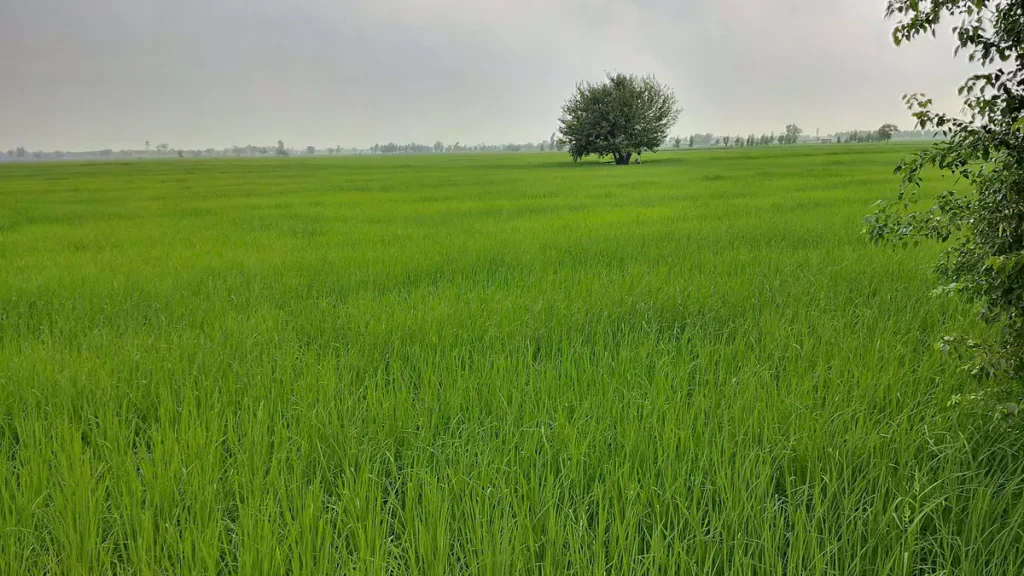
Photo: Jaspinder Singh Duhewala, CC BY-SA 4.0, via Wikimedia Commons
Exam angle
Prelims: largest exporter since 2012, 21.57 million tonnes, virtual water, alternate wetting and drying, the 1985 export authority. · Mains GS-III: cropping patterns, water use and agricultural exports.
Practice MCQs
Original practice questions (not PYQs).
Consider the following statements:
1. India has been the world's largest rice exporter since 2012.
2. Alternate wetting and drying of paddy fields can reduce methane emissions.
3. In 2025–26 India exported a larger volume of Basmati rice than non-Basmati rice.
How many of the above statements are correct?
Answer (b) & explanation
Statements 1 and 2 are correct. Non-Basmati exports (15.04 million tonnes) were more than twice Basmati (6.52 million tonnes).
Questions students ask about this
How much rice did India export in 2025–26?
21.57 million tonnes, worth $11.54 billion, up from 17.73 million tonnes in 2020–21.
How long has India been the world’s largest rice exporter?
Since 2012. It now accounts for about 30 to 35% of world trade.
What is the hidden water cost?
Every exported tonne carries the water used to grow it. In Punjab, Haryana and western Uttar Pradesh, much of that water is pumped from shrinking groundwater.
What is virtual water?
The water used to grow or make a product, which then travels with it when the product is sold.
What is alternate wetting and drying?
A way of growing rice in which the field is not kept continuously flooded. It can cut the water used and the methane from paddies.