
World Heritage Week opens with free entry at Taj Mahal and Agra Fort
World Heritage Week runs for seven days. On its opening day, the Archaeological Survey of India waived entry fees at all centrally protected monuments. In Agra this covered the Taj Mahal, Agra Fort and Fatehpur Sikri, though the ₹200 fee for the Taj’s main mausoleum still applied. The Survey protects more than 3,800 monuments and sites, of which 143 are ticketed. Exhibitions and school competitions are planned during the week, and 360-degree cameras will be added at blind spots in the Taj complex. Agra Fort and the Taj Mahal stand on the Yamuna in western Uttar Pradesh. Read it to revise Mughal architecture, World Heritage Sites in Uttar Pradesh and the Archaeological Survey of India.
- The week
- World Heritage Week, seven days; free entry on the opening day
- Still charged
- The ₹200 fee for the Taj Mahal’s main mausoleum
- The Survey
- Protects more than 3,800 monuments and sites; 143 are ticketed
- Security
- 360-degree cameras at blind spots in the Taj complex
What happened in Agra on the first day of World Heritage Week?
For one day, anyone could walk into the Taj Mahal and Agra Fort without a ticket. The week is a reminder of how much of India’s heritage sits in one corner of Uttar Pradesh.
- World Heritage Week runs for seven days. On its opening day, the Archaeological Survey of India waived entry fees at all centrally protected monuments.
- In Agra this covered the Taj Mahal, Agra Fort and Fatehpur Sikri. The ₹200 fee for the Taj’s main mausoleum still applied.
- The Survey protects more than 3,800 monuments and sites, of which 143 are ticketed.
- Exhibitions and school competitions are planned, and 360-degree cameras will be added at blind spots in the Taj complex.
- Agra Fort and the Taj Mahal stand on the Yamuna in western Uttar Pradesh.
What should you know about Agra’s monuments?
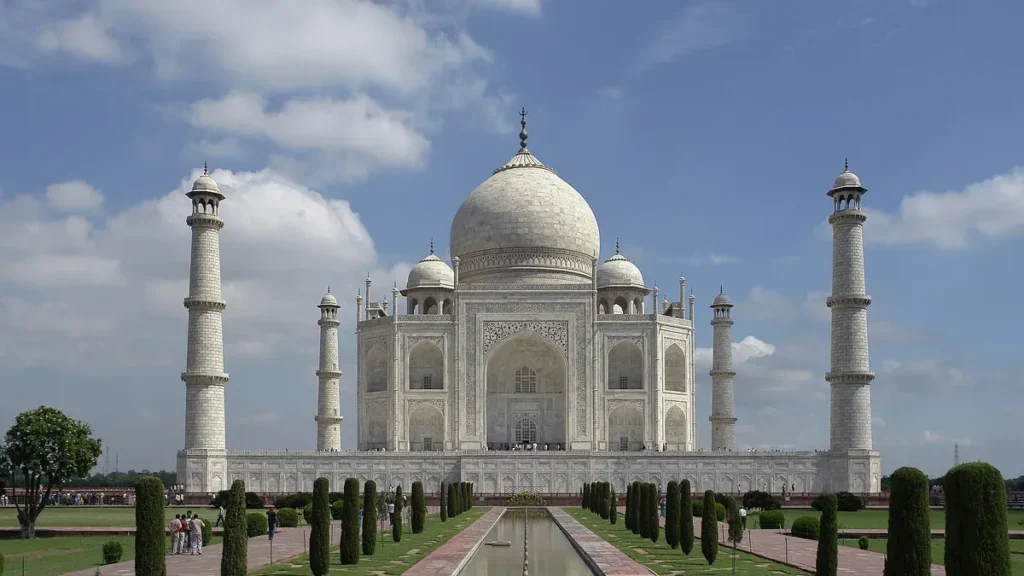
Taj Mahal: commissioned in 1632 by Shah Jahan in memory of Mumtaz Mahal. A World Heritage Site of the United Nations Educational, Scientific and Cultural Organization since 1983.
Agra Fort: on the right bank of the Yamuna. A World Heritage Site since 1983. It is described as the only fort in India inhabited by all the early Mughal emperors.
Previous year questions linked to this story
UPPCS Prelims 2025
Match List-I with List-II and select the correct answer using the code given below the lists.
List-I (Emperor): A. Babur B. Humayun C. Jahangir D. Shah Jahan
List-II (City where Tomb is located): 1. Agra 2. Lahore 3. Delhi 4. Kabul
Answer: (a)
UPSC Mains 2018 (General Studies Paper 1)
Safeguarding the Indian art heritage is the need of the moment. Discuss.
What can Prelims ask on this story?
Prelims probability:Static Mughal facts; the event itself is routine.
- Taj Mahal and Agra Fort: World Heritage Sites since 1983.
- Taj Mahal commissioned in 1632 by Shah Jahan.
- Archaeological Survey of India: more than 3,800 protected monuments, 143 ticketed.
How to write about this story in Mains
Practice question (15 marks, 250 words): World Heritage Week opened with free entry at the Taj Mahal and Agra Fort. Discuss the challenges in conserving India’s heritage monuments while keeping them open to large numbers of visitors.
- Open with the week and the free-entry day.
- Explain the role of the Archaeological Survey of India and the scale of protected sites.
- Discuss the pressures: crowds, pollution near the Yamuna and security gaps.
- Suggest timed tickets, digital monitoring, local community roles and awareness in schools.
Ready lines for your answer
- Open doors build pride; careful management keeps the monument standing.
- Cameras at blind spots show that conservation is also about security.
Quotable data pointThe Hindu, 20 November 2026: free entry at centrally protected monuments on the opening day; more than 3,800 protected monuments, 143 ticketed.
Photo: Yann; edited by King of Hearts, CC BY-SA 4.0, via Wikimedia Commons
Exam angle
Prelims: 1632, 1983 and the Archaeological Survey of India. · Mains GS-I: heritage conservation.
Practice MCQs
Original practice questions (not PYQs).
On the opening day of World Heritage Week in November 2026, entry fees were waived at centrally protected monuments. Which of the following still had to be paid at Agra?
Answer (a) & explanation
Entry was free at the Taj Mahal, Agra Fort and Fatehpur Sikri, but visitors still paid the ₹200 fee for the Taj Mahal's main mausoleum.
Consider the following statements:
1. The Taj Mahal and Agra Fort were both inscribed as World Heritage Sites in 1983.
2. Agra Fort stands on the bank of the Ganga.
3. The Archaeological Survey of India protects more than 3,800 monuments and sites.
How many of the above statements are correct?
Answer (b) & explanation
Statements 1 and 3 are correct. Agra Fort stands on the right bank of the Yamuna, not the Ganga.