
UPSC Prelims 2023 · GS Paper I: Consider the following statements :Statement-I : The temperature contrast between continents and oceans is…
Consider the following statements :
Statement-I : The temperature contrast between continents and oceans is greater during summer than in winter.
Statement-II : The specific heat of water is more than that of land surface.
Which one of the following is correct in respect of the above statements?
Answer (d) & explanation
Statement I is wrong but Statement II is correct (d). Statement II is right: water has a much higher specific heat than rock and soil, so the oceans warm and cool slowly, while land heats and cools fast. Statement I is marked wrong: UPSC's key treats the land–sea temperature contrast as greater in winter, when continental interiors such as Siberia become extremely cold while the oceans stay mild. So the difference in winter is larger than in summer.
Notice the effects: continental climates have a big range between summer and winter, while maritime climates stay mild. The land–sea contrast also drives land and sea breezes daily and the monsoon seasonally. The Siberian High in winter is the result of this deep cold.
Answer as per the official UPSC answer key.
Same theme in UPSC Mains
- MAINS UPSC Mains 2024 · GS Paper I · Q4What is sea surface temperature rise? How does it affect the formation of tropical cyclones?
- MAINS UPSC Mains 2025 · GS Paper II · Q3Compare and contrast the President’s power to pardon in India and in the USA. Are there any limits to it in both the countries? What are…
- MAINS UPSC Mains 2023 · GS Paper II · Q4Compare and contrast the British and Indian approaches to Parliamentary sovereignty.
Related questions from other years
Ships from which of the following countries have to cross the Strait of Hormuz to reach out to the Indian Ocean ?
- 1. Bahrain
- 2. Syria
- 3. Qatar
- 4. Egypt
Select the answer using the code given below :
Answer (b) & explanation
Bahrain and Qatar must cross the Strait of Hormuz (b). The Strait of Hormuz, between Iran and Oman, is the only sea exit from the Persian Gulf. Items 1 and 3 are right: Bahrain and Qatar lie wholly inside the Gulf, so their ships must pass it. Item 2 is wrong: Syria is on the Mediterranean. Item 4 is wrong: Egypt reaches the Indian Ocean through the Suez Canal and the Red Sea. So options (a), (c) and (d) fail.
Notice its importance: about a fifth of the world's oil passes through Hormuz, and much of India's crude and LNG (Qatar is a top LNG supplier). Iran's threats to close it raise prices. The UAE's pipeline to Fujairah and Saudi pipelines to the Red Sea help bypass it.
Answer as per the official UPSC answer key.
Tungurahua Volcano, which was declared a Global Geopark by UNESCO in 2025, is situated in which one among the following countries ?
Answer (a) & explanation
Tungurahua is in Ecuador (a). Tungurahua, meaning "throat of fire", is an active stratovolcano in the Andes of central Ecuador, above the town of Baños. UNESCO named the area around it a Global Geopark in 2025. Options (b), (c) and (d), Peru, Bolivia and Colombia, are wrong, though the Andes pass through all of them too.
Notice Ecuador's other famous volcanoes: Cotopaxi, one of the highest active volcanoes, and Chimborazo, whose summit is the point farthest from Earth's centre, because of the equatorial bulge. Ecuador also owns the Galápagos Islands. A Global Geopark honours geological heritage; India has none yet, though sites like Lonar have been proposed.
Answer as per the official UPSC answer key.
With reference to the climate of Andaman and Nicobar Islands, which of the following statements is/are correct ?
- 1. The climate can be defined as a humid, tropical coastal climate.
- 2. It receives rainfall from both South-west monsoon and North-east monsoon.
- 3. Maximum precipitation is between December and May.
Select the answer using the code given below :
Answer (b) & explanation
Statements 1 and 2 are correct (b). Statement 1 is right: the islands lie close to the equator in the Bay of Bengal, so they are hot and humid all year, a tropical coastal climate. Statement 2 is right: they get rain from both the south-west and north-east monsoons, from about May to December. Statement 3 is wrong: January to April is the driest part of the year, so maximum rain is not between December and May. So options (a), (c) and (d) fail.
Notice the islands' features: Barren Island, India's only active volcano; Saddle Peak, the highest point; and Indira Point, India's southernmost tip. Rich tropical evergreen forests cover them, and cyclones often form nearby.
Answer as per the official UPSC answer key.
Which of the following geographical features or phenomena is/are associated with the Peninsular Block of India ?
- 1. Submergence of parts of the western coast due to tectonic activity
- 2. Presence of residual mountain ranges such as the Veliconda hills and Mahendragiri hills
- 3. Deep, V-shaped river valleys formed by fast-flowing rivers
Select the answer using the code given below :
Answer (b) & explanation
Features 1 and 2 belong to the Peninsular Block (b). The Peninsula is an old, stable block. Item 1 is right: faulting submerged parts of the west coast. Item 2 is right: long erosion left residual hills such as the Veliconda and Mahendragiri. Item 3 is wrong: Peninsular rivers are mature, with broad, shallow valleys; deep V-shaped valleys belong to the young Himalayan rivers. So options (a), (c) and (d) fail.
Notice other Peninsular traits: Gondwana coal, Deccan Traps basalt, rift valleys of the Narmada and Tapi, which flow west into the Arabian Sea, and old block mountains like the Aravallis, among the world's oldest. Rivers here are rain-fed, not snow-fed.
Answer as per the official UPSC answer key.
In the news since
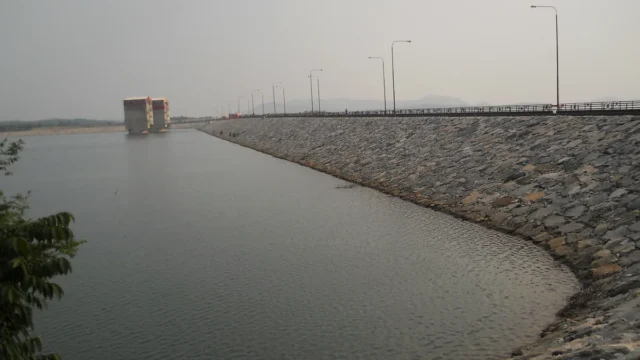
Pumped storage hydropower: India’s roadmap for 100 GW of ‘water batteries’ by 2035-36
A PIB backgrounder of 19 October 2026 explains how pumped storage projects (PSPs) will store solar and wind power for India’s grid. India runs 7.43 GW of pumped storage today, is building 15.87 GW more and has an assessed potential of 345.38 GW. A roadmap aims to add about 100 GW between 2025-26 and 2035-36.
19 Oct 2026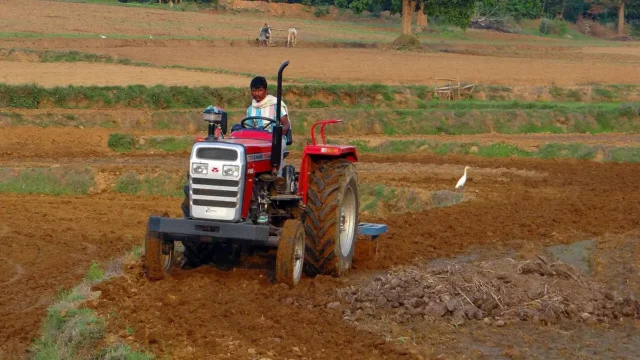
Khet Bachao Abhiyan: Centre reviews 22 October to 30 November farm campaign with States
On 17 October 2026 Union Agriculture Minister Shivraj Singh Chouhan reviewed preparations for the Khet Bachao Abhiyan with agriculture ministers of 11 States and UTs. The campaign runs from 22 October to 30 November 2026. About 4,150 teams of Krishi Vigyan Kendra and ATMA staff, with over 12,000 scientists and officials, plan around 1.5 lakh meetings with farmers on soil health, crop residue, balanced fertiliser use and key schemes.
17 Oct 2026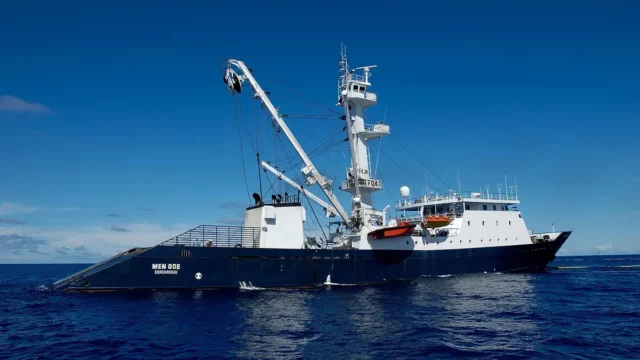
India to accede to the Southern Indian Ocean Fisheries Agreement (SIOFA)
On 14 October 2026 the Centre approved India's accession to the Southern Indian Ocean Fisheries Agreement. India, a Cooperating Non-Contracting Party since 2022, will become a full Contracting Party. Indian vessels can then fish squids, toothfish, alfonsino and other non-migratory stocks in the SIOFA area and join its scientific and compliance bodies.
14 Oct 2026