
UPSC Mains 2025 GS2 Q3: model answer
Compare and contrast the President’s power to pardon in India and in the USA. Are there any limits to it in both the countries? What are ‘preemptive pardons’?
What the question wants
Similarities and differences between Art. 72 and Art. II of the US Constitution, limits in each, and the meaning of a preemptive pardon.
How to structure it
Intro: mercy as a constitutional safety valve. Body: comparison table points; limits; preemptive pardons with examples. Conclusion.
- 1Comparison table points
- 2Limits
- 3Preemptive pardons with examples
Model answer
Both constitutions give the head of state a power of mercy to correct errors and soften harsh outcomes of law.
| Basis | India (Art. 72) | USA (Art. II, Sec. 2) |
|---|---|---|
| Decided by | President on ministerial advice | President alone |
| Coverage | Union laws, court-martial, all death sentences | Federal offences only |
| Bar | None written; judicial review applies | Cases of impeachment |
| Review | Limited review (Kehar Singh, Epuru Sudhakar) | Practically none |
| Preemptive use | Not in practice | Ford–Nixon 1974; Biden, Jan 2025 |
Similarities: both cover offences under the national government's laws; both can pardon, reprieve or commute.
Differences
- Who decides: the Indian President acts on the advice of the Council of Ministers (Maru Ram, 1980). The US President acts on personal discretion.
- Range: Art. 72 covers Union laws, court-martial and all death sentences, and names five forms: pardon, commutation, remission, respite, reprieve. The US power covers only federal offences, not State crimes.
- Review: Indian courts can review a mercy decision for mala fides, arbitrariness or irrelevant grounds (Kehar Singh, 1989; Epuru Sudhakar, 2006). US courts almost never review pardons.
Limits: in the USA, no pardon in cases of impeachment and none for State offences. In India, the advice requirement and judicial review restrain the power.
Preemptive pardons are granted before any charge or conviction. President Ford pardoned Richard Nixon in 1974; in January 2025 President Biden pardoned officials and family members in advance of any prosecution. India has used mercy almost wholly after conviction.
Mercy works best when it is transparent and reasoned.
Keywords, cases and data to drop in
Art. 72 Art. II Sec. 2 Maru Ram Kehar Singh Ford–Nixon 1974 preemptive pardon
Where most answers lose marks
- Saying the Indian President acts in discretion.
- Forgetting the impeachment bar in the US.
Same theme in Prelims
With reference to the Indian polity, consider the following statements :
- I. An Ordinance can amend any Central Act.
- II. An Ordinance can abridge a Fundamental Right.
- III. An Ordinance can come into effect from a back date.
Which of the statements given above are correct?
Answer (c) & explanation
Statements I and III are correct (c). An Ordinance under Article 123 has the same force as an Act of Parliament. Statement I is right: so it can amend any Central Act. Statement III is right: like an Act, it can be made retrospective, taking effect from a back date. Statement II is wrong: Article 13 counts an Ordinance as "law", and no law can take away or abridge Fundamental Rights. So options (a), (b) and (d) fail.
Notice the limits: an Ordinance can be issued only when Parliament is not in session, and it lapses six weeks after Parliament reassembles unless approved. In Krishna Kumar Singh (2017), the Supreme Court held that re-promulgating Ordinances again and again is a fraud on the Constitution. Governors have the same power under Article 213.
"same force as an Act" makes students think an Ordinance can do anything. It carries the same limits too.
Traps like this come back in new clothes. The PYQ Book collects all of them, topic by topic, so none catch you twice. Try the free sample
Answer as per the official UPSC answer key.
Consider the following statements :
- I. The Constitution of India explicitly mentions that in certain spheres the Governor of a State acts in his/her own discretion.
- II. The President of India can, of his/her own, reserve a bill passed by a State Legislature for his/her consideration without it being forwarded by the Governor of the State concerned.
Which of the statements given above is/are correct?
Answer (a) & explanation
Only statement I is correct (a). Statement I is right: Article 163(1) itself says the Governor acts on ministers' advice "except in so far as he is by or under this Constitution required to exercise his functions… in his discretion". Examples include Article 371 duties and the Sixth Schedule. Statement II is wrong: under Article 200, only the Governor can reserve a State Bill for the President. The President cannot pull a Bill up on their own. So options (b), (c) and (d) fail.
Notice the recent fights over Governors sitting on Bills. In State of Tamil Nadu v. Governor (April 2025), the Supreme Court set time limits for assent. On a Presidential reference, a Constitution Bench in November 2025 said courts cannot fix such deadlines, but long, unexplained delay can still be reviewed.
the President is "higher", so students assume he can act directly on State Bills. The route always runs through the Governor.
Answer as per the official UPSC answer key.
With reference to the Indian polity, consider the following statements :
- I. The Governor of a State is not answerable to any court for the exercise and performance of the powers and duties of his/her office.
- II. No criminal proceedings shall be instituted or continued against the Governor during his/her term of office.
- III. Members of a State Legislature are not liable to any proceedings in any court in respect of anything said within the House.
Which of the statements given above are correct?
Answer (d) & explanation
All three statements are correct (d). Statement I is right: Article 361 says the President and Governors are not answerable to any court for official acts. Statement II is right: under the same Article, no criminal case can be started or continued against them during their term. Statement III is right: Article 194(2) gives State legislators freedom of speech in the House, just as Article 105 does for MPs. So options (a), (b) and (c) fail.
Notice the limit on legislators: in Sita Soren (2024), a seven-judge Bench held that MPs and MLAs who take bribes to vote or speak get no immunity, overruling P.V. Narasimha Rao (1998). Civil cases against a Governor need two months' notice.
Answer as per the official UPSC answer key.
Fresh examples from current affairs

Supreme Court: no prior approval under Section 17A needed to probe a bribe demand
In a judgment of 16 October 2026, a Supreme Court Bench of Justices S.V.N. Bhatti and N.V. Anjaria held that investigating a bribe demand by a public servant does not need prior approval under Section 17A of the Prevention of Corruption Act. Asking for a bribe, the court said, is not part of discharging official duties.
UPSC angle: Prelims: Sections 7, 7A, 17A and 19 of the PC Act. · Mains GS-II/GS-IV: honest officers versus accountability.
19 Oct 2026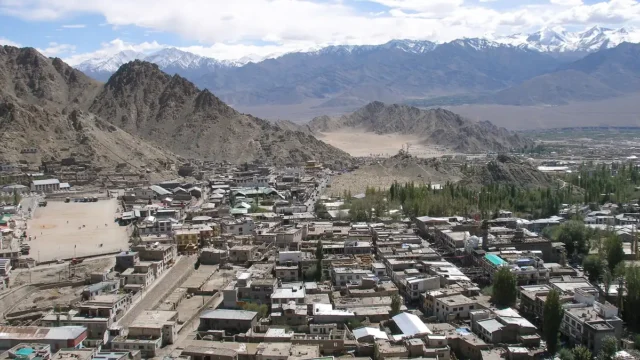
CJI Surya Kant inaugurates the first permanent High Court bench in Leh
On 18 October 2026 Chief Justice of India Surya Kant inaugurated a permanent bench of the High Court of Jammu and Kashmir and Ladakh in Leh. Until now, a person in Ladakh who wanted to file a writ petition had to travel to Srinagar or Jammu, across high passes and harsh winters. The bench was made possible by a regulation that the President promulgated on 27 August and that came into force on 5 September. It is a simple idea with a big effect: bring the court to the people.
UPSC angle: Prelims: Arts. 214, 231, 241, 226, 39A; common High Court. · Mains GS-II: access to justice, judicial infrastructure.
18 Oct 2026
Three High Court Chief Justices appointed as Supreme Court judges
On 5 October 2026 the President appointed three High Court Chief Justices as judges of the Supreme Court: Justice Sunita Agarwal (Gujarat), Justice Devendra Kumar Upadhyaya (Delhi) and Justice Aparesh Kumar Singh (Telangana). The first two have Allahabad as their parent High Court and the third Jharkhand.
UPSC angle: Prelims: Article 124. · Mains GS-II: judicial appointments.
5 Oct 2026
President at NGT climate conference: community-based adaptation rooted in traditional knowledge
On 20 September 2026 President Droupadi Murmu spoke at the valedictory session of the International Conference on "The Future of Environment and Climate Dynamics", organised by the National Green Tribunal in New Delhi. She called for people-centric, community-based climate adaptation rooted in traditional knowledge, and for afforestation that restores whole ecosystems.
UPSC angle: Mains: Role of traditional knowledge in climate adaptation.
20 Sep 2026Learn the concept
Question text as printed in the official UPSC question paper: https://www.upsc.gov.in/sites/default/files/GENERAL-STUDIES-PAPER-II-QP-CSM-25-010925.pdf The model answer is original Battle IAS work; use it to learn structure, not to memorise.