
UPSC Mains 2026 GS2 Q20: model answer
“China's Belt and Road Initiative (BRI) has transformed South Asia from a regional space into a theatre of great power competition.” Analyse the strategic implications of the BRI for India's security and regional influence in South Asia.
What the question wants
Explain how BRI changed the balance of power in South Asia, then analyse implications for India's security and influence, and India's responses.
How to structure it
Intro: BRI (2013) and its South Asian footprint. Body: security implications; influence implications; India's response; assessment. Conclusion.
- 1Security implications
- 2Influence implications
- 3India's response
- 4Assessment
Model answer
China launched the Belt and Road Initiative in 2013. In South Asia, its projects include the China–Pakistan Economic Corridor (CPEC), Hambantota port in Sri Lanka, projects in Nepal, Bangladesh and the Maldives, and a planned corridor through Myanmar. India has stayed out, objecting that CPEC passes through Indian territory in Pakistan-occupied Kashmir.
| Country | BRI footprint | India's counter |
|---|---|---|
| Sri Lanka | Hambantota port lease (2017) | Credit lines, 2022 crisis support |
| Pakistan | CPEC through PoK | Objection on sovereignty |
| Nepal, Bangladesh | Infrastructure deals | Connectivity, energy grids, BBIN |
Security implications for India
- Sovereignty: CPEC through PoK challenges India's territorial claim.
- Maritime: dual-use potential of ports such as Gwadar and Hambantota (leased to a Chinese firm for 99 years in 2017) and visits by Chinese research and survey vessels raise surveillance concerns in the Indian Ocean.
- Two-front pressure: deeper China–Pakistan military and infrastructure ties.
- Debt leverage: unsustainable loans can give China influence over small states' choices.
Implications for India's regional influence
- Neighbours gain bargaining power and play India and China against each other (Nepal, the Maldives, Sri Lanka).
- India's historic primacy in South Asia is now contested, especially in infrastructure finance.
India's response
- Neighbourhood First and SAGAR/MAHASAGAR: lines of credit, grid connectivity (BBIN power trade), and the Kaladan project; quick help to Sri Lanka during its 2022 crisis (about USD 4 billion).
- Strategic ports: Chabahar (Iran), Sabang (Indonesia), Duqm access (Oman).
- Partnerships: the Quad, IMEC (India–Middle East–Europe Economic Corridor), the Partnership for Global Infrastructure and Investment, and the Colombo Security Conclave.
Assessment: BRI has indeed made South Asia contested, but several projects have stalled over debt and local opposition, which gives India room. India's edge lies in transparent, demand-driven projects and cultural closeness.
Conclusion: India must compete on delivery, not rhetoric: faster project execution, regional connectivity and maritime capacity will protect both its security and its standing.
Keywords, cases and data to drop in
BRI 2013 CPEC through PoK Hambantota 99-year lease debt-trap concerns Neighbourhood First Chabahar IMEC Sri Lanka aid 2022
Where most answers lose marks
- Describing BRI only, without analysing implications for India.
- Ignoring India's counter-strategy.
- Overstating: note that many BRI projects have stalled.
Same theme in Prelims
Consider the following statements with respect to the AI Impact Summit, 2026 held in New Delhi :
- 1. The Summit’s intellectual framework was based on three foundational Sutras : People, Planning, and Progress.
- 2. The Preamble of the Summit stresses Democratising AI Resources, which acknowledges the Charter for Democratic Diffusion of AI as a binding framework to support locally relevant innovation and strengthen resilient AI ecosystems while respecting national laws.
- 3. The New Delhi Declaration on AI Impact was structured around seven Chakras (Pillars), which included Access for Social Empowerment, AI for Science, and Secure and Trusted AI.
Which of the statements given above is/are correct ?
Answer (d) & explanation
Only statement 3 is correct (d). Statement 3 is right: the New Delhi Declaration on AI Impact was built around seven chakras (pillars), including access for social empowerment, AI for science and secure and trusted AI. Statement 1 is wrong: the three sutras were People, Planet and Progress, not "Planning". Statement 2 is wrong: the Charter for Democratic Diffusion of AI is voluntary, not binding. So options (a), (b) and (c) fail.
Notice the event: the AI Impact Summit was held at Bharat Mandapam, New Delhi, in February 2026, the first global AI summit in the Global South. It followed the summits at Bletchley Park (2023), Seoul (2024) and Paris (2025). At home, the IndiaAI Mission (2024) funds shared GPU computing.
Statement 1 changes one word, Planet to Planning. Statement 2 changes voluntary to binding.
Answer as per the official UPSC answer key.
Which of the following connectivity projects is/are a part of cooperation between India and the ASEAN member countries ?
- 1. Kaladan Multi-Modal Transit Transport Project
- 2. IMT Trilateral Highway
- 3. Agartala-Akhaura Rail Line
Select the answer using the code given below :
Answer (a) & explanation
Projects 1 and 2 involve ASEAN members (a). Item 1 is right: the Kaladan Multi-Modal project links Kolkata to Sittwe port and on to Mizoram through Myanmar. Item 2 is right: the India–Myanmar–Thailand Trilateral Highway runs from Moreh in Manipur to Mae Sot in Thailand. Myanmar and Thailand are both ASEAN members. Item 3 is wrong: the Agartala–Akhaura rail line links Tripura with Bangladesh, which is not in ASEAN. So options (b), (c) and (d) fail.
Notice the policy: these projects are the backbone of India's Act East Policy (2014), which upgraded the Look East Policy (1991). ASEAN has 11 members since Timor-Leste joined in 2025. Bangladesh links fall under BBIN and BIMSTEC instead.
Answer as per the official UPSC answer key.
Match List I with List II and select the answer using the code given below the Lists :
| List I (Project Supported by India) | List II (Country)
| A. Mangdechhu Hydroelectric Project | 1. Maldives
| B. Restoration of Stor Palace | 2. Afghanistan
| C. District Hospital at Dickoya | 3. Bhutan
| D. Institute of Security and Law Enforcement Studies | 4. Sri Lanka
Code :
Answer (b) & explanation
The correct match is A-3, B-2, C-4, D-1 (b). Mangdechhu (720 MW) is an India-built hydro project in Bhutan (A-3). India restored the Stor Palace in Kabul, Afghanistan (B-2), opened in 2016. The Dickoya hospital is in the hill country of Sri Lanka (C-4), serving the Indian-origin Tamil community. The Institute of Security and Law Enforcement Studies was built for the Maldives police (D-1). Options (a), (c) and (d) mix these up.
Notice the pattern: India's Neighbourhood First policy relies on such development partnership projects. In Afghanistan, India also built the Parliament building and the Salma Dam (Afghan–India Friendship Dam). Bhutan's hydropower, including Chukha and Tala, sells surplus power to India.
Answer as per the official UPSC answer key.
Fresh examples from current affairs
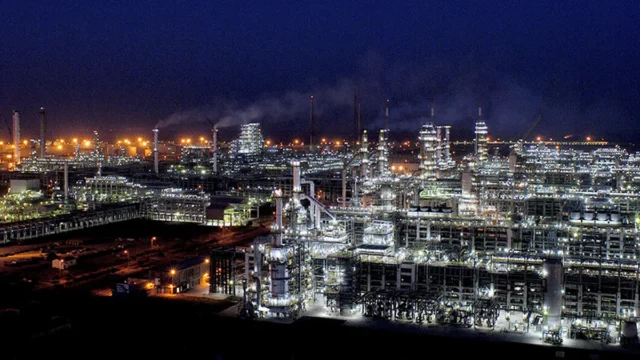
Rubio at Jamnagar: US pitches oil and Venezuelan crude to India’s ‘refining superpower’
US Secretary of State Marco Rubio visited Reliance’s Jamnagar refinery complex in Gujarat on 21 October 2026, a day after calling India a ‘refining superpower’. He wants India to buy more US oil and refine more Venezuelan crude. In Mumbai on 20 October, External Affairs Minister S. Jaishankar also held an unannounced India–US–UAE meeting on energy and connectivity, with the Strait of Hormuz blocked.
UPSC angle: Prelims: Jamnagar, Hormuz, I2U2, IMEC, SPR sites. · Mains GS-II/III: energy security vs strategic autonomy; India–US–UAE.
21 Oct 2026
US PERM freeze on Indian IT firms: what the skilled-migrant crackdown means for India
On 8 October 2026 the US Labor Department suspended Microsoft, Adobe, Infosys, TCS, Wipro, HCL, Cognizant and Capgemini from the PERM programme, the labour-certification step for most employment-based green cards. A Hindu data analysis on 21 October shows these firms filed only about 2,000 PERM applications this year, under 2% of the total. The direct hit is small, but the message to Indian talent is large.
UPSC angle: Prelims: PERM, H-1B, I-140, GATS Mode 4. · Mains GS-II: skilled migration and India–US ties; diaspora.
21 Oct 2026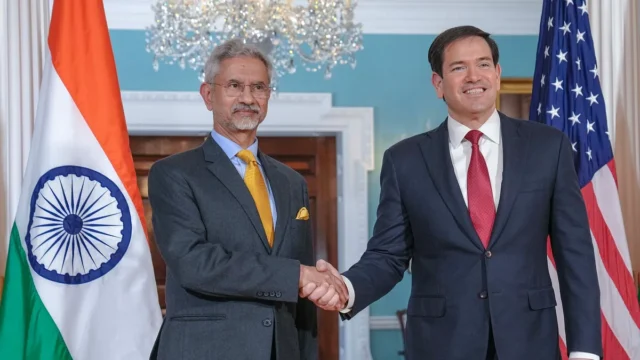
Rubio in Mumbai: India–US trade deal ‘very, very close’; energy and defence on the table
US Secretary of State Marco Rubio began his second India visit of the year in Mumbai on 20 October 2026 and met External Affairs Minister S. Jaishankar on trade, energy, technology and defence. Rubio said the two sides are ‘very, very close’ to a trade deal with ‘a small number of items left’, and praised India’s progress in diversifying energy supplies.
UPSC angle: Prelims: I2U2, Jamnagar, key office holders. · Mains GS-II: India-US partnership, tariffs and strategic autonomy.
20 Oct 2026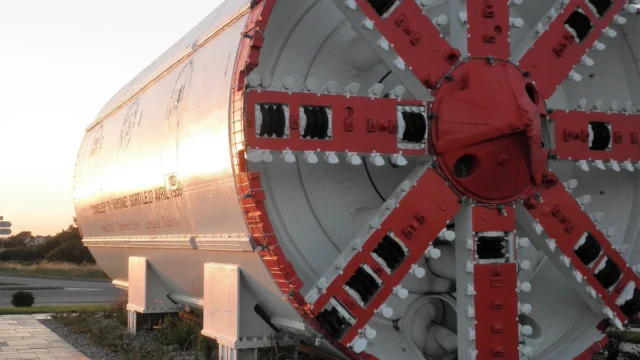
China to impose export controls on tunnel boring machines from 18 November: what it means for India
On 19 October 2026 China’s Commerce Ministry announced export controls on tunnel boring machines (TBMs) and related items from 18 November, calling them clearly dual-use. India imports TBMs for metro, rail and border tunnels and has faced customs delays on Chinese machines since 2024. China also announced controls on some drones.
UPSC angle: Prelims: export control regimes, SCOMET, Wassenaar, MTCR. · Mains GS-II/III: China dependence and supply-chain resilience.
19 Oct 2026Learn the concept
Question text as printed in the official UPSC question paper: https://www.upsc.gov.in/sites/default/files/QP-CSM-26-010926-GENERAL-STUDIES-PAPER%20-%20II.pdf The model answer is original Battle IAS work; use it to learn structure, not to memorise.