
PM Dhan-Dhaanya Krishi Yojana completes one year: 100 aspirational agricultural districts
Next story · 10 OctNavy launches Next Generation Offshore Patrol Vessel “Shreyas” at GRSE Kolkata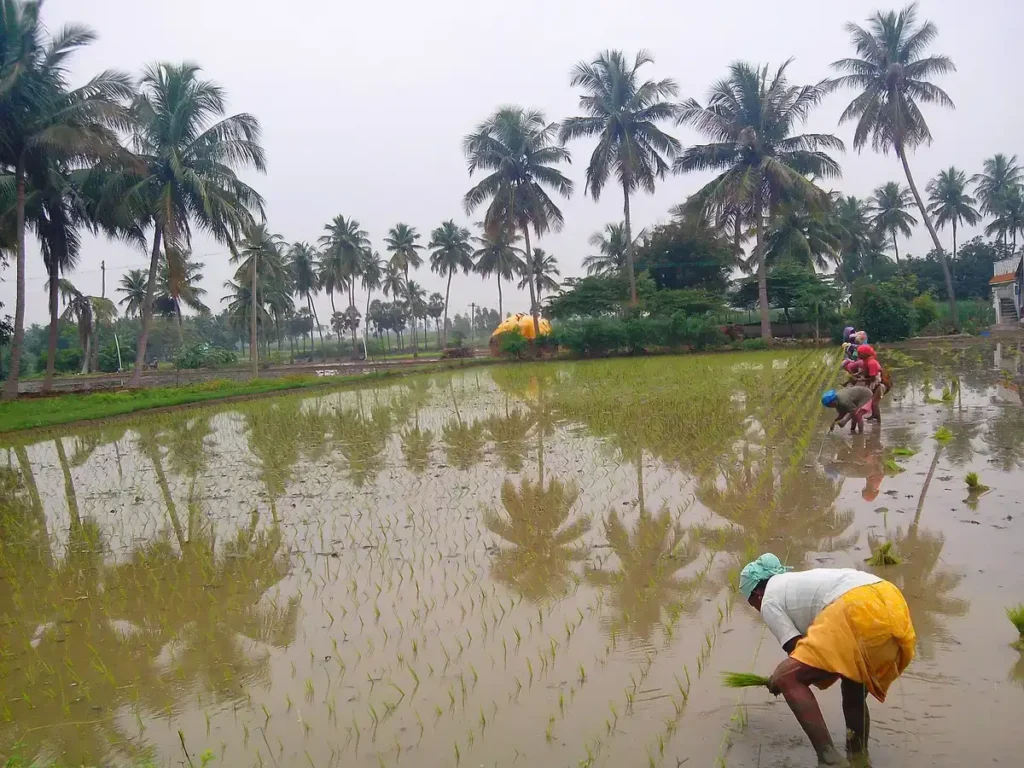
PM Dhan-Dhaanya Krishi Yojana, launched on 11 October 2025, completed one year. It targets 100 aspirational agricultural districts chosen for low productivity, low cropping intensity and low farm credit, and joins 36 Central schemes of 11 ministries. The districts’ average score rose from 18.85 in April 2026 to 46.89 in August 2026.
- Launch
- 11 Oct 2025
- Duration
- Six years
- Coverage
- 100 districts
- Monitoring
- 121 indicators
PM Dhan-Dhaanya Krishi Yojana: what happened?
The idea is borrowed from the Aspirational Districts Programme: pick the weakest districts, measure them every month and push them up. Here the lens is only farming.
- All 100 districts have prepared District Action Plans, now under implementation, and committees are in place at national, State and district level.
- The average score across six objectives rose from 18.85 (April 2026) to 46.89 (August 2026).
- The Department of Public Enterprises has included adoption of these districts for CSR by CPSEs in 2026-27 and 2027-28.
- A PM-DDKY FPO Sangam in December 2025 brought together over 72 FPOs from 15 States and 33 districts.
How were the 100 districts chosen?
- Three indicators: low productivity, low cropping intensity and less agricultural credit.
- The share of net cropped area and operational holdings in each State/UT was also considered, and every State has at least one district.
How is the scheme run?
Three-tier structure
- National Executive Committee (Union Agriculture Minister) and National Monitoring Committee (Secretary, DA&FW)
- State Samiti headed by the Chief Secretary reviews district plans
- District Samiti headed by the Collector/DM prepares and runs the District Action Plan
- Monthly ranking on the PM-DDKY dashboard
Which objectives improved most in the first year?
| Objective | Apr 2026 | Aug 2026 |
|---|---|---|
| Agricultural productivity | 1.50 | 8.08 |
| Crop diversification and sustainable practices | 4.08 | 10.18 |
| Post-harvest storage | 2.14 | 5.19 |
| Irrigation | 1.38 | 4.91 |
| Short- and long-term credit | 2.40 | 6.53 |
| Governance and service delivery | 7.41 | 12.05 |
| Overall average (six objectives) | 18.85 | 46.89 |
Why does PM Dhan-Dhaanya Krishi Yojana matter?
| Angle | What to note |
|---|---|
| Federal | Agriculture is a State subject (List II, Entry 14); the scheme works through convergence and district plans rather than a new central department. |
| Economic | Targets the districts where yield, cropping intensity and credit are weakest. |
| Governance | Monthly ranking creates competition, the same tool used in the Aspirational Districts Programme. |
| Farmers | FPO examples: Gadchiroli rice unit, Tumakuru copra, Jaisalmer solar sprinklers on cumin. |
What are the challenges in PM Dhan-Dhaanya Krishi Yojana?
- Scores are on output indicators; actual yield and income gains need outcome data over several years.
- Convergence of 36 schemes depends on many departments acting together.
- Irrigation and storage scores, though higher, are still the lowest.
What should be done next on PM Dhan-Dhaanya Krishi Yojana?
- Publish outcome indicators (yield, income) alongside output rankings.
- Use CPSE CSR money for storage and irrigation, the weakest objectives.
What can Prelims ask on PM Dhan-Dhaanya Krishi Yojana?
- Approved 16 July 2025; launched 11 October 2025; six years.
- 100 districts; three selection indicators.
- 36 Central schemes of 11 ministries; 121 indicators.
- Dashboard hosted on NITI Aayog’s site (pmddky.niti.gov.in).
How to write about PM Dhan-Dhaanya Krishi Yojana in Mains
Practice question (10 marks, 150 words): District-level convergence can lift farm output in lagging regions. Examine with reference to the PM Dhan-Dhaanya Krishi Yojana.
- Intro: 100 districts, one year.
- Design: selection, convergence, three tiers, ranking.
- Results: scores table.
- Limits: outcome data, coordination.
- Conclusion: measured convergence works if outcomes follow.
Image: Thamizhpparithi Maari, Wikimedia Commons, CC BY-SA 4.0
How to use this in Mains
If asked: Discuss the targeting criteria and early outcomes of PM Dhan-Dhaanya Krishi Yojana. (GS-III)
Quote: “The average score across six objectives rose from 18.85 (April 2026) to 46.89 (August 2026).”
Use it: Use as evidence of early outcomes; caution that scores measure process, not yet farm income.
Exam angle
Prelims: selection indicators, number of schemes and ministries. · Mains GS-III: agricultural development, convergence.
Practice MCQs
Original practice questions (not PYQs).
Which of the following is NOT one of the three indicators used to select PM Dhan-Dhaanya districts?
Answer (d) & explanation
PIB lists low productivity, low cropping intensity and less agricultural credit.
PM Dhan-Dhaanya Krishi Yojana works through convergence of how many Central schemes?
Answer (c) & explanation
36 Central schemes across 11 Ministries and Departments (PIB, 10 Oct 2026).
Questions students ask about this
What is PM Dhan-Dhaanya Krishi Yojana?
A six-year scheme from 2025-26 to develop 100 aspirational agricultural districts by bringing together 36 Central schemes of 11 ministries, along with State schemes and private effort.
How were districts selected?
On low productivity, low cropping intensity and low agricultural credit, with at least one district per State.
How is progress tracked?
Through 121 indicators on the PM-DDKY dashboard, with monthly district rankings on output indicators.
Keep studying
Go deeper
Official source: PIB Backgrounder: Prime Minister Dhan-Dhaanya Krishi Yojana (PMDDKY), 10 Oct 2026
facts from cited sources only; faculty review pending