
UPSC Mains 2026 GS3 Q6: model answer
Distinguish between a Fast Breeder Reactor (FBR) and a thermal nuclear reactor. In the context of first indigenously developed prototype FBR at Kalpakkam, explain the term 'criticality'. What are its implications for clean energy future of our country?
What the question wants
Three parts: FBR vs thermal reactor (neutron speed, fuel, coolant, breeding); what criticality means for PFBR; implications for clean energy and the three-stage programme.
How to structure it
Intro: PFBR as stage two. Body: comparison (table helps), criticality in plain terms, implications. Conclusion: a sober note on timelines and costs.
- 1Comparison (table helps)
- 2Criticality in plain terms
- 3Implications
Model answer
The 500 MWe PFBR at Kalpakkam (BHAVINI) opens stage two of India's three-stage nuclear programme.
| Feature | Thermal (PHWR) | Fast breeder (PFBR) |
|---|---|---|
| Neutrons | Slowed by moderator | Fast, no moderator |
| Fuel | Natural uranium | U-Pu mixed oxide (MOX) |
| Coolant | Heavy water | Liquid sodium |
| Fuel balance | Consumes fissile material | Breeds more than it uses |
| Stage | Stage I | Stage II (leads to thorium) |
FBR vs thermal reactor
- Neutrons: thermal reactors slow them with a moderator; an FBR uses fast neutrons, no moderator.
- Fuel: natural/enriched uranium vs uranium-plutonium MOX.
- Coolant: water vs liquid sodium.
- Breeding: an FBR makes more fissile material than it burns, from a U-238 (later thorium) blanket.
Criticality is when the chain reaction sustains itself: each fission causes, on average, exactly one more. First criticality proves core and controls work; power is then raised in steps.
Clean-energy implications
- Path to stage three: thorium via U-233.
- More energy from scarce uranium, fewer imports.
- Low-carbon baseload for net-zero 2070 and 100 GW nuclear by 2047.
Sodium handling, reprocessing and two decades of delay remain. Stable operation matters more than new announcements.
Keywords, cases and data to drop in
three-stage programme PFBR 500 MWe BHAVINI MOX fuel liquid sodium coolant breeding ratio criticality thorium and U-233 100 GW by 2047 net zero 2070
Where most answers lose marks
- Saying an FBR does not need any fissile fuel.
- Defining criticality as a dangerous condition; it is the normal operating state.
- Skipping the thorium link, which is the whole point of stage two.
Same theme in Prelims
In the context of electric vehicle batteries, consider the following elements :
- I. Cobalt
- II. Graphite
- III. Lithium
- IV. Nickel
How many of the above usually make up battery cathodes?
Answer (c) & explanation
Three of the four usually make up cathodes (c). A lithium-ion cathode is a lithium metal oxide, such as nickel-manganese-cobalt (NMC), nickel-cobalt-aluminium (NCA), or lithium iron phosphate (LFP). So lithium (III), nickel (IV) and cobalt (I) go into cathodes. Item II is wrong: graphite is the usual anode material, not the cathode. So options (a), (b) and (d) fail.
Notice the shift to LFP batteries, which avoid costly cobalt and are safer, now common in EVs. Sodium-ion batteries are an emerging cheaper option. India's PLI scheme for Advanced Chemistry Cell batteries aims to make cells at home, and the Kolar and Jammu lithium finds made news.
Answer as per the official UPSC answer key.
Consider the following substances :
- I. Ethanol
- II. Nitroglycerine
- III. Urea
Coal gasification technology can be used in the production of how many of them?
Answer (b) & explanation
Coal gasification can produce two of them (b). Gasification turns coal into syngas, a mix of carbon monoxide and hydrogen. Item III is right: syngas can be made into ammonia and then urea, as at the revived Talcher fertiliser plant. Item I is right: syngas can be made into methanol and ethanol, which is why India's coal gasification mission names these products. Item II is wrong: nitroglycerine is made by nitrating glycerol, which comes from fats, not from syngas.
Notice the National Coal Gasification Mission, aiming to gasify 100 million tonnes of coal by 2030, to cut imports of gas, ammonia and methanol. Gasification is cleaner than burning coal directly, but still emits CO₂.
Answer as per the official UPSC answer key.
What is the common characteristic of the chemical substances generally known as CL-20, HMX and LLM-105, which are sometimes talked about in media?
Answer (b) & explanation
They are explosives used in military weapons (b). CL-20 (hexanitrohexaazaisowurtzitane), HMX (octogen) and LLM-105 are high explosives used in warheads and munitions. CL-20 is among the most powerful non-nuclear explosives. LLM-105 is valued because it is insensitive, so it does not go off easily by accident. Option (a) is wrong: they are not refrigerants. Options (c) and (d) are wrong: they are not fuels for cruise missiles or rockets, which burn steadily rather than detonate.
Notice India's interest: DRDO's High Energy Materials Research Laboratory in Pune works on such compounds. Other common military explosives include RDX and TNT. Some rocket propellants do add HMX for extra energy.
Answer as per the official UPSC answer key.
Fresh examples from current affairs
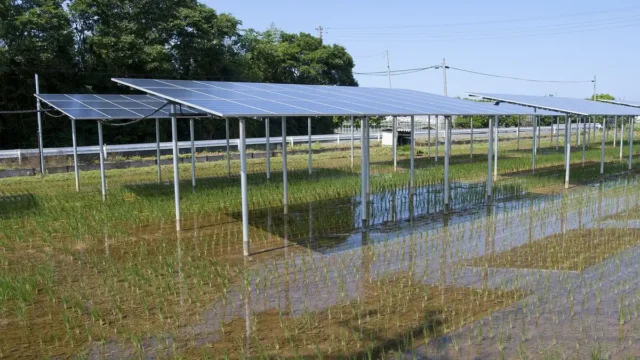
Agrivoltaics: Centre plans a scheme to push solar panels above farms; 5 GW seen in 3–4 years
MNRE Secretary Santosh Kumar Sarangi said on 19 October 2026 that the Centre is planning a central sector scheme to help States adopt agrivoltaics, either standalone or within PM-KUSUM 2.0. He expects capacity to cross 5 GW in three to four years if States notify feed-in tariffs. India hosts the 7th Agrivoltaics World Conference in New Delhi from 21 to 23 October.
UPSC angle: Prelims: agrivoltaics, PM-KUSUM components, feed-in tariffs. · Mains GS-III: energy transition and food security.
20 Oct 2026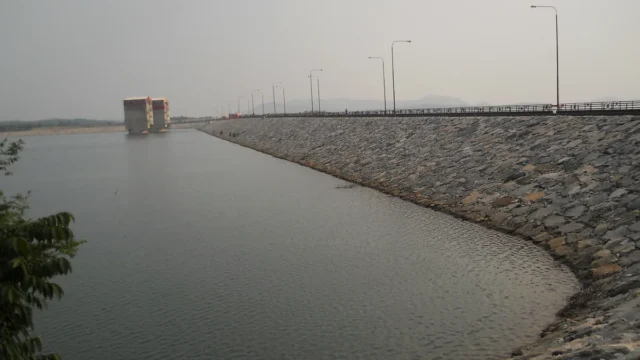
Pumped storage hydropower: India’s roadmap for 100 GW of ‘water batteries’ by 2035-36
A PIB backgrounder of 19 October 2026 explains how pumped storage projects (PSPs) will store solar and wind power for India’s grid. India runs 7.43 GW of pumped storage today, is building 15.87 GW more and has an assessed potential of 345.38 GW. A roadmap aims to add about 100 GW between 2025-26 and 2035-36.
UPSC angle: Prelims: PSP types, CEA, ISTS waiver, IRENA ranking. · Mains GS-III: storage and the clean energy transition.
19 Oct 2026
Oil companies bar sugar-based ethanol for 2026-27; maize incentive cut to ₹2.79 a litre
The oil marketing companies have kept sugar out of India’s ethanol programme for the coming year. The tender issued on 16 October 2026 seeks about 11 billion litres of ethanol for the 2026-27 supply year, but asks for none made from sugarcane juice, sugar syrup or B-heavy molasses, because the Government wants sugar diversion for ethanol cut to zero. Grain must now carry the load, and even the maize incentive has been cut. Read this as a live example of the food-versus-fuel trade-off.
UPSC angle: Prelims: E20, NPB 2018, molasses grades, feedstocks. · Mains GS-III: energy security vs food security; farm incomes.
18 Oct 2026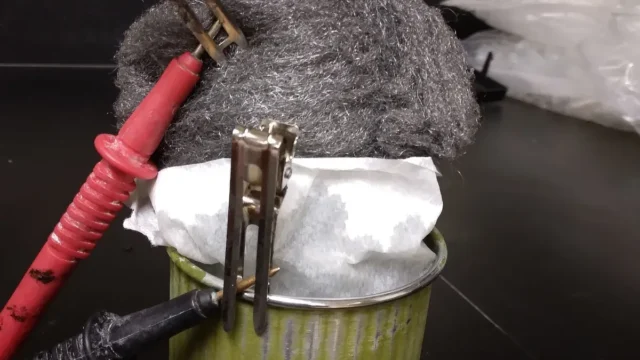
Metal-free porous catalyst could cut cost of zinc–air batteries and fuel cells
Scientists from S.N. Bose Centre Kolkata, INST Mohali and SRM University Amaravati made a metal-free porous organic catalyst, TTT-DHTD, for the oxygen reduction reaction in zinc-air batteries. It reached about 96% of commercial platinum's performance and stayed stable for 120 hours. Replacing platinum could cut the cost of zinc-air batteries and fuel cells.
UPSC angle: Prelims: battery chemistries. · Mains GS-III: energy storage, indigenous research.
7 Oct 2026Learn the concept
Question text as printed in the official UPSC question paper: https://www.upsc.gov.in/sites/default/files/QP-CSM-26-010926-GENERAL-STUDIES-PAPER-III.pdf The model answer is original Battle IAS work; use it to learn structure, not to memorise.