
UPSC Mains 2026 GS3 Q12: model answer
How are startups in India promoting entrepreneurship, innovation and employment? Discuss the global and domestic challenges in their working and suggest suitable measures to overcome these challenges.
What the question wants
Contribution on three fronts with examples; challenges split into global and domestic; measures.
How to structure it
Intro: size of the ecosystem. Body: three contributions; global and domestic challenges; measures. Conclusion: depth over valuations.
- 1Three contributions
- 2Global and domestic challenges
- 3Measures
Model answer
India has one of the world's largest startup ecosystems, with well over 1.5 lakh DPIIT-recognised startups and a large share outside the metros.
| Global | Domestic |
|---|---|
| High interest rates, funding winter | Thin domestic risk capital |
| Geopolitics and data rules abroad | Regulatory uncertainty |
| Big Tech competition | Governance lapses; flipping abroad |
| Export market slowdowns | Skill gaps; gig-worker insecurity |
Contribution
- Entrepreneurship: first-generation founders from Tier-2 and Tier-3 cities such as Jaipur, Indore and Lucknow; a growing share of recognised startups have at least one woman director.
- Innovation: fintech on top of UPI, agritech for advisory and markets, healthtech for teleconsultation, and private space firms (Skyroot, Agnikul) after the space sector was opened up.
- Employment: DPIIT-recognised startups report lakhs of direct jobs, plus gig and delivery jobs on platforms, and indirect jobs among suppliers.
Global challenges
- A funding winter after interest rates rose in 2022; foreign venture capital became cautious.
- Geopolitics and data rules abroad that affect SaaS exports; competition from global tech platforms.
Domestic challenges
- Regulatory complexity and uncertainty (for example, earlier angel-tax disputes, now abolished).
- Thin domestic risk capital and a shallow market for deep-tech, where returns take a decade.
- Governance failures in some high-profile startups, and 'flipping' of headquarters abroad.
- Skill gaps and job insecurity for gig workers.
Measures
- Use the new Fund of Funds and the Research Development and Innovation fund to back deep-tech.
- Allow more pension and insurance capital into venture funds, and ease listing on Indian exchanges so 'reverse flipping' continues.
- Single-window, predictable regulation; regulatory sandboxes as RBI and IFSCA run.
- Corporate governance norms for late-stage startups.
- Social security for platform workers under the Code on Social Security.
The aim should be durable firms that solve Indian problems, not a count of unicorns.
Keywords, cases and data to drop in
Startup India 2016 DPIIT recognition Fund of Funds for Startups angel tax abolished (2024) funding winter reverse flipping deep-tech regulatory sandbox Code on Social Security 2020 (gig workers) space sector opening (IN-SPACe)
Where most answers lose marks
- Not separating global and domestic challenges, which the question asks for explicitly.
- Celebrating unicorn numbers with no discussion of jobs.
- Generic measures with no named policy.
Same theme in Prelims
In what way(s) does the Vizhinjam International Seaport represent a structural shift in India's maritime trade and logistics policy ?
- 1. By functioning exclusively as a domestic cargo hub to reduce reliance on coastal shipping and eliminate the need for foreign collaborations.
- 2. By focusing primarily on passenger cruise tourism and heritage shipping to increase Kerala's profile as a maritime heritage destination.
- 3. By leveraging its natural deep draft and strategic location to reduce dependence on foreign trans-shipment ports, enhance revenue retention, and reposition India in regional maritime trade.
Select the answer using the code given below :
Answer (d) & explanation
Only statement 3 explains the shift (d). Statement 3 is right: Vizhinjam, in Kerala, is India's first deep-water container trans-shipment port, built on a PPP model and opened in 2025. It sits close to the main East-West shipping lane with a natural depth of about 18–20 m, so giant mother ships can call here instead of at Colombo, Singapore or Dubai. That keeps freight earnings at home. Statement 1 is wrong: it is an international cargo port. Statement 2 is wrong: it is not a cruise port.
Notice the problem it solves: earlier, about three-quarters of India's trans-shipped cargo was handled at foreign ports. The Adani group runs it. Galathea Bay in Great Nicobar is planned as another trans-shipment hub.
words like "exclusively" and "primarily" in statements 1 and 2. A trans-shipment port lives on foreign ships, so "eliminate foreign collaborations" cannot be right.
Fell for this one? Most aspirants do. The PYQ Book puts every UPSC trap side by side, so the pattern finally clicks. Try the free sample
Answer as per the official UPSC answer key.
An e-commerce revenue model where the seller has control over pricing but doesn't keep products in stock and instead transfers customer orders and shipment details to a third-party supplier, who then ships the goods directly to the customer, is called :
Answer (a) & explanation
This is the dropshipping model (a). In dropshipping, the online store sets the price and takes the order but keeps no stock. It passes the order to a third-party supplier, who ships straight to the buyer. Option (b) is wrong: in the affiliate model a site earns a commission only for sending buyers to another seller. Option (c) is wrong: a transaction-fee model charges a cut on each sale made on a platform. Option (d) is wrong: an agency seller acts on behalf of the owner, who controls the price.
Notice the trade-off: dropshipping needs little capital, but the seller earns thinner margins and depends on the supplier's quality and speed. India allows 100% FDI only in the marketplace model of e-commerce, not the inventory model.
the affiliate model also holds no stock. The clue is "the seller has control over pricing": an affiliate does not set the price.
One trap spotted is one mark saved. The PYQ Book lines up every trap UPSC has set, so you walk in prepared. Try the free sample
Answer as per the official UPSC answer key.
Which one of the following best describes the key objective of India's 'Open Network for Digital Commerce' (ONDC) initiative ?
Answer (c) & explanation
ONDC aims to break the dominance of large platforms (c). The Open Network for Digital Commerce, a DPIIT initiative (2021-22), is an open set of rules, like UPI for shopping. A buyer on one app can buy from a seller listed on another app. This interoperability lets small sellers reach buyers without joining a giant platform. Option (a) is wrong: it does not give the government control of transactions. Option (b) is wrong: private players can join; they are not replaced. Option (d) is wrong: it does not force UPI payments.
Notice ONDC's design: it is a not-for-profit company and part of India's Digital Public Infrastructure, along with Aadhaar, UPI and DigiLocker. It now covers food, groceries and mobility too.
options (a), (b) and (d) use strong words: "all", "replace", "mandate". A public digital platform usually opens a market; it does not take it over.
Answer as per the official UPSC answer key.
Fresh examples from current affairs
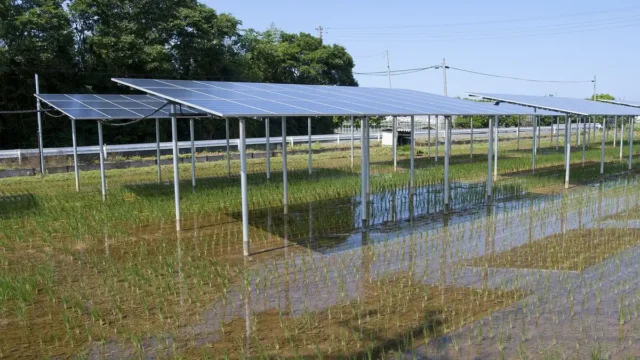
Agrivoltaics: Centre plans a scheme to push solar panels above farms; 5 GW seen in 3–4 years
MNRE Secretary Santosh Kumar Sarangi said on 19 October 2026 that the Centre is planning a central sector scheme to help States adopt agrivoltaics, either standalone or within PM-KUSUM 2.0. He expects capacity to cross 5 GW in three to four years if States notify feed-in tariffs. India hosts the 7th Agrivoltaics World Conference in New Delhi from 21 to 23 October.
UPSC angle: Prelims: agrivoltaics, PM-KUSUM components, feed-in tariffs. · Mains GS-III: energy transition and food security.
20 Oct 2026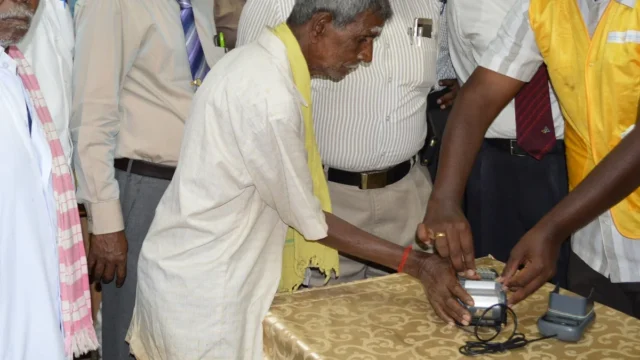
Financial inclusion saturation campaign in 2.70 lakh panchayats and ULBs from 21 October
The Department of Financial Services will run a nationwide campaign from 21 October to 31 December 2026 to saturate financial inclusion schemes in 2.70 lakh gram panchayats and urban local bodies. Bank camps will enrol people in PMJJBY, PMSBY and APY, open Jan Dhan accounts, finish re-KYC and nominations, and spread awareness on digital frauds and unclaimed deposits.
UPSC angle: Prelims: scheme parameters of PMJJBY, PMSBY, APY, PMJDY. · Mains GS-III: inclusive growth and financial inclusion.
20 Oct 2026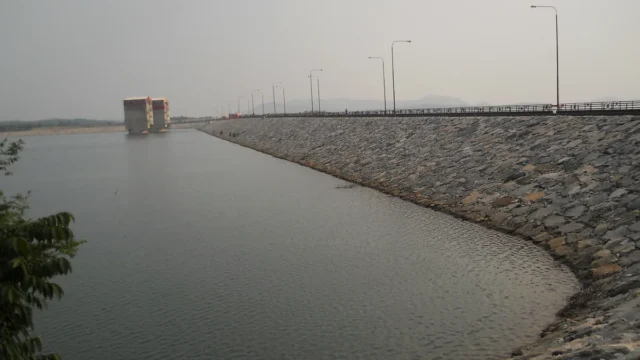
Pumped storage hydropower: India’s roadmap for 100 GW of ‘water batteries’ by 2035-36
A PIB backgrounder of 19 October 2026 explains how pumped storage projects (PSPs) will store solar and wind power for India’s grid. India runs 7.43 GW of pumped storage today, is building 15.87 GW more and has an assessed potential of 345.38 GW. A roadmap aims to add about 100 GW between 2025-26 and 2035-36.
UPSC angle: Prelims: PSP types, CEA, ISTS waiver, IRENA ranking. · Mains GS-III: storage and the clean energy transition.
19 Oct 2026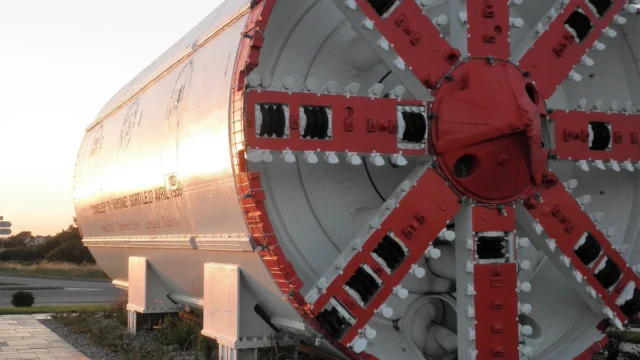
China to impose export controls on tunnel boring machines from 18 November: what it means for India
On 19 October 2026 China’s Commerce Ministry announced export controls on tunnel boring machines (TBMs) and related items from 18 November, calling them clearly dual-use. India imports TBMs for metro, rail and border tunnels and has faced customs delays on Chinese machines since 2024. China also announced controls on some drones.
UPSC angle: Prelims: export control regimes, SCOMET, Wassenaar, MTCR. · Mains GS-II/III: China dependence and supply-chain resilience.
19 Oct 2026Learn the concept
Question text as printed in the official UPSC question paper: https://www.upsc.gov.in/sites/default/files/QP-CSM-26-010926-GENERAL-STUDIES-PAPER-III.pdf The model answer is original Battle IAS work; use it to learn structure, not to memorise.