
UPSC Mains 2026 GS4 Q12: model answer
Ajit has been recently promoted as the Head of the Department of Weapon Sales
(DWS) in the Ministry of Defence Production (MDP). His charter of duties includes international sales of weapons produced domestically by MDP. In two recent wars, MDP weapons have performed admirably, resulting in many countries showing interest in buying them, particularly long-range artillery and missiles. Country A and country B have asked for these weapons. However, production constraints restrict DWS to accept only one purchase order. Country A is a developing nation with a sound technology base. MDP is planning R&D collaboration with it for the next generation of weapons. It is not part of any security alliance and needs weapons for protection from a troublesome neighbour. It seeks a large acquisition on a long-term loan. Country B is also a developing nation. Military strength is its priority, with the military budget often ingressing into allocations for human resources and infrastructure development. It is in security alliance with a superpower who has a large military base there and periodically allots it financial grants. It is a member of an economic bloc with which the government is currently negotiating a free trade agreement. It is not a signatory of NPT but possesses smaller nuclear weapons and delivery systems. It supports some guerrilla forces abroad. It has sought a smaller acquisition and is prepared to make some advance payment. It is currently negotiating arms purchases from another nation too. Ajit discussed this case with his counterparts in the related departments. Therein, the significant economic benefits, employment generation and stronger diplomatic relations arising from this sale were highlighted. It was also emphasized that refusing the deal could result in country B purchasing weapons from some other supplier. Ajit was aware that in arms sales, due diligence at each stage was pivotal to ensure conformity to national policy and international treaties.
(a) Discuss the options available to Ajit. Which option should he select and why?
(b) How can Ajit balance nation's economic and strategic interests with ethical considerations?
What the question wants
(a) Options: sell to A, sell to B, defer; choose A with reasons. (b) How to balance economic and strategic interests with ethics (due diligence, end-use, treaties).
How to structure it
(a) Compare A and B on ethics and strategy; choose A. (b) Principles and safeguards.
- 1Part (a): Compare A and B on ethics and strategy; choose A
- 2Part (b): Principles and safeguards
Model answer
(a) Options
| Test | A | B |
|---|---|---|
| Purpose | Self-defence | Military priority over welfare |
| Treaty risk | Low | Outside NPT, backs guerrillas |
| Long-term value | R&D partner | Advance payment, FTA leverage |
- Sell to Country B: advance payment, FTA leverage. But B diverts money from development, is outside the NPT with nuclear weapons, supports guerrilla forces abroad and is allied to a superpower with a base there. Arms could fuel conflict or reach non-state actors.
- Sell to Country A: needs weapons for self-defence, is non-aligned, and offers a long-term R&D partnership. The cost is a long-term loan and slower revenue.
- Defer both: avoids risk but loses strategic and economic gains.
Recommended: Country A
- Defensive need is a just purpose; risk of misuse is low.
- R&D collaboration builds long-term capability and self-reliance.
- Consistent with India's export control obligations (Wassenaar Arrangement, MTCR) and its reputation as a responsible supplier.
- The loan can be structured through Exim Bank lines of credit, as India does for partners.
- The argument that B will buy elsewhere does not justify India becoming the supplier of potential harm.
(b) Balancing interests with ethics
- Due diligence: end-user certificates, post-shipment verification, no re-export clauses.
- Policy test: check against national export policy, sanctions and treaty obligations at each stage.
- Consequence test: will the weapons protect or harm civilians?
- Transparency: decisions documented and approved by the competent committee.
- Long-term view: trust and reputation are strategic assets too.
- Explore future capacity to meet B's request later under strict safeguards, if its conduct changes.
Economic gain is legitimate, but India's interest also lies in being seen as a reliable and principled partner.
Keywords, cases and data to drop in
end-use monitoring Wassenaar Arrangement MTCR due diligence responsible supplier
Where most answers lose marks
- Choosing B for money
- No safeguards discussed
Fresh examples from current affairs
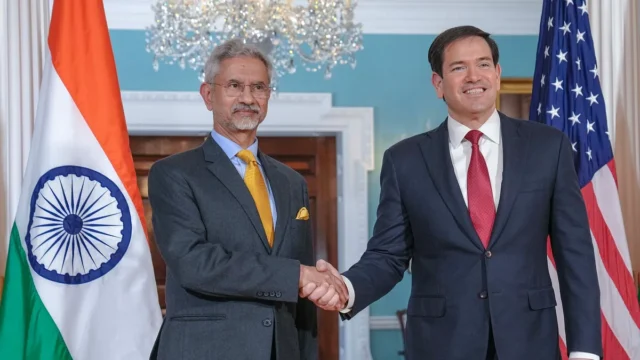
Rubio in Mumbai: India–US trade deal ‘very, very close’; energy and defence on the table
US Secretary of State Marco Rubio began his second India visit of the year in Mumbai on 20 October 2026 and met External Affairs Minister S. Jaishankar on trade, energy, technology and defence. Rubio said the two sides are ‘very, very close’ to a trade deal with ‘a small number of items left’, and praised India’s progress in diversifying energy supplies.
UPSC angle: Prelims: I2U2, Jamnagar, key office holders. · Mains GS-II: India-US partnership, tariffs and strategic autonomy.
20 Oct 2026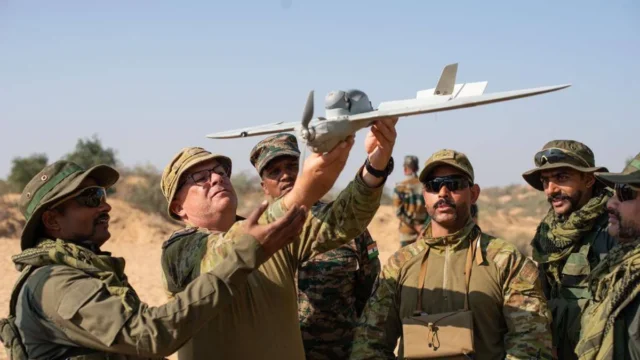
AUSTRAHIND 2026: fifth India–Australia Army exercise begins in Thiruvananthapuram
The fifth edition of the India–Australia joint military exercise AUSTRAHIND began on 19 October 2026 at the Foreign Training Node, Thiruvananthapuram, and runs till 1 November. About 120 soldiers from each army will train for sub-conventional operations in island and coastal terrain under a UN Chapter VII mandate. For the first time, New Zealand has sent observers.
UPSC angle: Prelims: exercise names, venues, partner countries, UN Chapter VII. · Mains GS-III: defence diplomacy in the Indo-Pacific.
20 Oct 2026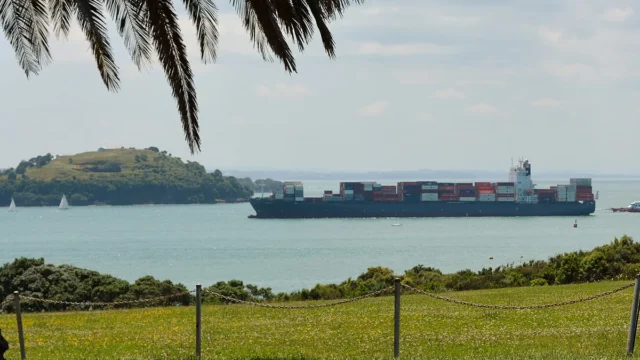
India–New Zealand FTA enters into force: zero duty on all Indian exports from day one
The India–New Zealand Free Trade Agreement came into force on 20 October 2026. From day one, New Zealand charges no customs duty on any Indian export, the first time India has got full duty-free access on all tariff lines at entry into force. New Zealand has also committed to facilitate USD 20 billion of investment into India, while dairy, sugar and edible oils stay protected.
UPSC angle: Prelims: FTA dates, Centres of Excellence, visa quotas, TRQ items. · Mains GS-II/III: FTAs with developed economies and farm safeguards.
20 Oct 2026
India to host 61st CIML meeting on legal metrology in New Delhi, 26–28 October
India will host the 61st meeting of the International Committee of Legal Metrology (CIML) for the first time, in New Delhi from 26 to 28 October 2026. The Department of Consumer Affairs is organising it with the International Organization of Legal Metrology (OIML), and more than 100 delegates are expected, PIB said on 19 October.
UPSC angle: Prelims: OIML, CIML, Legal Metrology Act 2009, Union List Entry 50. · Mains GS-III: standards and trade.
19 Oct 2026Learn the concept
Question text as printed in the official UPSC question paper: https://www.upsc.gov.in/sites/default/files/QP-CSM-26-010926-GENERAL-STUDIES-PAPER-IV.pdf The model answer is original Battle IAS work; use it to learn structure, not to memorise.