
Nuclear Energy in India: Fission Basics, Three-Stage Programme, Reactor Types, PFBR, SMRs and Policy (UPSC Notes + PYQs)
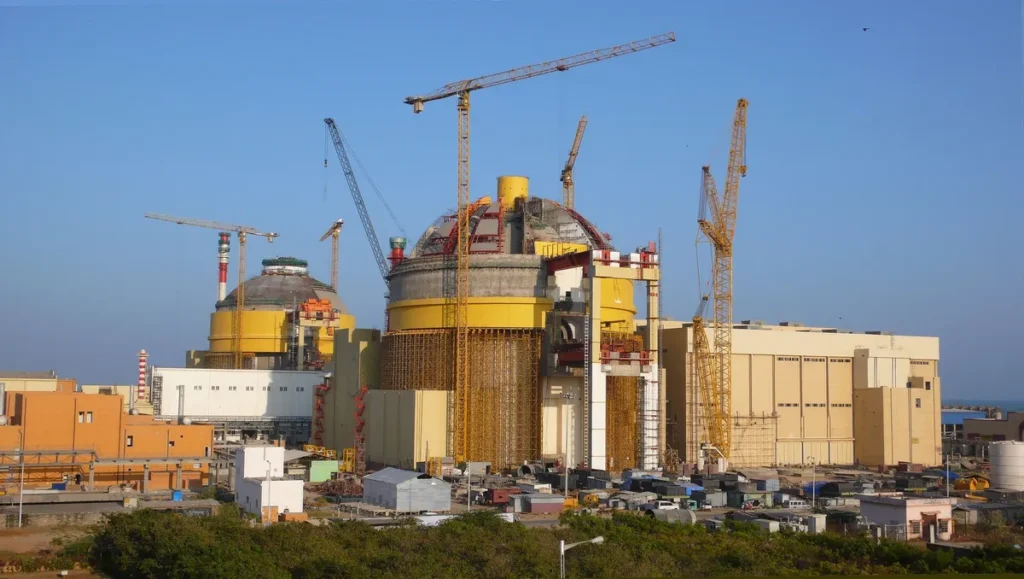
UPSC has already asked about this. Read the story with these questions in mind.
- Prelims 2012To meet its rapidly growing energy demand, some opine that India should pursue research and development on thorium as the future fuel of nuclear…Solve it below ↓
- Prelims 2016India is an important member of the ‘International Thermonuclear Experimental Reactor’. If this experiment succeeds, what is the immediate advantage for India?Solve it below ↓
Background: why nuclear power matters for India
India needs large amounts of reliable electricity to grow, while it has committed to cutting the carbon intensity of its economy and reaching net zero by 2070. Coal still provides most power, and solar and wind vary with the weather and season. Nuclear power offers steady, round-the-clock electricity with very low carbon emissions over its life cycle. India’s nuclear story began with the Atomic Energy Act, 1948 and the Department of Atomic Energy (1954), under Homi J. Bhabha. The first power reactors at Tarapur started in 1969. After the 1974 and 1998 tests, India faced international restrictions on fuel and technology, which shaped its reliance on indigenous Pressurised Heavy Water Reactors. The 2008 civil nuclear agreement with the US and the NSG waiver opened access to imported uranium and reactors.
Fission and fusion
In fission, a heavy nucleus such as U-235 splits when hit by a neutron, releasing energy and more neutrons that sustain a chain reaction. Moderators (heavy water, light water, graphite) slow neutrons; control rods (boron, cadmium) absorb them. Fusion joins light nuclei (hydrogen isotopes) and powers the sun; ITER in France, where India is a partner, aims to show it at scale.
- 1Stage 1: PHWRs burn natural uranium
- 2Spent fuel reprocessed for plutonium
- 3Stage 2: Fast breeders breed fuel from U-238 and thorium
- 4Uranium-233 produced from thorium
- 5Stage 3: Thorium-based reactors
Three-stage programme
| Stage | Reactor | Fuel | Output |
|---|---|---|---|
| I | Pressurised Heavy Water Reactor | Natural uranium; heavy water moderator | Power + plutonium-239 |
| II | Fast Breeder Reactor | Plutonium-uranium MOX; U-238 blanket | Power + more plutonium; later U-233 from thorium blanket |
| III | Thorium-based reactors (e.g., AHWR) | Thorium + U-233 | Sustained use of India’s large thorium reserves |
India has modest uranium but some of the world’s largest thorium reserves, mostly in monazite sands of Kerala and Odisha coasts.
Where India stands
About two dozen operating reactors, run mainly by NPCIL, with installed capacity of around 8.8 GW. Indigenous 700 MWe PHWRs (Kakrapar 3 and 4, Rajasthan 7) are now operating. Kudankulam uses Russian VVER light-water reactors. The PFBR, built by BHAVINI, began core loading in 2024.
- Slow neutrons
- Needs a moderator
- Water as coolant
- Consumes more fuel than it makes
- Fast neutrons
- No moderator
- Liquid sodium coolant
- Breeds more fissile fuel than it uses
New directions
The 2025 Union Budget announced a Nuclear Energy Mission with ₹20,000 crore for small modular reactors, aiming for at least five indigenous SMRs by 2033, and amendments to the Atomic Energy Act and the Civil Liability for Nuclear Damage Act to allow private participation. Bharat Small Reactors (220 MWe PHWR design) are planned for captive industrial use.
Types of reactors
| Reactor | Fuel | Moderator and coolant | Indian example |
|---|---|---|---|
| Boiling Water Reactor (BWR) | Enriched uranium | Light water | Tarapur 1 and 2 |
| Pressurised Heavy Water Reactor (PHWR) | Natural uranium | Heavy water | Kakrapar, Rawatbhata, Kaiga |
| VVER (pressurised light water) | Enriched uranium | Light water | Kudankulam (with Russia) |
| Fast Breeder Reactor | Plutonium-uranium mixed oxide | No moderator; liquid sodium coolant | PFBR, Kalpakkam |
The type matters because each stage of India’s programme depends on a different reactor: PHWRs in stage one, fast breeders in stage two and thorium-based reactors in stage three.
Debates
For: low-carbon baseload power, energy security, net zero by 2070. Against: high capital cost, long delays, waste management, safety fears after Fukushima (2011), and land and protest issues (Kudankulam, Jaitapur).
Fast breeder vs thermal reactor
A thermal reactor uses slow neutrons. A moderator such as heavy water or graphite slows the neutrons so that they can split uranium-235 atoms efficiently. Most of the uranium, uranium-238, is not used. A fast breeder reactor uses fast neutrons and no moderator. Its core contains plutonium-239, surrounded by a blanket of uranium-238 or thorium-232. The fast neutrons convert the blanket material into new fissile fuel: plutonium-239 from uranium-238, or uranium-233 from thorium. So it ‘breeds’ more fuel than it consumes. Because heat in the core is very intense, liquid sodium is used as the coolant. The Prototype Fast Breeder Reactor at Kalpakkam, built by BHAVINI with a design capacity of 500 MWe, is the key step to stage two.
Fission vs fusion and ITER
| Point | Fission | Fusion |
|---|---|---|
| Process | Splitting heavy nuclei | Joining light nuclei |
| Fuel | Uranium, plutonium, thorium | Deuterium and tritium |
| Waste | Long-lived radioactive waste | Much less, short-lived |
| Status | Commercial since the 1950s | Experimental |
India is one of seven members of ITER, the international fusion project being built in France, along with the EU, China, Japan, Korea, Russia and the US. India joined in 2005 and contributes in kind: the cryostat (the large steel vessel around the machine), in-wall shielding, cooling water systems, cryolines, and heating and power systems, built largely by Indian industry. At home, the Institute for Plasma Research, Gandhinagar, runs the tokamaks Aditya and SST-1.
Safety, liability and waste
Public concern about nuclear power centres on accidents, waste and the cost of liability. Chernobyl (1986) and Fukushima (2011) showed what can go wrong, and protests at Kudankulam and Jaitapur followed. India’s regulator is the Atomic Energy Regulatory Board (1983). The Civil Liability for Nuclear Damage Act, 2010 channels liability to the operator and gives the operator a right of recourse against suppliers, which foreign vendors said discouraged them. India follows a closed fuel cycle: spent fuel is reprocessed to recover plutonium and uranium, which reduces the volume of high-level waste that must be vitrified and stored. A balanced Mains answer acknowledges these concerns and points to strong regulation, transparency and local benefit sharing as the way to build trust.
Writing a Mains answer
For questions on India’s nuclear programme, begin with the three-stage plan and the thorium logic, then use a table of reactor types. Explain the PFBR as the bridge to stage two. Add India’s role in ITER for fusion. Close with challenges: cost and delays, fuel supply, liability, public acceptance, and the need for private and state participation to scale up.
Nuclear Energy: UPSC angle
For UPSC CSE
Prelims: three stages, moderators, thorium, places of reactors, ITER. Mains GS-III: role of nuclear in energy transition; private participation.
Nuclear Energy UPSC PYQs (Prelims)
Questions UPSC has actually asked, from the official papers. Pick an option to check yourself.
To meet its rapidly growing energy demand, some opine that India should pursue research and development on thorium as the future fuel of nuclear energy. In this context, what advantage does thorium hold over uranium?
– 1. Thorium is far more abundant in nature than uranium.
– 2. On the basis of per unit mass of mined mineral, thorium can generate more energy compared to natural uranium.
– 3. Thorium produces less harmful waste compared to uranium.
Which of the statements given above is/are correct?
Thorium is about three to four times more abundant than uranium (India has huge monazite reserves in Kerala’s sands). Nearly all mined thorium can be bred into fissile U-233, unlike the 0.7% U-235 in natural uranium, so it yields more energy per tonne mined and leaves less long-lived waste. Answer as per the official UPSC key · Battle IAS PYQ bankAnswer (d) & why
India is an important member of the ‘International Thermonuclear Experimental Reactor’. If this experiment succeeds, what is the immediate advantage for India?
ITER, at Cadarache in France, is testing whether hydrogen fusion in a tokamak can give out more energy than it uses. As a partner, India would share the know-how to build fusion power reactors. Thorium use is part of India’s separate three-stage fission programme. Answer as per the official UPSC key · Battle IAS PYQ bankAnswer (d) & why
Mains PYQs on this topic
Questions from the official UPSC Mains papers (2023-2026 in the Battle IAS Mains bank), newest first. Each links to a model answer.
- UPSC Mains 2026 · GS Paper III · Q6 · 10 marks
Distinguish between a Fast Breeder Reactor (FBR) and a thermal nuclear reactor. In the context of first indigenously developed prototype FBR at Kalpakkam, explain the term 'criticality'. What are its implications for clean energy future of our country?
- UPSC Mains 2025 · GS Paper III · Q5 · 10 marks
The fusion energy programme in India has steadily evolved over the past few decades. Mention India’s contributions to the international fusion energy project — International Thermonuclear Experimental Reactor (ITER). What will be the implications of the success of this project for the future of global energy ?
Quick quiz
The second stage of India’s nuclear programme uses
FBRs using plutonium.Answer (b)
Thorium is converted in a reactor into
Thorium-232 absorbs a neutron and becomes fissile U-233.Answer (b)
FAQs
Who designed India’s three-stage nuclear programme?
Homi J. Bhabha, in the 1950s.
Why does India focus on thorium?
It has limited uranium but large thorium reserves.
What is a small modular reactor?
A reactor of up to about 300 MWe built from factory-made modules.
What is the PFBR?
The 500 MWe Prototype Fast Breeder Reactor at Kalpakkam, the first of stage two.
What is a moderator?
A material such as heavy water, light water or graphite that slows neutrons in a thermal reactor so that they cause fission more efficiently.
Why is liquid sodium used in fast reactors?
It removes heat very well, does not slow neutrons much and works at high temperature without high pressure.
What is India’s contribution to ITER?
In-kind supply of components such as the cryostat, in-wall shielding, cooling water and cryogenic systems, along with a share of funding and scientists.
Spotted an error? Tell us. We correct within 48 hours.
Image: Petr Pavlicek/IAEA, Wikimedia Commons, Attribution
How to use this in Mains
If asked: UPSC Mains 2026, GS-III: Distinguish between a Fast Breeder Reactor (FBR) and a thermal nuclear reactor. In the context of first indigenously developed prototype FBR at Kalpakkam, explain the term 'criticality'. What are its implications for clean energy future of our country?
Quote: “India needs large amounts of reliable electricity to grow, while it has committed to cutting the carbon intensity of its economy and reaching net zero by 2070.”
Use it: A strong intro on why nuclear energy matters.
In the news
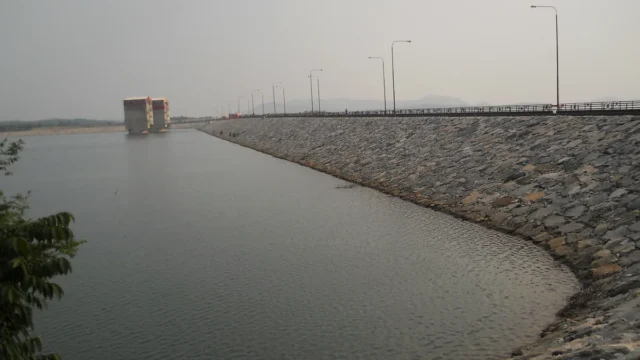
Pumped storage hydropower: India’s roadmap for 100 GW of ‘water batteries’ by 2035-36
A PIB backgrounder of 19 October 2026 explains how pumped storage projects (PSPs) will store solar and wind power for India’s grid. India runs 7.43 GW of pumped storage today, is building 15.87 GW more and has an assessed potential of 345.38 GW. A roadmap aims to add about 100 GW between 2025-26 and 2035-36.
19 Oct 2026
NMC withdraws MSMER-2023: medical colleges lose the fixed penalty rulebook, annual disclosure stays
The National Medical Commission (NMC) has de-notified the Maintenance of Standards of Medical Education Regulations, 2023 (MSMER-2023) by a notification dated 14 October 2026, published in the Gazette on 16 October. Its fixed penalties, including seat cuts and fines of up to ₹5 lakh for false records, go with it. The Annual Disclosure Report stays.
19 Oct 2026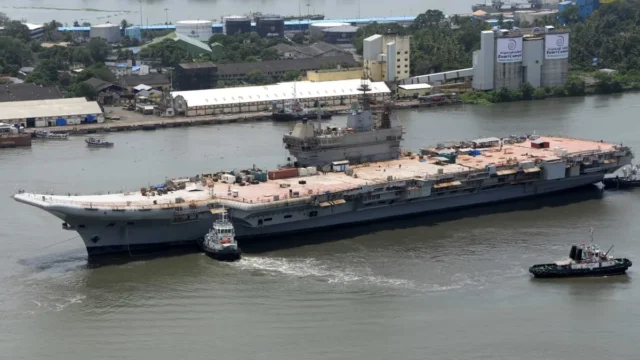
Swavlamban 2026: Navy’s fifth innovation and indigenisation seminar on 26–27 October
At a curtain raiser on 19 October 2026, Vice Chief of the Naval Staff Vice Admiral Ajay Kochhar announced the fifth edition of Swavlamban, the Navy’s flagship innovation and indigenisation seminar. It will be held on 26–27 October at the Manekshaw Centre, New Delhi, where the Navy will release the NAUSETU interface standards and a technology compendium.
19 Oct 2026
Oil companies bar sugar-based ethanol for 2026-27; maize incentive cut to ₹2.79 a litre
The oil marketing companies have kept sugar out of India’s ethanol programme for the coming year. The tender issued on 16 October 2026 seeks about 11 billion litres of ethanol for the 2026-27 supply year, but asks for none made from sugarcane juice, sugar syrup or B-heavy molasses, because the Government wants sugar diversion for ethanol cut to zero. Grain must now carry the load, and even the maize incentive has been cut. Read this as a live example of the food-versus-fuel trade-off.
18 Oct 2026