
Coral Reefs: Formation, Types, Bleaching and Acidification, India’s Reefs and Conservation (UPSC Notes + PYQs)
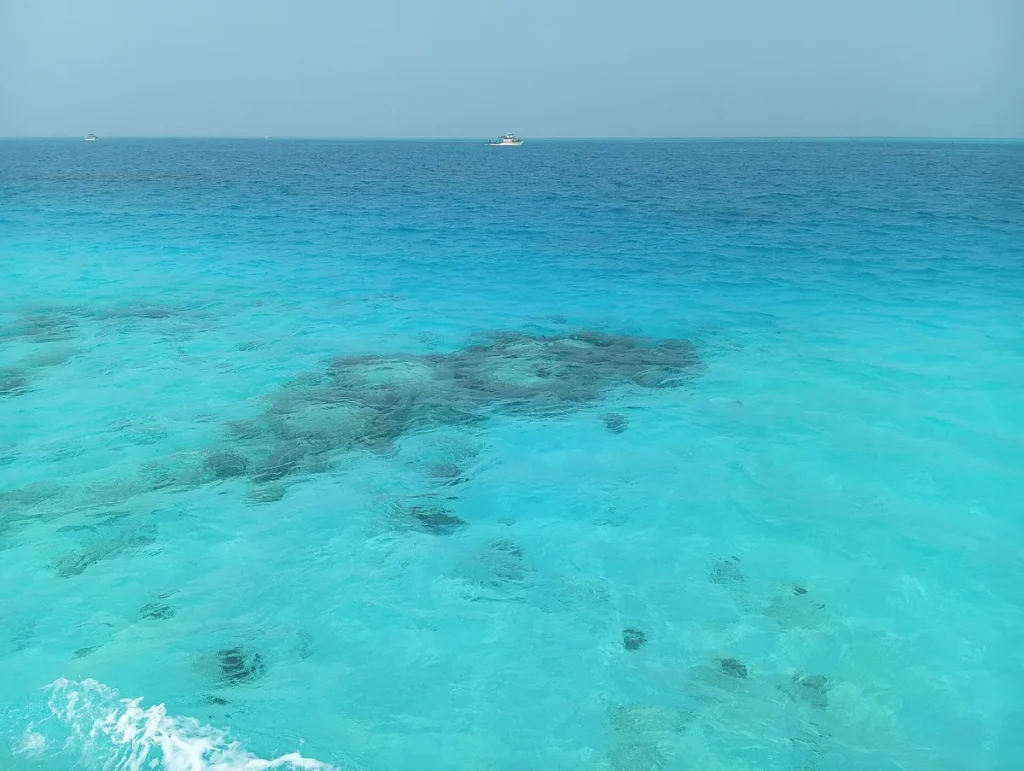
UPSC has already asked about this. Read the story with these questions in mind.
Conditions for growth
- Water temperature roughly 20-28°C, so mostly between 30°N and 30°S.
- Depth usually under 50 m, where sunlight reaches the algae.
- Clear, salty water with little sediment; reefs are absent near big river mouths like the Ganga.
- Firm base to attach to.
Types and Darwin’s theory
Fringing reefs hug the shore; barrier reefs run parallel to the coast across a lagoon (Great Barrier Reef, about 2,300 km); atolls are rings around a lagoon (Lakshadweep, Maldives). Darwin’s subsidence theory: a fringing reef around a sinking volcanic island becomes a barrier reef and finally an atoll.
Threats
- Bleaching: sea temperature 1°C above the summer maximum for weeks makes corals expel zooxanthellae. NOAA confirmed the fourth global bleaching event in 2024, affecting over 80% of reef area.
- Acidification: more dissolved CO₂ lowers pH and carbonate ions, so skeletons grow weaker (2012 Prelims).
- Sedimentation, sewage, destructive fishing, coral mining, crown-of-thorns starfish.
India’s reefs
Four main areas: Gulf of Mannar and Gulf of Kachchh (fringing), Andaman and Nicobar Islands (fringing and a barrier reef), and Lakshadweep (atolls). Patchy reefs also off Malvan and Netrani. All corals are protected under Schedule I of the Wildlife (Protection) Act. Restoration: ZSI’s coral transplantation in the Gulf of Kachchh, and biorock technology, which uses a low electric current to speed calcium carbonate deposition (2022 Prelims).
Coral Reefs: UPSC angle
For UPSC CSE
Prelims: growth conditions, where reefs exist in India, bleaching, biorock, acidification. Mains GS-I/III: distribution of reefs, climate change impacts, blue economy.
Coral Reefs UPSC PYQs (Prelims)
Questions UPSC has actually asked, from the official papers. Pick an option to check yourself.
The following table gives population and total income of a city for four years :
=TABLE Year|1992|1993|1994|1995
Population in lakhs|20|21|22|23
Income in crores (₹)|1010|1111|1225|1345
Which one of the following statements is correct in respect of the above data ?
India’s main coral reefs are in the Andaman and Nicobar Islands, Lakshadweep, the Gulf of Mannar and the Gulf of Kachchh. The muddy, low-salinity waters of the Sundarbans delta support mangroves, which corals cannot live alongside. Answer as per the official UPSC key · Battle IAS PYQ bankAnswer (c) & why
Consider the following statements :
– 1. Most of the world’s coral reefs are in tropical waters.
– 2. More than one-third of the world’s coral reefs are located in the territories of Australia, Indonesia and Philippines.
– 3. Coral reefs host far more number of animal phyla than those hosted by tropical rainforests.
Which of the statements given above is/are correct ?
Reef-building corals need warm, clear, shallow water, so most reefs lie in the tropics. Australia, Indonesia and the Philippines together hold more than a third of the world’s reef area. Reefs hold more animal phyla (major body plans) than rainforests, because the sea has groups that never moved onto land. Answer as per the official UPSC key · Battle IAS PYQ bankAnswer (d) & why
Consider the Question and two Statements given below :
Question: What is the age of Manisha?
Statement-1 : Manisha is 24 years younger than her mother.
Statement-2 : 5 years later, the ages of Manisha and her mother will be in the ratio 3 : 5.
Which one of the following is correct in respect of the Question and the Statements?
Biorock passes a weak electric current through a steel frame under the sea. Minerals from sea water build up on the frame like limestone, and coral pieces fixed to it grow fast. India has tried it in the Gulf of Kachchh. Answer as per the official UPSC key · Battle IAS PYQ bankAnswer (c) & why
=IMG q2012_50.png
Which one of the figures shown below occupies the blank space (?) in the matrix given above?
=IMG q2012_50o.png
The sea absorbs CO2 and forms carbonic acid, which reduces the carbonate that organisms need to build calcium carbonate shells and skeletons. This harms calcareous plankton, corals and animals with planktonic larval stages. Cloud formation is not directly affected. Answer as per the official UPSC key · Battle IAS PYQ bankAnswer (d) & why
Mains PYQs on this topic
No UPSC Mains question from 2023-2026 is directly on this topic. Older papers (2013-2022) will be added as the Mains bank grows.
Quick quiz
Which of these lacks significant coral reefs?
Sediment-rich river mouths prevent reefs.Answer (c)
Coral bleaching is mainly caused by
Expulsion of zooxanthellae.Answer (b)
Atolls in India are found in
Coral islands.Answer (b)
FAQs
What are zooxanthellae?
Microscopic algae living inside coral tissues that provide food through photosynthesis and give colour.
Can bleached corals recover?
Yes, if temperatures fall soon enough; prolonged stress kills them.
Why are there no reefs at the Ganga mouth?
Fresh water and heavy sediment block light and lower salinity.
What is biorock technology?
A method of growing reefs on steel frames using a small electric current to deposit minerals.
Spotted an error? Tell us. We correct within 48 hours.
Image: Susmitad830, Wikimedia Commons, CC BY-SA 3.0
How to use this in Mains
If asked: Why are coral reefs important, and how are they threatened? (GS-I/III)
Quote: “Bleaching: sea temperature 1°C above the summer maximum for weeks makes corals expel zooxanthellae.”
Use it: Use to explain bleaching precisely.
In the news
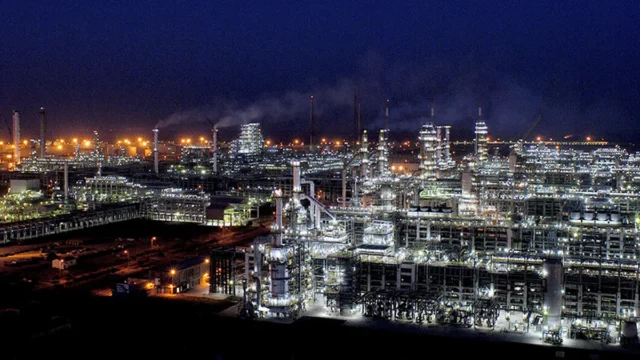
Rubio at Jamnagar: US pitches oil and Venezuelan crude to India’s ‘refining superpower’
US Secretary of State Marco Rubio visited Reliance’s Jamnagar refinery complex in Gujarat on 21 October 2026, a day after calling India a ‘refining superpower’. He wants India to buy more US oil and refine more Venezuelan crude. In Mumbai on 20 October, External Affairs Minister S. Jaishankar also held an unannounced India–US–UAE meeting on energy and connectivity, with the Strait of Hormuz blocked.
21 Oct 2026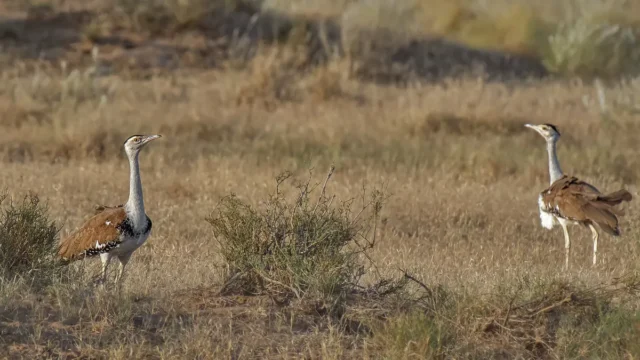
National Red List of birds: 1,211 species under assessment, 107 done in first review
India has begun a national Red List assessment of its 1,211 regularly occurring bird species using the IUCN framework. By 19 October 2026, a preliminary review of 107 species was complete, with the Great Indian Bustard proposed as Critically Endangered and the Indian Roller as Vulnerable. A final assessment is expected towards the end of 2027.
20 Oct 2026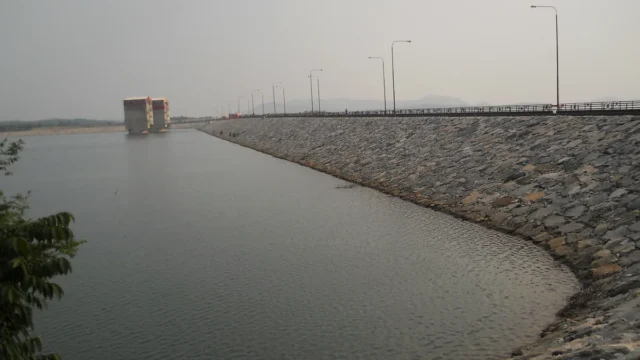
Pumped storage hydropower: India’s roadmap for 100 GW of ‘water batteries’ by 2035-36
A PIB backgrounder of 19 October 2026 explains how pumped storage projects (PSPs) will store solar and wind power for India’s grid. India runs 7.43 GW of pumped storage today, is building 15.87 GW more and has an assessed potential of 345.38 GW. A roadmap aims to add about 100 GW between 2025-26 and 2035-36.
19 Oct 2026
NBA shares Rs 1.19 crore with 29 State Biodiversity Boards from use of crop genetic resources
On 17 October 2026 the National Biodiversity Authority (NBA) said it had shared ₹1.19 crore with 29 State Biodiversity Boards and one UT Biodiversity Council. The money came from seed companies that used Indian maize, rice, pearl millet and cotton for research and commercial hybrids. As the crops were bought from markets and the original holders could not be traced, the amount was split in proportion to each State’s cultivation area. The release comes two days before the CBD COP 17 opens in Yerevan.
18 Oct 2026