
World Trade Organization: Origin, Principles, Key Agreements, Agriculture Boxes and India’s Stakes (UPSC Notes + PYQs)
UPSC has already asked about this. Read the story with these questions in mind.
- Prelims 2016In the context of which of the following do you sometimes find the terms 'amber box, blue box and green box' in the news?Solve it below ↓
- Prelims 2015The terms 'Agreement on Agriculture', 'Agreement on the Application of Sanitary and Phytosanitary Measures' and 'Peace Clause' appear in the news frequently in the…Solve it below ↓
See all 4 PYQs
Structure
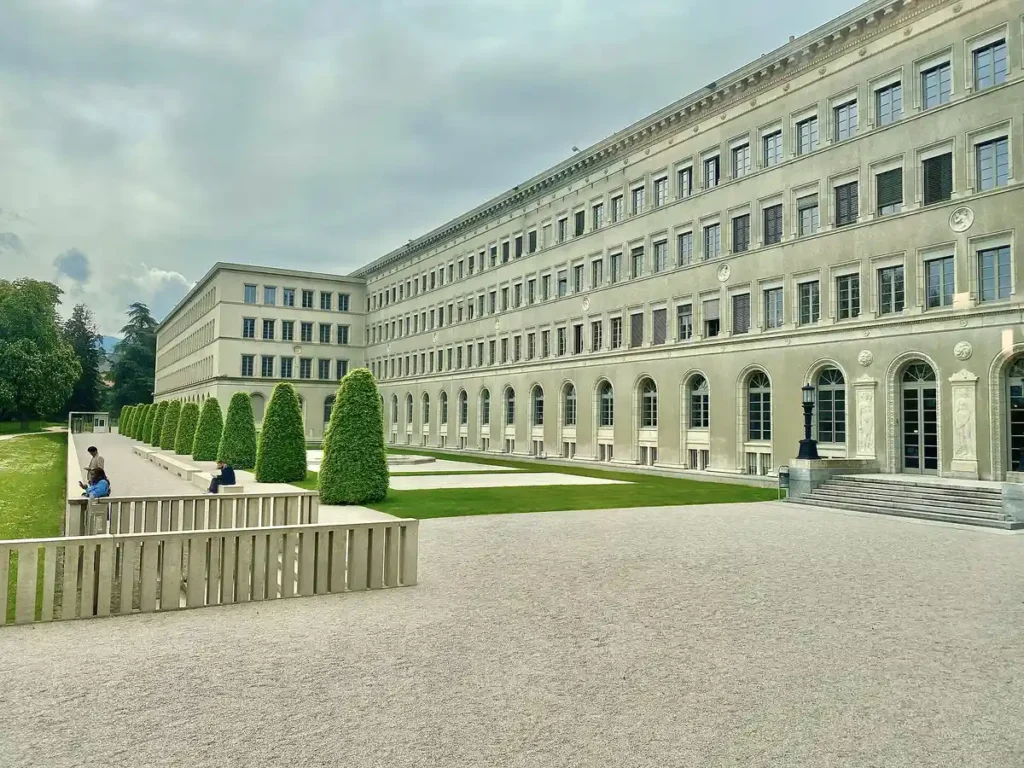
The Ministerial Conference, meeting about every two years, is the top body; the General Council runs daily work and also sits as the Dispute Settlement Body and Trade Policy Review Body. Decisions are by consensus. The 13th Ministerial Conference was held in Abu Dhabi (2024); the 14th is set for Cameroon in 2026. Headquarters: Geneva. 166 members.
Key agreements
- Agreement on Agriculture (AoA): market access, domestic support, export subsidies.
- SPS (food safety) and TBT (technical standards).
- TRIPS: minimum standards for patents, copyright, geographical indications.
- TRIMS (investment measures), GATS (services), Trade Facilitation Agreement (2017; India ratified in 2016).
Agriculture boxes
| Box | Meaning | Limit |
|---|---|---|
| Amber | Trade-distorting support (price support, input subsidies) | De minimis 10% of production value for developing countries |
| Blue | Amber support tied to production-limiting programmes | No limit |
| Green | Minimally distorting (research, extension, direct income support) | No limit |
| Development box (Art. 6.2) | Input and investment subsidies for low-income farmers in developing countries | Exempt |
India’s issues
- Public stockholding: MSP procurement for the PDS can breach the 10% limit because the reference price dates from 1986-88. The Bali “peace clause” (2013) protects India from disputes; India wants a permanent solution. India invoked the clause for rice in 2020.
- Fisheries subsidies: India seeks space for small fishers.
- Opposes e-commerce duty moratorium being permanent and investment facilitation entering through plurilaterals.
- Disputes: the sugar subsidy case, ICT tariffs case, and the US steel tariffs.
The crisis
The Appellate Body stopped working in December 2019 after the US blocked appointments. Some members use an interim arrangement (MPIA); India has not joined. With rising tariffs, the WTO’s relevance is the Mains question: India’s line is reform with special and differential treatment for developing countries, not abandonment.
WTO: UPSC angle
For UPSC CSE
Prelims: boxes, agreements, peace clause, TRIPS, origin. Mains GS-III: food security and WTO, MSP compatibility, multilateralism in crisis.
WTO UPSC PYQs (Prelims)
Questions UPSC has actually asked, from the official papers. Pick an option to check yourself.
In the context of which of the following do you sometimes find the terms 'amber box, blue box and green box' in the news?
The WTO Agreement on Agriculture sorts farm subsidies into boxes. Amber box subsidies distort trade (such as price support) and are capped. Blue box subsidies are tied to production limits, and green box subsidies cause minimal distortion (such as research and environmental programmes); neither is capped. Answer as per the official UPSC key · Battle IAS PYQ bankAnswer (a) & why
The terms 'Agreement on Agriculture', 'Agreement on the Application of Sanitary and Phytosanitary Measures' and 'Peace Clause' appear in the news frequently in the context of the affairs of the
All three are WTO terms. The Peace Clause (Bali, 2013) protects developing countries from legal challenge if their public stockholding for food security breaches subsidy limits. India secured it to protect MSP procurement. Answer as per the official UPSC key · Battle IAS PYQ bankAnswer (c) & why
Consider the following statements :
– 1. India has ratified the Trade Facilitation Agreement (TFA) of WTO.
– 2. TFA is a part of WTO's Bali Ministerial Package of 2013.
– 3. TFA came into force in January 2016.
Which of the statements given above is/are correct ?
The Trade Facilitation Agreement came out of the Bali Ministerial (2013); it simplifies customs procedures. India ratified it in April 2016. It came into force on 22 February 2017, when two-thirds of WTO members had ratified it, not in January 2016. Answer as per the official UPSC key · Battle IAS PYQ bankAnswer (a) & why
India enacted The Geographical Indications of Goods (Registration and Protection) Act, 1999 in order to comply with the obligations to
The TRIPS Agreement of the WTO requires members to protect geographical indications. India passed the GI Act in 1999, in force from 2003. Darjeeling tea was the first Indian GI. Registration is handled by the GI Registry in Chennai. Answer as per the official UPSC key · Battle IAS PYQ bankAnswer (d) & why
Mains PYQs on this topic
Questions from the official UPSC Mains papers (2023-2026 in the Battle IAS Mains bank), newest first. Each links to a model answer.
- UPSC Mains 2025 · GS Paper III · Q2 · 10 marks
What are the challenges before the Indian economy when the world is moving away from free trade and multilateralism to protectionism and bilateralism ? How can these challenges be met ?
- UPSC Mains 2023 · GS Paper III · Q14 · 15 marks
What are the direct and indirect subsidies provided to farm sector in India? Discuss the issues raised by the World Trade Organization (WTO) in relation to agricultural subsidies.
Quick quiz
“Amber box, blue box and green box” relate to
UPSC 2016.Answer (b)
The WTO replaced
In 1995.Answer (b)
The “peace clause” agreed at Bali concerns
2013.Answer (b)
FAQs
What is MFN treatment?
A member must give every other member the same trade terms it gives its most favoured partner, with exceptions such as FTAs.
Why is the Appellate Body not working?
The US has blocked new appointments since 2019, leaving it without quorum.
Is India’s MSP compatible with WTO rules?
Procurement support counts in the amber box; India relies on the peace clause and seeks a permanent solution.
Where is the WTO headquartered?
Geneva.
Spotted an error? Tell us. We correct within 48 hours.
Image: Jérémy Toma, Wikimedia Commons, CC BY-SA 4.0
How to use this in Mains
If asked: UPSC Mains 2025, GS-III: What are the challenges before the Indian economy when the world is moving away from free trade and multilateralism to protectionism and bilateralism ? How can these challenges be met ?
Quote: “Public stockholding: MSP procurement for the PDS can breach the 10% limit because the reference price dates from 1986-88.”
Use it: A specific Indian concern at the WTO; use in the body.
In the news
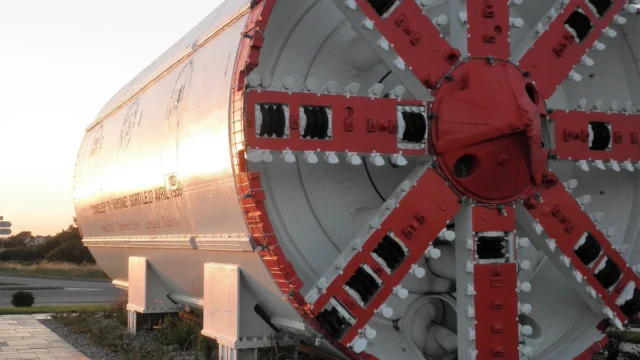
China to impose export controls on tunnel boring machines from 18 November: what it means for India
On 19 October 2026 China’s Commerce Ministry announced export controls on tunnel boring machines (TBMs) and related items from 18 November, calling them clearly dual-use. India imports TBMs for metro, rail and border tunnels and has faced customs delays on Chinese machines since 2024. China also announced controls on some drones.
19 Oct 2026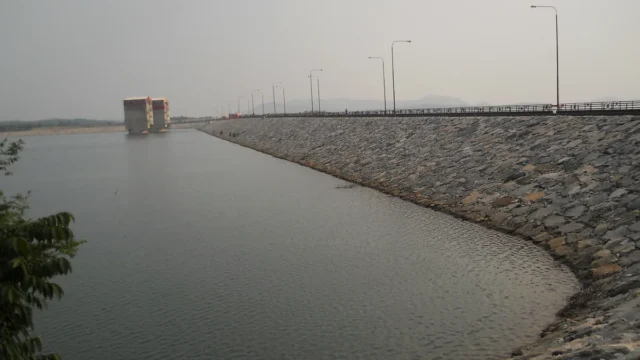
Pumped storage hydropower: India’s roadmap for 100 GW of ‘water batteries’ by 2035-36
A PIB backgrounder of 19 October 2026 explains how pumped storage projects (PSPs) will store solar and wind power for India’s grid. India runs 7.43 GW of pumped storage today, is building 15.87 GW more and has an assessed potential of 345.38 GW. A roadmap aims to add about 100 GW between 2025-26 and 2035-36.
19 Oct 2026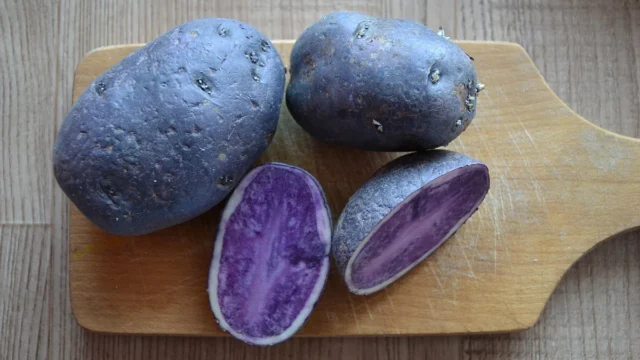
Kufri Jamunia: ICAR-CPRI’s purple potato to fight hidden hunger
A PIB backgrounder of 18 October 2026 puts the spotlight on Kufri Jamunia, a purple-fleshed potato bred by ICAR’s Central Potato Research Institute and released in 2024. It has nearly twice the Vitamin C of a common potato and several times more zinc and iron, along with antioxidants called anthocyanins. The idea is clever: instead of asking people to change what they eat, make the food they already eat more nutritious. That is biofortification.
18 Oct 2026
Oil companies bar sugar-based ethanol for 2026-27; maize incentive cut to ₹2.79 a litre
The oil marketing companies have kept sugar out of India’s ethanol programme for the coming year. The tender issued on 16 October 2026 seeks about 11 billion litres of ethanol for the 2026-27 supply year, but asks for none made from sugarcane juice, sugar syrup or B-heavy molasses, because the Government wants sugar diversion for ethanol cut to zero. Grain must now carry the load, and even the maize incentive has been cut. Read this as a live example of the food-versus-fuel trade-off.
18 Oct 2026