
Buddhism for UPSC: Life of the Buddha, Teachings, Councils, Sects, Art and PYQs
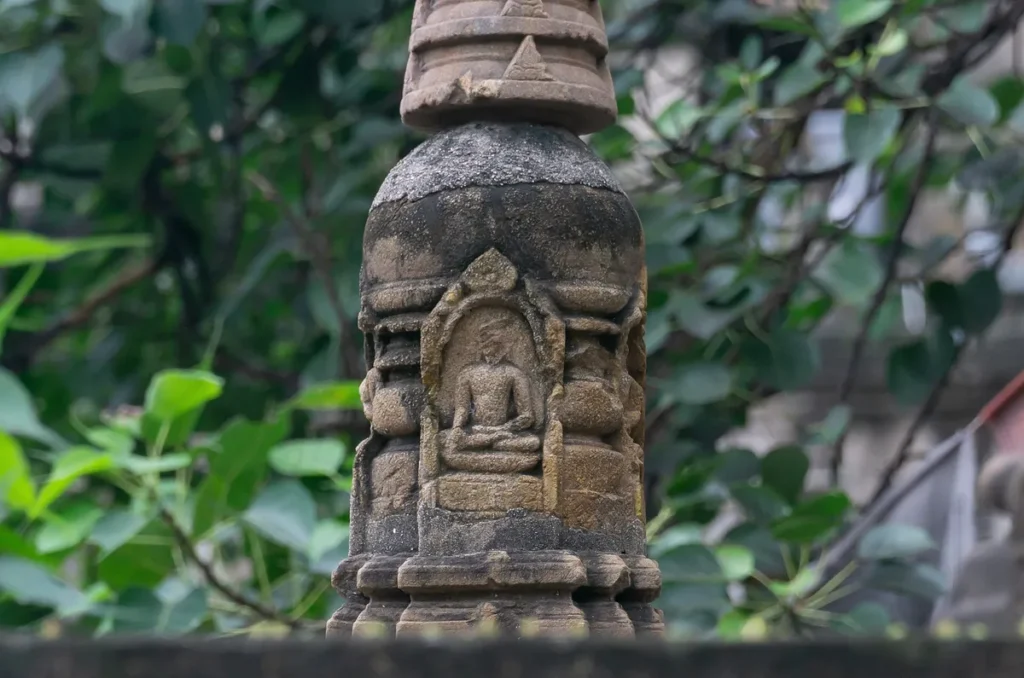
UPSC has already asked about this. Read the story with these questions in mind.
- Prelims 2013Which one of the following describes best the concept of Nirvana in Buddhism?Solve it below ↓
- Prelims 2020With reference to the religious history of India, consider the following statementsSolve it below ↓
See all 6 PYQs
- Prelims 2012Lord Buddha’s image is sometimes shown with the hand gesture called ‘Bhumisparsha Mudra’. It symbolizesSolve it below ↓
- Prelims 2026What does an empty seat represent in early Buddhist iconography ?Solve it below ↓
- Prelims 2014Which of the following Kingdoms were associated with the life of the Buddha?Solve it below ↓
- Prelims 2019Consider the following: Deification of the Buddha …Solve with answer →
Background: the sixth century BCE ferment
Buddhism grew in the middle Ganga valley at a time of great change. Iron tools and rice farming created surplus, towns such as Rajagriha, Shravasti and Vaishali grew, and trade brought new merchant groups. Large kingdoms like Magadha and Kosala were absorbing the old tribal republics. Vedic sacrifice, which killed cattle and needed costly priests, sat badly with farmers and traders. Dozens of wandering teachers, the shramanas, offered alternatives. Siddhartha Gautama of the Shakya clan was one of them, and his message of a middle way, open to all regardless of varna, found ready listeners.
Life of the Buddha: four places to remember
Born at Lumbini (in present-day Nepal) into the Shakya clan; enlightenment at Bodh Gaya; first sermon (Dhammachakkappavattana) at Sarnath; death (mahaparinibbana) at Kushinagar. Traditional dates put his life around 563–483 BCE, though many historians now place it later. He taught in Pali-speaking Magadha and Kosala, the kingdoms most connected with his life.
Core teachings
- Four Noble Truths: life involves suffering (dukkha); suffering has a cause (desire, tanha); it can end (nirodha); the way to end it is the Eightfold Path.
- Eightfold Path: right view, intention, speech, action, livelihood, effort, mindfulness, concentration.
- Middle path between indulgence and severe penance; no role for Vedic ritual or caste in liberation.
- Nirvana: literally “blowing out”: the extinction of the fire of desire, not annihilation of the self.
- Three jewels (triratna): Buddha, Dhamma, Sangha.
- 1Dukkha: life involves suffering
- 2Samudaya: suffering arises from desire
- 3Nirodha: suffering can end
- 4Magga: the Eightfold Path leads there
Buddhist councils
| Council | Place | Patron | Outcome |
|---|---|---|---|
| First | Rajagriha | Ajatashatru | Sutta and Vinaya compiled |
| Second | Vaishali | Kalashoka | Split: Sthaviravadins vs Mahasanghikas |
| Third | Pataliputra | Ashoka | Abhidhamma; missions abroad |
| Fourth | Kashmir | Kanishka | Mahayana emerges; texts in Sanskrit |
The canon is the Tripitaka: Vinaya (monastic rules), Sutta (discourses), Abhidhamma (philosophy).
Sects: Hinayana, Mahayana, Vajrayana
Sthaviravada/Theravada (Hinayana) keeps the older Pali canon and the ideal of the arhat. The Mahasanghikas and their offshoots (such as the Lokottaravadins) moved towards a divine Buddha, which fostered Mahayana, with the bodhisattva ideal, image worship and Sanskrit texts. Vajrayana added tantric practice and flourished in eastern India and Tibet.
- Buddha as a teacher
- Personal liberation (arhat)
- Pali canon
- Sri Lanka, Myanmar, Thailand
- Buddha worshipped as divine
- Bodhisattva ideal
- Sanskrit texts
- China, Japan, Korea, Tibet
Buddhist art and symbols
Early Buddhist art was aniconic: the Buddha was shown through symbols such as an empty seat (his meditation), a stupa (mahaparinibbana), a wheel (first sermon) or footprints. Image worship grew with Mahayana in the Gandhara and Mathura schools. In the bhumisparsha mudra the Buddha touches the earth, calling it to witness his resolve and purity against Mara. Ajanta’s Padmapani bodhisattva is a classic painting question.
Buddhism in Prelims: common traps
Questions often mix up places and events: the first sermon was at Sarnath (Deer Park), not Bodh Gaya; the Buddha died at Kushinagar, not Lumbini. Another favourite is the language of texts: early canon in Pali, later Mahayana works in Sanskrit. Keep a one-line note for each council and its patron.
Why Buddhism declined in India and how it spread abroad
Commonly given reasons for its decline include loss of royal patronage, the revival and absorption of Buddhist ideas within Brahmanical traditions (the Buddha came to be counted as an avatar), the growing distance between monasteries and laity, and the destruction of great monasteries such as Nalanda and Vikramashila around the 12th–13th centuries. It spread through Ashoka’s missions (to Sri Lanka and beyond), trade routes (the Silk Road to Central Asia and China) and later to Tibet and Southeast Asia.
Key Buddhist terms
| Term | Meaning |
|---|---|
| Triratna | Buddha, Dhamma, Sangha |
| Four Noble Truths | Suffering, its cause (desire), its end, and the path |
| Ashtangika Marga | Eightfold Path from right view to right concentration |
| Nirvana | Extinction of desire and release from rebirth |
| Tripitaka | Vinaya (rules), Sutta (teachings), Abhidhamma (philosophy) |
| Bodhisattva | One who delays nirvana to help others (Mahayana ideal) |
The Sangha and patrons
The Sangha was open to men and, after initial hesitation, to women; Mahaprajapati Gotami was the first nun. Monks lived by the Vinaya rules and spent the rainy season (vassa) in fixed shelters, which grew into viharas. Kings and merchants were key patrons: Bimbisara and Ajatashatru of Magadha, Prasenajit of Kosala, the merchant Anathapindika who gifted the Jetavana grove at Shravasti, and the courtesan Amrapali of Vaishali. Later, Ashoka, Kanishka and Harsha gave Buddhism royal support, and universities such as Nalanda and Vikramashila drew scholars from across Asia.
Buddhism and Indian culture
- Pali and Prakrit literature, and the Jataka stories.
- Stupas at Sanchi and Bharhut, and the Ajanta paintings.
- Gandhara and Mathura schools of sculpture that gave the Buddha a human image.
- Ideas of non-violence and compassion that later shaped Ashoka’s Dhamma and modern Indian thought, including B.R. Ambedkar’s Navayana.
Buddhism: UPSC angle
For UPSC CSE
Prelims: places, councils, sects, mudras, texts, art symbols, sites. UPSC asks Buddhism-related questions most years. Mains GS-I: Buddhist contribution to art and architecture; why it spread abroad and declined at home.
Buddhism UPSC PYQs (Prelims)
Questions UPSC has actually asked, from the official papers. Pick an option to check yourself.
Which one of the following describes best the concept of Nirvana in Buddhism?
Nirvana means the extinction of the flame of desire. Answer as per the official UPSC key · Battle IAS PYQ bankAnswer (a) & why
With reference to the religious history of India, consider the following statements :
– 1. Sthaviravadins belong to Mahayana Buddhism.
– 2. Lokottaravadin sect was an offshoot of Mahasanghika sect of Buddhism.
– 3. The deification of Buddha by Mahasanghikas fostered the Mahayana Buddhism.
Which of the statements given above is/are correct ?
Sthaviravadins belong to Hinayana (1 wrong). Lokottaravada was a Mahasanghika offshoot, and Mahasanghika deification of the Buddha fostered Mahayana (2 and 3 correct). Answer as per the official UPSC key · Battle IAS PYQ bankAnswer (b) & why
Lord Buddha’s image is sometimes shown with the hand gesture called ‘Bhumisparsha Mudra’. It symbolizes
In bhumisparsha mudra the Buddha calls the Earth to witness his purity and resolve despite Mara’s temptations. Answer as per the official UPSC key · Battle IAS PYQ bankAnswer (b) & why
What does an empty seat represent in early Buddhist iconography ?
In aniconic art, the empty seat indicates the Buddha’s meditation (as explained in NCERT Class XII, Themes I). Answer as per the official UPSC key · Battle IAS PYQ bankAnswer (a) & why
Which of the following Kingdoms were associated with the life of the Buddha?
– 1. Avanti
– 2. Gandhara
– 3. Kosala
– 4. Magadha
Select the correct answer using the code given below.
Kosala and Magadha were the kingdoms most associated with the Buddha’s life and teaching. Answer as per the official UPSC key · Battle IAS PYQ bankAnswer (c) & why
Mains PYQs on this topic
No UPSC Mains question from 2023-2026 is directly on this topic. Older papers (2013-2022) will be added as the Mains bank grows.
Quick quiz
The Buddha delivered his first sermon at
Dhammachakkappavattana at Sarnath, near Varanasi.Answer (b)
The Fourth Buddhist Council was held under the patronage of
Kashmir; Mahayana emerges.Answer (c)
Which part of the Tripitaka contains rules for monks and nuns?
Vinaya = monastic discipline.Answer (b)
FAQs
What are the main teachings of Buddhism?
The Four Noble Truths, the Eightfold Path and the middle way, aimed at nirvana.
Where did the Buddha attain enlightenment?
At Bodh Gaya, under the Bodhi tree.
What is the difference between Hinayana and Mahayana?
Hinayana (Theravada) follows the older Pali canon and the arhat ideal; Mahayana emphasises the bodhisattva ideal, a divine Buddha, image worship and Sanskrit texts.
Why did Buddhism decline in India?
Loss of royal patronage, absorption into Brahmanical traditions, monastic isolation from laity and destruction of major monasteries are the usual reasons cited.
How many Buddhist councils were held?
Four major councils: Rajagriha, Vaishali, Pataliputra and Kashmir.
What are the Jatakas?
Stories of the previous births of the Buddha, part of the Sutta Pitaka and widely depicted at Bharhut, Sanchi and Ajanta.
What is the Triratna in Buddhism?
The three jewels: the Buddha, the Dhamma (his teaching) and the Sangha (the order of monks and nuns).
Spotted an error? Tell us. We correct within 48 hours.
Image: Sumitsurai, Wikimedia Commons, CC BY-SA 4.0
How to use this in Mains
If asked: Explain the core teachings of Buddhism and their relevance today. (GS-I/IV)
Quote: “Four Noble Truths: life involves suffering (dukkha); suffering has a cause (desire, tanha); it can end (nirodha); the way to end it is the Eightfold Path.”
Use it: Use in the body as a summary of the teachings.
In the news
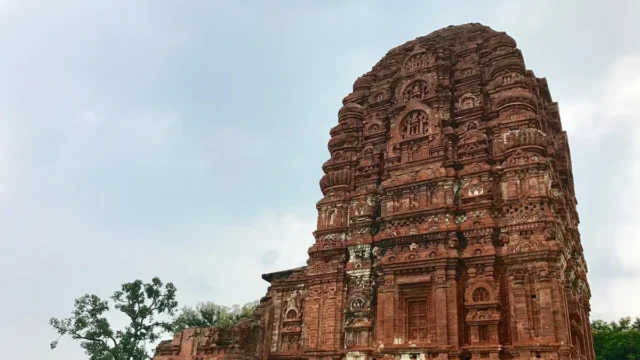
Sirpur in Chhattisgarh enters UNESCO’s Tentative List of World Heritage sites
Sirpur, an archaeological site in Chhattisgarh’s Mahasamund district with Hindu, Buddhist and Jain remains from the 5th to the 12th century CE, has been added to UNESCO’s Tentative List. The ASI now has about a year to prepare a nomination dossier proving its Outstanding Universal Value. Sirpur was once the capital of Dakshina Kosala.
20 Oct 2026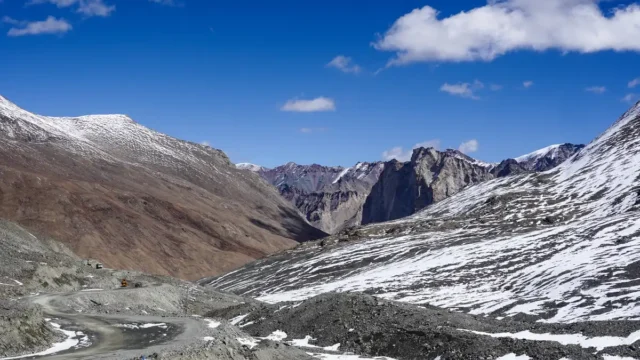
PM inaugurates five Ladakh projects: Nimmu–Padum–Darcha road, Leh terminal, Hanu hydro
On 15 October 2026 the Prime Minister inaugurated, by video conference, five projects worth about ₹3,350 crore in Ladakh: a new passenger terminal at Leh's Kushok Bakula Rimpochee Airport, the 298-km Nimmu–Padum–Darcha road built by BRO, the 9 MW Hanu small hydro project with a 66 kV line, India's first Petroglyph Conservation Park at Sindhu Ghat, and 40 water bodies under Project Him Sarovar.
15 Oct 2026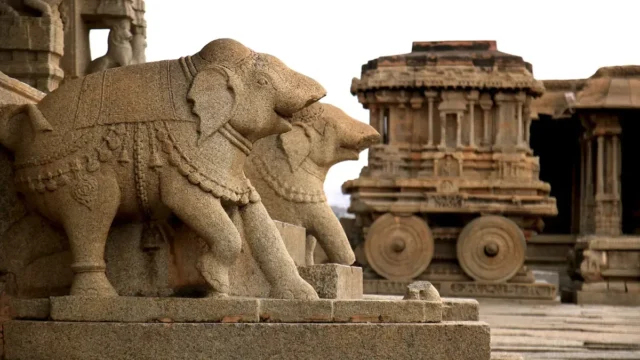
HAL, NCF and ASI sign MoA for Hampi, Taj Mahal and Bekal Fort
On 13 October 2026 HAL, the National Culture Fund and ASI signed an MoA for conservation and visitor works at Hampi, the Taj Mahal and Bekal Fort. HAL has approved about ₹23.60 crore in CSR support over three years; NCF facilitates the projects and ASI supervises them technically.
14 Oct 2026
Centres of Excellence approved for five newer classical languages
On 3 October 2026 the Ministry of Education approved five Centres of Excellence for Classical Assamese, Bengali, Marathi, Pali and Prakrit, hosted by Tezpur University, Visva-Bharati, Deccan College Pune, Central University of Odisha and Central University of Gujarat. These five got classical status in October 2024, taking India's total to 11 classical languages.
3 Oct 2026