
Jainism for UPSC: Mahavira, Tirthankaras, Teachings, Sects, Councils and PYQs
UPSC has already asked about this. Read the story with these questions in mind.
- Prelims 2011The Jain philosophy holds that the world is created and maintained bySolve it below ↓
- Prelims 2012With reference to the history of ancient India, which of the following was/were common to both Buddhism and Jainism?Solve it below ↓
See all 5 PYQs
- Prelims 2023“Souls are not only the property of animal and plant life, but also of rocks, running water and many other natural objects not looked…Solve it below ↓
- Prelims 2022With reference to Indian history, consider the following texts: Nettipakarana …Solve it below ↓
- Prelims 2017With reference to the religious history of India, consider the following statementsSolve with answer →
Background
Jain tradition holds that its teachings are eternal and were taught by 24 Tirthankaras (“ford-makers”), beginning with Rishabhanatha. Historians accept the 23rd, Parshvanatha of Varanasi, as a historical figure who taught four vows. The 24th, Vardhamana Mahavira, was born near Vaishali in a Kshatriya family of the Jnatrika clan, renounced home at about thirty, and after twelve years of austerity attained kaivalya (supreme knowledge) near the river Rijupalika. He became the Jina (conqueror), and his followers were called Jainas. He preached for about thirty years in Magadha, Videha and Anga and died at Pava, near Rajagriha.
Mahavira and the Tirthankaras
Jain tradition names Rishabhanatha as the first Tirthankara. Parshvanatha, the 23rd, is associated with Varanasi. Vardhamana Mahavira was born at Kundagrama near Vaishali, attained kaivalya (omniscience) after years of austerity, and died at Pavapuri (Bihar). He was called Jina (“conqueror”), from which “Jain” comes.
Core teachings of Jainism
- Triratna: right faith (samyak darshana), right knowledge (jnana), right conduct (charitra).
- Five vows (mahavratas): ahimsa, satya, asteya (non-stealing), aparigraha (non-possession) and brahmacharya. Tradition credits Mahavira with adding the fifth to Parshvanatha’s four.
- Souls everywhere: jiva exists in animals and plants, and also in stones, water and other natural objects. That belief is why ahimsa is so strict.
- Anekantavada (reality has many aspects) and syadvada (every statement is true only from some standpoint, “may be”).
- No creator god; the world is eternal and runs by universal law; karma binds the soul.
- AhimsaNon-violence
- SatyaTruth
- AsteyaNon-stealing
- AparigrahaNon-possession
- BrahmacharyaCelibacy
Jainism vs Buddhism
Common: both rejected the authority of the Vedas and the efficacy of ritual, used Prakrit languages, welcomed all varnas and were patronised by kings of Magadha. Different: Jainism stressed severe penance and extreme non-violence; the Buddha rejected extreme asceticism (the middle path). Jainism keeps the soul (jiva) at its centre; Buddhism denies a permanent self (anatta).
Sects, councils and texts
The split into Digambara (“sky-clad”, led in tradition by Bhadrabahu, who went south during a famine with Chandragupta Maurya) and Svetambara (“white-clad”, led by Sthulabhadra) developed over time. The first council at Pataliputra began compiling the canon. The second, at Vallabhi (5th century CE), finalised the Svetambara Agamas in Ardhamagadhi Prakrit. Hemachandra’s Parishishtaparvan and the Trishashtilakshana Mahapurana are Jain works.
- Monks remain sky-clad (naked)
- Women cannot attain liberation in the same birth
- Linked to Bhadrabahu
- Strong in Karnataka
- Monks wear white robes
- Women can attain liberation
- Linked to Sthulabhadra
- Strong in Gujarat and Rajasthan
Jainism in Prelims: common traps
Examiners like to test the difference between Parshvanatha’s four vows and Mahavira’s five, the split into Digambara and Svetambara, and the councils at Pataliputra and Vallabhi. Another trap is the idea that Jainism rejects the existence of souls; in fact it holds that every living being, even plants and water, has a jiva. Jainism also does not accept a creator god, yet it does not deny the authority of moral law, and karma is understood as fine matter that sticks to the soul. Liberation (moksha or kaivalya) comes from stopping the inflow of karma and shedding what has already accumulated, through right faith, knowledge and conduct.
Why Jainism did not spread as widely as Buddhism
Its very strict discipline and ahimsa limited its appeal to occupations like agriculture, so it found its base among traders. It also lacked large-scale missionary activity abroad of the Ashokan type. Yet it survived continuously in India and shaped art (Mount Abu, Shravanabelagola, Mathura) and literature.
Key Jain ideas
| Idea | What it means |
|---|---|
| Triratna | Right faith, right knowledge, right conduct |
| Pancha mahavrata | Ahimsa, satya, asteya, aparigraha, brahmacharya |
| Anekantavada | Reality has many aspects; no single view is complete |
| Syadvada | Every statement is true only from a certain standpoint |
| Jiva and ajiva | Living souls and non-living matter; karma binds jiva |
| Sallekhana | Voluntary fasting unto death at the end of life |
Royal patrons and spread
Jainism found support among traders and merchants, whose work involved little violence. Tradition says Chandragupta Maurya became a Jain, went south with Bhadrabahu during a famine, and ended his life by sallekhana at Shravanabelagola. Kharavela of Kalinga (1st century BCE), whose Hathigumpha inscription is a key source, was a Jain patron, as were the Rashtrakuta king Amoghavarsha and the Gujarat ruler Kumarapala, guided by the scholar Hemachandra. Jainism became strong in Karnataka, Gujarat and Rajasthan, and it survives as a vibrant community to this day.
Contribution to Indian culture
- Prakrit and early Kannada literature; Jain monks also wrote in Sanskrit and Apabhramsha.
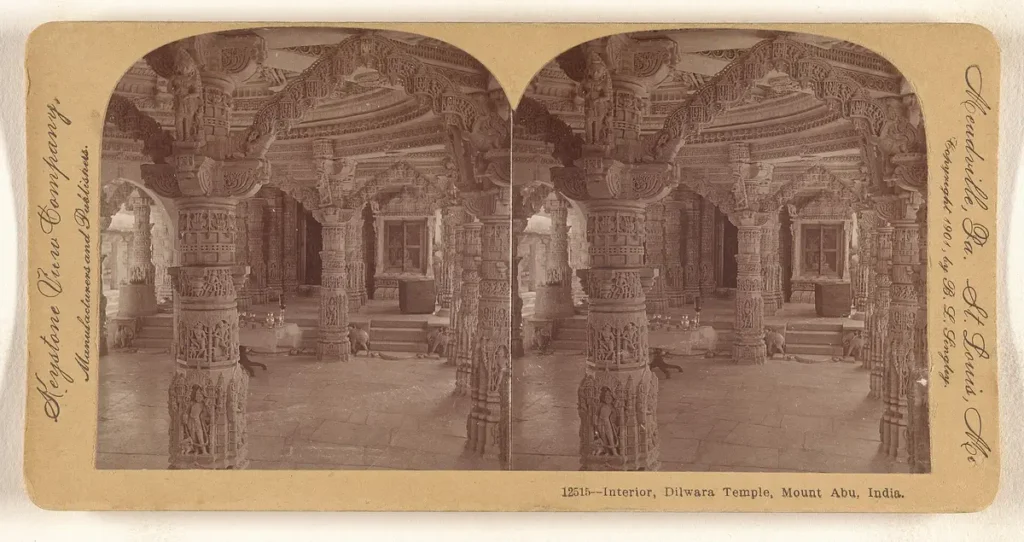
- Temples at Dilwara (Mount Abu), Ranakpur and Palitana; the Gommateshwara statue at Shravanabelagola.
- Cave sites such as Udayagiri-Khandagiri (Odisha) and parts of Ellora.
- An ethic of non-violence and non-possession that influenced Gandhi.
Relevance today
Anekantavada offers a way to deal with disagreement without hostility, a useful theme in GS IV. Aparigraha (non-possession) speaks to consumerism and sustainability, and the strict practice of ahimsa anticipates modern concerns for animal welfare and the environment. Mains has asked candidates to explain Mahavira’s teachings and their relevance to the contemporary world, so prepare examples from ethics, ecology and public life.
Jainism: UPSC angle
For UPSC CSE
Prelims: doctrines (syadvada, anekantavada), vows, texts, sects, Jain vs Buddhist statements. Mains GS-I: contribution of Jainism to Indian culture, art and philosophy.
Jainism UPSC PYQs (Prelims)
Questions UPSC has actually asked, from the official papers. Pick an option to check yourself.
The Jain philosophy holds that the world is created and maintained by
Jain philosophy holds that the world is uncreated and runs according to universal law. Answer as per the official UPSC key · Battle IAS PYQ bankAnswer (a) & why
With reference to the history of ancient India, which of the following was/were common to both Buddhism and Jainism?
– 1. Avoidance of extremities of penance and enjoyment
– 2. Indifference to the authority of the Vedas
– 3. Denial of efficacy of rituals
Select the correct answer using the codes given below :
Both rejected Vedic authority and the efficacy of ritual (2 and 3). Avoiding extremes of penance was the Buddha’s middle path, not a Jain idea. Answer as per the official UPSC key · Battle IAS PYQ bankAnswer (b) & why
“Souls are not only the property of animal and plant life, but also of rocks, running water and many other natural objects not looked on as living by other religious sects.”
The above statement reflects one of the core beliefs of which one of the following religious sects of ancient India?
Attributing souls to rocks and running water is a distinctive Jain belief. Answer as per the official UPSC key · Battle IAS PYQ bankAnswer (b) & why
With reference to Indian history, consider the following texts :
– 1. Nettipakarana
– 2. Parishishtaparvan
– 3. Avadanashataka
– 4. Trishashtilakshana Mahapurana
Which of the above are Jaina texts ?
Parishishtaparvan and Trishashtilakshana Mahapurana are Jain texts. Nettipakarana and Avadanashataka are Buddhist. Answer as per the official UPSC key · Battle IAS PYQ bankAnswer (b) & why
Mains PYQs on this topic
Questions from the official UPSC Mains papers (2023-2026 in the Battle IAS Mains bank), newest first. Each links to a model answer.
- UPSC Mains 2025 · GS Paper IV · Q4b · 10 marks
What are the major teachings of Mahavir? Explain their relevance in the contemporary world.
Quick quiz
The 23rd Tirthankara of Jainism was
Mahavira was the 24th.Answer (b)
Syadvada in Jain philosophy means
Linked to anekantavada.Answer (b)
The Jain canon was finally compiled at a council held at
5th century CE; Svetambara Agamas.Answer (b)
FAQs
Who founded Jainism?
Jains regard it as eternal, taught by 24 Tirthankaras; Mahavira, the 24th, gave it its historical form.
What are the three jewels of Jainism?
Right faith, right knowledge and right conduct.
What are the five vows of Jainism?
Ahimsa, satya, asteya, aparigraha and brahmacharya.
What is the difference between Digambara and Svetambara?
Digambara monks renounce clothing and hold that women cannot attain liberation in their current birth; Svetambara monks wear white and accept a different canon.
Why did Jainism not spread like Buddhism?
Very strict discipline, limited appeal to farming communities and no large missionary drive abroad.
What is anekantavada?
The Jain doctrine of many-sidedness: reality is complex, and any single viewpoint captures only part of the truth.
Which vow did Mahavira add to Parshvanatha’s four?
Brahmacharya (celibacy).
Spotted an error? Tell us. We correct within 48 hours.
Image: https://commons.wikimedia.org/wiki/File:Dilwara_Temple,_Mount_Abu,_Rajasthan.jpg
How to use this in Mains
If asked: Compare the teachings of Jainism and Buddhism. (GS-I)
Quote: “Common: both rejected the authority of the Vedas and the efficacy of ritual, used Prakrit languages, welcomed all varnas and were patronised by kings of Magadha.”
Use it: Ready list of common features.
In the news
Pollen study links Harappan decline to weak monsoon (5100–4000 BP)
A pollen study by the Birbal Sahni Institute of Palaeosciences links the shrinking of the Harappan Civilization to a weak Indian Summer Monsoon between about 5100 and 4000 years before present, the Science Ministry said on 29 July 2026. Sediments from Deoria Tal in the Garhwal Himalaya show an abrupt dry spell, the "4.2 ka event".
29 Jul 2026
Sarnath inscribed as India’s 45th UNESCO World Heritage Site
On 25 July 2026 the 48th World Heritage Committee in Busan inscribed the "Ancient Buddhist Site of Sarnath" on the UNESCO World Heritage List. It is India's 45th property. The serial site in Varanasi covers Chaukhandi Stupa and the Archaeological Remains of Sarnath, where the Buddha gave his first sermon.
25 Jul 2026
Rakhigarhi skeletal remains handed to Anthropological Survey of India
ASI handed human skeletal remains from Rakhigarhi, Haryana, to the Anthropological Survey of India under a new MoU, the Culture Ministry said on 22 June 2026. The 2025-26 dig at Mound No. 7 found eight burials; three complete skeletons plus fragments went to AnSI's Kolkata repository. Planned work includes aDNA, isotopes and palaeopathology with partner labs.
22 Jun 2026
Relics of the Buddha’s chief disciples enshrined for exposition in Mongolia
The holy relics of Arhat Sariputra and Arhat Mahamoggallana, the Buddha's two chief disciples, were ceremonially enshrined at Gandantegchenling Monastery in Ulaanbaatar on Buddha Purnima (Vesak) 2026. Brought from India for a ten-day exposition from 31 May to 10 June 2026, they arrived on a special IAF IL-76 aircraft and had travelled abroad only once before, to Thailand in 2024.
31 May 2026