
Cabinet Mission Plan (1946): Members, Proposals, Grouping of Provinces, Interim Government and Why It Failed (UPSC Notes + PYQs)

UPSC has already asked about this. Read the story with these questions in mind.
Background: why Britain sent the Mission
The Second World War left Britain exhausted and in debt. Clement Attlee’s Labour government, elected in July 1945, accepted that India had to be freed soon. Events in India pushed the pace: the INA trials at the Red Fort (from November 1945) stirred public anger across communities; the Royal Indian Navy mutiny in Bombay (February 1946) showed that the armed forces could no longer be fully relied on; and strikes and peasant unrest spread. The 1945-46 elections polarised the country: the Congress swept the general seats, while the Muslim League won nearly all Muslim seats, strengthening its claim for Pakistan. The Simla Conference of June 1945 under Viceroy Wavell had already failed over the League’s demand to nominate all Muslim members.
The members
Lord Pethick-Lawrence (Secretary of State for India), Sir Stafford Cripps (President of the Board of Trade) and A.V. Alexander (First Lord of the Admiralty). They arrived on 24 March 1946 and held talks with Congress and League leaders in Delhi and at a second Simla conference in May, which failed to produce agreement. The Mission then announced its own plan on 16 May 1946.
The 16 May plan
- No Pakistan: a sovereign Pakistan was rejected as unworkable; a smaller one would leave large non-Muslim populations and divide Punjab and Bengal.
- Three-tier structure: a Union of British India and the princely States dealing only with foreign affairs, defence and communications, with power to raise funds for these; provinces with all other subjects and residuary powers; and an optional middle tier of groups.
- Groups: Section A (Madras, Bombay, United Provinces, Bihar, Central Provinces, Orissa), Section B (Punjab, North-West Frontier Province, Sind), Section C (Bengal, Assam).
- Constituent Assembly of 389: 292 from provinces elected by provincial assemblies on a community basis (general, Muslim, Sikh), 4 from Chief Commissioners’ provinces, 93 for princely States.
- Provinces could leave a group after the first general elections under the new constitution, and any province could ask for reconsideration of the Union constitution after ten years.
- An interim government of Indian leaders to run the country meanwhile.
- Section AMadras, Bombay, UP, Bihar, CP, Orissa
- Section BPunjab, NWFP, Sind
- Section CBengal, Assam
- Princely States93 seats in the Assembly
Why it failed
The League accepted the plan on 6 June 1946, reading the groups B and C as the base of a future Pakistan. The Congress accepted the long-term plan on 25 June but read grouping as optional, since Assam (Hindu-majority) and NWFP (with a Congress ministry) did not want to be in Sections C and B. On 10 July Nehru told a press conference that the Congress would enter the Assembly “completely unfettered by agreements”. The League took this as proof of bad faith, withdrew its acceptance on 29 July, and called for Direct Action Day on 16 August 1946. Calcutta saw killings that left thousands dead; violence spread to Noakhali, Bihar and Garhmukteshwar.
The interim government
Formed on 2 September 1946 with Nehru as Vice-President of the Viceroy’s Executive Council. The League joined in October 1946 but not the Constituent Assembly; Liaquat Ali Khan held Finance, and his “poor man’s budget” of 1947 hurt business backers of the Congress, showing how hard joint rule had become. The Constituent Assembly met on 9 December 1946 without League members. Attlee’s statement of 20 February 1947 fixed June 1948 as the deadline for British withdrawal, and Mountbatten’s 3 June 1947 plan accepted Partition.
- 24 Mar 1946Mission arrives in Delhi
- 16 May 1946Plan announced
- 6 Jun 1946League accepts
- 29 Jul 1946League withdraws acceptance
- 16 Aug 1946Direct Action Day
- 2 Sep 1946Interim government formed
- 9 Dec 1946Constituent Assembly meets
- 3 Jun 1947Mountbatten Plan
Significance
The Mission produced the Constituent Assembly that wrote our Constitution, and its plan was the last serious attempt to keep India united. Historians differ on blame: some point to the Congress’s refusal to accept compulsory grouping, others to the League’s readiness to use violence, and others to British hurry to leave. For an answer, note that the plan’s ambiguity on grouping allowed both sides to read it their own way.
The three groups in detail
| Group | Provinces | Character |
|---|---|---|
| A | Madras, Bombay, United Provinces, Bihar, Central Provinces, Orissa | Hindu-majority |
| B | Punjab, North-West Frontier Province, Sind | Muslim-majority, north-west |
| C | Bengal, Assam | Muslim-majority, north-east (Assam itself Hindu-majority) |
The grouping clause was the heart of the quarrel. The League read it as compulsory: provinces had to sit in their groups, which would draw up group constitutions, giving a Pakistan in all but name. The Congress read it as optional: a province could stay out of its group from the start. Assam and the North-West Frontier Province, both with Congress governments, feared being swallowed by Muslim-majority groups. Nehru’s press conference of 10 July 1946, saying the Congress would enter the Constituent Assembly “unfettered by agreements”, convinced Jinnah that the Congress would rewrite the plan once in power, and the League withdrew its acceptance.
Direct Action Day and its aftermath
On 29 July 1946 the League called for “Direct Action” to achieve Pakistan and fixed 16 August as the day. In Calcutta, where the League ministry of H.S. Suhrawardy declared a public holiday, the day turned into the Great Calcutta Killing; thousands died over four days. Violence spread to Noakhali in east Bengal, then to Bihar and Garhmukteshwar in the United Provinces. Gandhi walked through Noakhali to restore peace. The riots convinced many leaders, British and Indian, that a united India under the Cabinet Mission plan was no longer possible, and they set the stage for Attlee’s announcement of February 1947 and the Mountbatten Plan.
How the Constituent Assembly was elected
The plan fixed one seat for roughly every ten lakh people. Provincial assemblies, elected in 1946 on a limited franchise, chose 292 members by proportional representation with seats split among General, Muslim and Sikh voters; the princely States were given 93 seats. The Congress won 208 seats and the League 73 in July 1946.
PYQ trend
Prelims asked about the Mission’s recommendations in 2015 (a federal government, not more Indians in the ICS) and used it as a distractor in 2013 (Quit India was a response to the Cripps proposals). Mains GS-I asks about the transfer of power and Partition; the Mission is a key paragraph there.
Cabinet Mission: UPSC angle
For UPSC CSE
Prelims: members, proposals, Assembly composition. Mains GS-I: causes of Partition, last phase of the freedom struggle, role of British policy.
Cabinet Mission UPSC PYQs (Prelims)
Questions UPSC has actually asked, from the official papers. Pick an option to check yourself.
With reference to the Cabinet Mission, which of the following statements is/are correct?
– 1. It recommended a federal government.
– 2. It enlarged the powers of the Indian courts.
– 3. It provided for more Indians in the ICS.
Select the correct answer using the code given below.
The Cabinet Mission (1946) proposed a loose Union of provinces and states. The Centre would hold defence, foreign affairs and communications, the provinces would be grouped into sections A, B and C, and a Constituent Assembly and interim government would be formed. It said nothing on courts or the ICS. Answer as per the official UPSC key · Battle IAS PYQ bankAnswer (a) & why
Quit India Movement was launched in response to
The failure of the Cripps Mission (March-April 1942), which offered only dominion status after the war, convinced Gandhi that Britain would not part with power. The Quit India resolution followed in August 1942. Answer as per the official UPSC key · Battle IAS PYQ bankAnswer (b) & why
Mains PYQs on this topic
No UPSC Mains question from 2023-2026 is directly on this topic. Older papers (2013-2022) will be added as the Mains bank grows.
Quick quiz
Who among these was not a member of the Cabinet Mission?
Wavell was Viceroy.Answer (d)
Under the Cabinet Mission Plan, Assam was placed in
With Bengal.Answer (c)
The Constituent Assembly under the plan was to be elected by
Indirect election.Answer (b)
FAQs
Did the Cabinet Mission accept Pakistan?
No. It rejected a sovereign Pakistan but offered grouping of Muslim-majority provinces.
Why was grouping controversial?
The League wanted it compulsory as a path to Pakistan; the Congress, Assam and NWFP wanted it optional.
What was Direct Action Day?
The League’s call of 16 August 1946 to press for Pakistan, which led to mass killings in Calcutta.
Who headed the interim government?
Jawaharlal Nehru, as Vice-President of the Viceroy’s Executive Council.
How many seats did princely States get in the Constituent Assembly?
93 out of 389.
Spotted an error? Tell us. We correct within 48 hours.
Image: https://commons.wikimedia.org/wiki/File:British_Cabinet_Mission_To_India,_1946_IND5092.jpg
How to use this in Mains
If asked: Why did the Cabinet Mission Plan fail? Assess its significance. (GS-I)
Quote: “The Mission produced the Constituent Assembly that wrote our Constitution, and its plan was the last serious attempt to keep India united.”
Use it: Use as the concluding significance line.
In the news
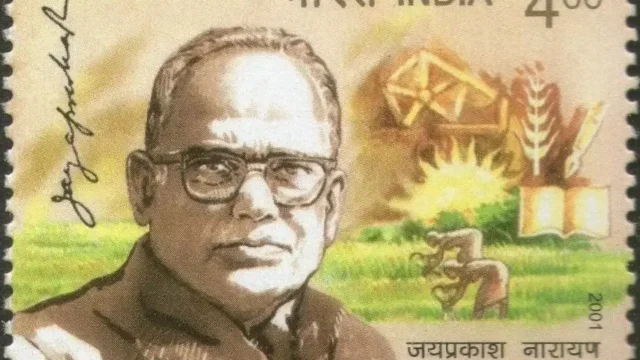
Birth anniversaries: Jayaprakash Narayan and Nanaji Deshmukh
11 October is the birth anniversary of Loknayak Jayaprakash Narayan and Nanaji Deshmukh, both Bharat Ratna awardees. The Prime Minister recalled JP's voice during the Emergency and his concern for good governance, and Nanaji's work in rural development and community participation. Treat this as a personality note for Prelims.
11 Oct 2026
ASI and Denmark museum to search for 1619 Danish shipwreck Oresund off Karaikal
The Archaeological Survey of India's Underwater Archaeology Wing and the National Museum of Denmark (Njord Centre, Copenhagen) signed an MoU to locate and document the Danish ship Oresund, wrecked off Karaikal, Puducherry, in 1619 CE. It is described as the first Danish ship known to have reached India.
15 Jun 2026
Veer Bal Diwas and the Rashtriya Bal Puraskar
The PM announced the day on 9 January 2022 and the first Veer Bal Diwas was held on 26 December 2022 [PMO].
26 Dec 2025
Stamp on Emperor Perumbidugu Mutharaiyar II
Questions on lesser-known regional dynasties are common in Prelims. Stamps and anniversaries often bring them into the news.
14 Dec 2025