
Quit India Movement (1942): Causes, Course, Parallel Governments, Significance and UPSC PYQs
UPSC has already asked about this. Read the story with these questions in mind.
- Prelims 2011Which one of the following observations is *not* true about the Quit India Movement of 1942 ?Solve it below ↓
- Mains 2024 · GS1What were the events that led to the Quit India Movement? Point out its results.See model answer →
See all 5 PYQs
- Prelims 2011With reference to Indian freedom struggle, Usha Mehta is well-known forSolve it below ↓
- Prelims 2021With reference to 8th August, 1942 in Indian history, which one of the following statements is correct?Solve it below ↓
- Prelims 2013Quit India Movement was launched in response toSolve it below ↓
Why the Quit India Movement started
The Cripps proposals (March 1942) offered dominion status only after the war and allowed provinces to opt out. Congress rejected them. Japan’s advance to Burma, wartime inflation and shortages, and distrust of British intentions convinced Gandhi that only immediate withdrawal would do. The Congress Working Committee at Wardha (July 1942) proposed the struggle; the AICC endorsed it at Gowalia Tank, Bombay.
Course of the movement
- 9 August 1942: Gandhi and the Congress leadership arrested; Congress banned.
- Spontaneous mass phase: hartals, attacks on railways, telegraph and police stations, especially in Bihar and eastern UP.
- Underground: Jayaprakash Narayan, Ram Manohar Lohia, Aruna Asaf Ali (flag-hoisting at Gowalia Tank), Sucheta Kripalani; Usha Mehta ran the secret Congress Radio.
- Parallel governments: Ballia (UP) under Chittu Pandey in 1942, Tamluk (Midnapore, Bengal) with the Jatiya Sarkar, and Satara (Maharashtra) with the Prati Sarkar.
- Gandhi’s 21-day fast in jail (February 1943).
Who stayed away
The Muslim League, the Hindu Mahasabha and the Communist Party of India (which backed the war effort after the USSR joined it) did not support the movement. Princely states were largely quiet. Labour participation was uneven, which is why UPSC called the claim that it “did not attract the labour class in general” true.
Why it is called the August Revolution, and why it “failed”
It began in August and was the most intense mass upsurge since 1857, hence “August Kranti”. It was suppressed within months by force (mass arrests, firing, collective fines), so it did not end British rule immediately. But it showed that India could no longer be governed without Indian consent and put independence on the immediate agenda after the war.
Quit India Movement: UPSC angle
For UPSC CSE
Prelims: dates, the resolution, the Cripps link, underground leaders, parallel governments, parties that opposed it. Mains GS-I: nature of the movement (spontaneous, violent episodes), significance, role of women and youth.
Quit India Movement UPSC PYQs (Prelims)
Questions UPSC has actually asked, from the official papers. Pick an option to check yourself.
Which one of the following observations is *not* true about the Quit India Movement of 1942 ?
The movement was leaderless after 9 August; it was not actually “led by” Gandhi in its course, since he was in jail. Answer as per the official UPSC key · Battle IAS PYQ bankAnswer (b) & why
With reference to Indian freedom struggle, Usha Mehta is well-known for
Usha Mehta ran the secret Congress Radio during the movement. Answer as per the official UPSC key · Battle IAS PYQ bankAnswer (a) & why
With reference to 8th August, 1942 in Indian history, which one of the following statements is correct?
The AICC adopted the Quit India Resolution on 8 August 1942. Answer as per the official UPSC key · Battle IAS PYQ bankAnswer (a) & why
Quit India Movement was launched in response to
It was launched in response to the failure of the Cripps proposals. Answer as per the official UPSC key · Battle IAS PYQ bankAnswer (b) & why
Mains PYQs on this topic
Questions from the official UPSC Mains papers (2023-2026 in the Battle IAS Mains bank), newest first. Each links to a model answer.
- UPSC Mains 2024 · GS Paper I · Q3 · 10 marks
What were the events that led to the Quit India Movement? Point out its results.
Quick quiz
The Quit India Resolution was adopted at
AICC session, 8 August 1942.Answer (b)
A parallel government during the Quit India Movement was set up in Ballia under
Nana Patil – Satara; Satish Samanta – Tamluk.Answer (b)
Which party did NOT support the Quit India Movement?
It backed the war effort after 1941.Answer (b)
FAQs
When did the Quit India Movement start?
On 8 August 1942, when the AICC passed the Quit India Resolution in Bombay.
Why did the Quit India Movement start?
Because the Cripps Mission failed and the wartime situation convinced Congress to demand immediate British withdrawal.
Who gave the slogan “Do or Die”?
Mahatma Gandhi.
Why did the Quit India Movement fail?
It was crushed by repression and lacked leadership after mass arrests, but it made independence inevitable.
Which parallel governments were formed in 1942?
Ballia (UP), Tamluk (Bengal) and Satara (Maharashtra).
Spotted an error? Tell us. We correct within 48 hours.
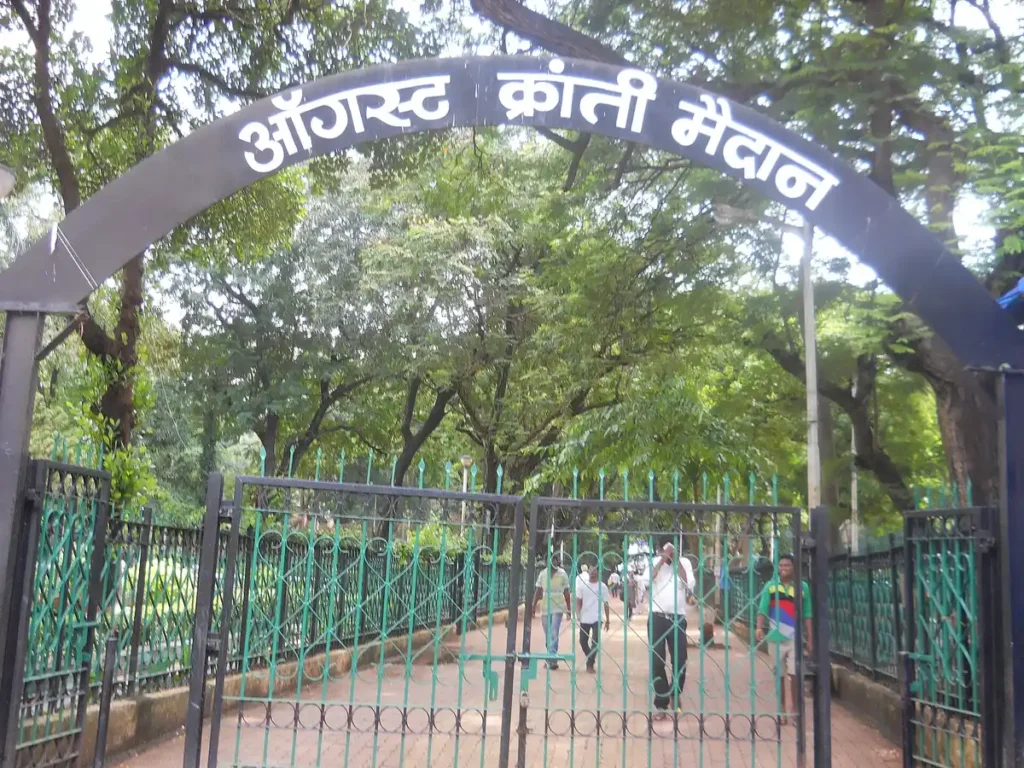
Image: Karthikndr, Wikimedia Commons, CC BY-SA 3.0
How to use this in Mains
If asked: UPSC Mains 2024, GS-I: What were the events that led to the Quit India Movement? Point out its results.
Quote: “It began in August and was the most intense mass upsurge since 1857, hence “August Kranti”.”
Use it: Use it to describe the movement's intensity.
In the news
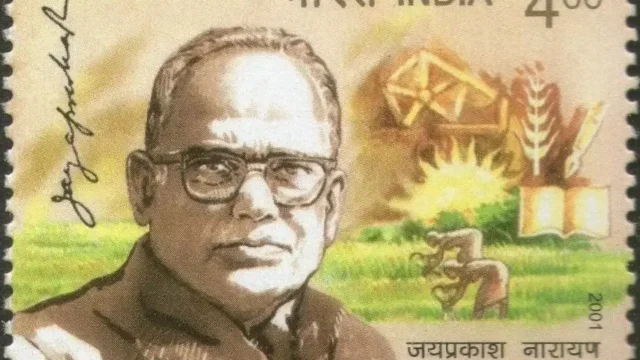
Birth anniversaries: Jayaprakash Narayan and Nanaji Deshmukh
11 October is the birth anniversary of Loknayak Jayaprakash Narayan and Nanaji Deshmukh, both Bharat Ratna awardees. The Prime Minister recalled JP's voice during the Emergency and his concern for good governance, and Nanaji's work in rural development and community participation. Treat this as a personality note for Prelims.
11 Oct 2026
ASI and Denmark museum to search for 1619 Danish shipwreck Oresund off Karaikal
The Archaeological Survey of India's Underwater Archaeology Wing and the National Museum of Denmark (Njord Centre, Copenhagen) signed an MoU to locate and document the Danish ship Oresund, wrecked off Karaikal, Puducherry, in 1619 CE. It is described as the first Danish ship known to have reached India.
15 Jun 2026
Veer Bal Diwas and the Rashtriya Bal Puraskar
The PM announced the day on 9 January 2022 and the first Veer Bal Diwas was held on 26 December 2022 [PMO].
26 Dec 2025
Stamp on Emperor Perumbidugu Mutharaiyar II
Questions on lesser-known regional dynasties are common in Prelims. Stamps and anniversaries often bring them into the news.
14 Dec 2025