
National Human Rights Commission (NHRC): Composition, Functions, Powers and Limitations (UPSC Notes + PYQs)

UPSC has already asked about this. Read the story with these questions in mind.
Background: human rights and the State
Human rights are the basic freedoms and protections every person has because they are human. In India they are protected through Fundamental Rights, Directive Principles and international treaties India has ratified. Courts enforce them, but courts act only when someone files a case and can take years. A national human rights institution fills this gap: it receives complaints cheaply, investigates, monitors prisons and police, and advises the government. The UN General Assembly endorsed the Paris Principles in 1993, which set standards such as a broad mandate, pluralist membership, independence from government and adequate funding. India passed the Protection of Human Rights Act, 1993 (first as an ordinance), creating the NHRC as a statutory body. The same Act provides for State Human Rights Commissions and human rights courts in districts.
Why it was set up
The NHRC was created in October 1993, in line with the UN’s Paris Principles for national human rights institutions, and partly in response to international criticism of custodial abuses during insurgencies.
Composition (after the 2019 amendment)
- Chairperson: a former Chief Justice of India or former Supreme Court judge.
- One former Supreme Court judge and one former High Court Chief Justice.
- Three members with knowledge of human rights, at least one a woman.
- Ex officio: chairpersons of national commissions for SCs, STs, Women, Minorities, Backward Classes, Protection of Child Rights, and the Chief Commissioner for Persons with Disabilities.
- Term: three years or 70 years of age, eligible for reappointment.
Appointment
The President appoints on the recommendation of a committee: the Prime Minister (chair), Lok Sabha Speaker, Union Home Minister, Leaders of Opposition in both Houses, and the Deputy Chairman of the Rajya Sabha.
- 1Complaint or suo motu notice
- 2Preliminary scrutiny (within one year?)
- 3Inquiry or report from authority
- 4Recommendation: relief, compensation, prosecution
- 5Action taken report within one month
Powers
- Inquiry on complaint or suo motu; powers of a civil court.
- Visit jails and detention centres.
- Intervene in court proceedings involving human rights.
- Recommend compensation, prosecution and interim relief.
- For armed forces, it can only seek a report from the Centre.
What ‘human rights’ means under the Act
Section 2(1)(d) of the 1993 Act defines human rights as rights relating to life, liberty, equality and dignity of the individual guaranteed by the Constitution or embodied in the International Covenants and enforceable by courts in India. This definition matters: the Commission cannot take up any grievance, only those linked to these rights. Most complaints concern custodial deaths and torture, police inaction, bonded labour, encounter killings, and neglect in homes and hospitals. Its guidelines require every custodial death to be reported to it within 24 hours, and post-mortems in such cases to be video-recorded. It has also taken up wider issues such as manual scavenging, silicosis among workers, and mental health institutions.
| Feature | NHRC | State Human Rights Commission |
|---|---|---|
| Chairperson | Former CJI or SC judge | Former HC Chief Justice or HC judge |
| Appointed by | President | Governor |
| Removed by | President | President (not Governor) |
| Jurisdiction | All of India | State List and Concurrent List subjects |
State commissions and human rights courts
The 1993 Act lets every State set up a State Human Rights Commission, and most States have done so. Its chairperson is a former Chief Justice or judge of a High Court, appointed by the Governor on the advice of a committee headed by the Chief Minister, but only the President can remove members. A State commission can inquire only into subjects in the State and Concurrent Lists. The Act also provides for human rights courts in each district, designated by the State government with the concurrence of the High Court’s Chief Justice, for speedy trial of offences arising from human rights violations, with a special public prosecutor. In practice few such courts function as distinct courts. The 2019 amendment widened the pool for the chairperson to include former Supreme Court judges, added a woman member, brought more national commissions in as ex officio members, and cut the term from five to three years. It also allowed Union Territory human rights matters, other than Delhi, to be given to a State commission.
- Free and simple complaints
- Civil court powers
- Can visit jails
- Suo motu action
- Recommendations not binding
- One-year limit
- Only a report on armed forces
- Depends on government staff
Limitations
Recommendations are not binding; one-year limit on complaints; limited power over the armed forces; dependence on government for investigative staff; large backlog. The Supreme Court has repeatedly called it a body with “no teeth” in practice.
Procedure: from complaint to recommendation
Anyone can complain, in any language, by post or online, and there is no fee. The Commission may also act on news reports. It can summon witnesses, demand records and use its own investigation team, or ask a State agency to investigate. It cannot inquire into a matter more than one year old, or one already before another commission. After inquiry it can recommend compensation, prosecution of officials, or other action, and may approach the Supreme Court or a High Court. The government must report within one month on action taken, and the Commission publishes its findings and the government’s response. Its annual report is laid before Parliament with a memorandum of action taken.
NHRC and the armed forces
Under Section 19, in complaints against the armed forces, the Commission can only seek a report from the Union government and then make recommendations. It cannot investigate on its own. Critics say this weakens it exactly where risks of abuse are high, in areas under the Armed Forces (Special Powers) Act. Supporters argue that the military has its own justice system and that operational secrecy must be protected. The Commission’s accreditation status before the Global Alliance of National Human Rights Institutions has been reviewed several times on questions of pluralism, independence and the role of police officers in investigations.
Assessment for Mains
- Strengths: low-cost access, suo motu action, guidelines on custodial deaths and encounters, focus on bonded labour and vulnerable groups.
- Weaknesses: recommendatory powers only, one-year limit, armed forces exclusion, reliance on deputed police for investigation, vacancies and backlog, and appointments dominated by retired judges and officials.
- Reform ideas: make recommendations binding unless the government gives written reasons, an independent investigation cadre, greater civil society membership, and stronger State commissions.
NHRC in Prelims: quick checks
Keep three points straight. The NHRC is statutory, not constitutional. Its chairperson and members are appointed by the President on the advice of a six-member committee headed by the Prime Minister. And its reports are recommendatory: the government must say what it did, but it is not bound to follow the advice. Questions also test the one-year limit and the special rule for the armed forces.
Nhrc: UPSC angle
For UPSC CSE
Prelims: statutory not constitutional, chairperson eligibility, who appoints, armed forces limits. Mains GS-II: effectiveness of rights bodies.
Nhrc UPSC PYQs (Prelims)
Questions UPSC has actually asked, from the official papers. Pick an option to check yourself.
Consider the following organizations/bodies in India :
– 1. The National Commission for Backward Classes
– 2. The National Human Rights Commission
– 3. The National Law Commission
– 4. The National Consumer Disputes Redressal Commission
How many of the above are constitutional bodies?
The NCBC became a constitutional body through the 102nd Amendment (2018), Article 338B. The NHRC comes from the Protection of Human Rights Act, 1993. The Law Commission is set up by a government order. The NCDRC is created under consumer protection law. Only one is constitutional. Answer as per the official UPSC key · Battle IAS PYQ bankAnswer (a) & why
Mains PYQs on this topic
No UPSC Mains question from 2023-2026 is directly on this topic. Older papers (2013-2022) will be added as the Mains bank grows.
Quick quiz
The NHRC is a
Under the Protection of Human Rights Act, 1993.Answer (b)
After 2019, the NHRC chairperson can be
The 2019 amendment widened eligibility.Answer (b)
NHRC recommendations are
They are not binding.Answer (c)
FAQs
When was the NHRC established?
On 12 October 1993.
Can the NHRC investigate the armed forces?
It can only seek a report from the Central Government and make recommendations.
What is the time limit for complaints?
The NHRC cannot inquire into matters more than one year after the alleged act.
What are the Paris Principles?
UN standards (1993) for independent national human rights institutions.
Is the NHRC a constitutional body?
No. It is a statutory body created by the Protection of Human Rights Act, 1993.
Who can remove the NHRC chairperson?
The President, on grounds such as proved misbehaviour or incapacity after a Supreme Court inquiry, or on grounds like insolvency or unsoundness of mind.
What are the Paris Principles?
UN standards (1993) for national human rights institutions covering mandate, independence, pluralism and resources.
Spotted an error? Tell us. We correct within 48 hours.
Image: Pulakit Singh, Wikimedia Commons, CC BY-SA 4.0
How to use this in Mains
If asked: Is the NHRC an effective watchdog? Examine. (GS-II)
Quote: “Recommendations are not binding; one-year limit on complaints; limited power over the armed forces; dependence on government for investigative staff; large backlog.”
Use it: Your core limitation paragraph.
In the news

Supreme Court: no prior approval under Section 17A needed to probe a bribe demand
In a judgment of 16 October 2026, a Supreme Court Bench of Justices S.V.N. Bhatti and N.V. Anjaria held that investigating a bribe demand by a public servant does not need prior approval under Section 17A of the Prevention of Corruption Act. Asking for a bribe, the court said, is not part of discharging official duties.
19 Oct 2026
CCPA acts against online sale of explosives: 3,940 sellers delisted from seven platforms
The Central Consumer Protection Authority (CCPA) said on 19 October 2026 that 3,940 sellers of regulated explosives such as ammonium nitrate, picric acid and PETN have been delisted from seven online platforms after its action. It has fined Dial4Trade and ExportersIndia ₹10 lakh per order, and other cases are under hearing or investigation.
19 Oct 2026
India to host 61st CIML meeting on legal metrology in New Delhi, 26–28 October
India will host the 61st meeting of the International Committee of Legal Metrology (CIML) for the first time, in New Delhi from 26 to 28 October 2026. The Department of Consumer Affairs is organising it with the International Organization of Legal Metrology (OIML), and more than 100 delegates are expected, PIB said on 19 October.
19 Oct 2026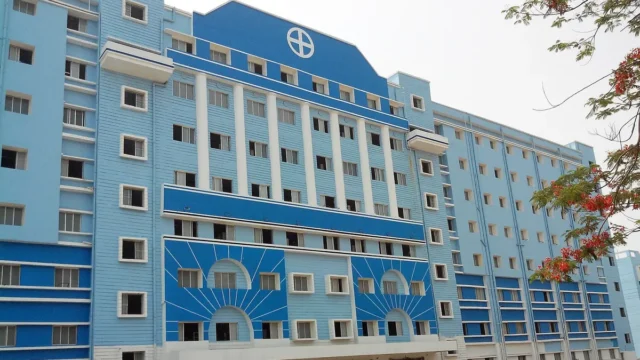
NMC withdraws MSMER-2023: medical colleges lose the fixed penalty rulebook, annual disclosure stays
The National Medical Commission (NMC) has de-notified the Maintenance of Standards of Medical Education Regulations, 2023 (MSMER-2023) by a notification dated 14 October 2026, published in the Gazette on 16 October. Its fixed penalties, including seat cuts and fines of up to ₹5 lakh for false records, go with it. The Annual Disclosure Report stays.
19 Oct 2026