
Parliamentary Committees: Public Accounts, Estimates, Public Undertakings and DRSCs (UPSC Notes + PYQs)
UPSC has already asked about this. Read the story with these questions in mind.
Background
A House of 543 or 245 members cannot study every Bill clause by clause or follow every rupee spent. Committees solve that problem. India’s system grew from colonial roots: the Public Accounts Committee was first set up in 1921 under the Montagu-Chelmsford reforms, and the Estimates Committee in 1950 on the advice of Finance Minister John Mathai. The 17 Departmentally Related Standing Committees, later expanded to 24, began in 1993. Committees work away from the cameras, which lets members of different parties build consensus that is hard to find on the floor of the House.
Why committees exist
Parliament sits for well under a hundred days a year. It cannot read every clause of every Bill or every audit paragraph on the floor. Committees do that work quietly, away from television cameras, which is why members often cross party lines there. They draw their authority from Articles 105 and 118 and from the Rules of Procedure, not from a separate Article.
The financial committees
| Committee | Members | Chair | Job |
|---|---|---|---|
| Public Accounts Committee (1921) | 22: 15 Lok Sabha + 7 Rajya Sabha | By convention from the Opposition since 1967 | Examines CAG audit reports after money is spent (“post-mortem”) |
| Estimates Committee (1950) | 30, all Lok Sabha | Ruling party member | Suggests economies in estimates; called a “continuous economy committee” |
| Committee on Public Undertakings (1964) | 22: 15 + 7 | Lok Sabha member | Examines reports and accounts of public sector undertakings |
Ministers cannot be members of any of these three.
- FinancialPAC, Estimates, Public Undertakings
- DRSCs24 subject committees
- InquiryPetitions, Privileges, Ethics
- ScrutinyAssurances, Subordinate Legislation
- HousekeepingBusiness Advisory, Rules
- Ad hocSelect committees and JPCs
Departmentally Related Standing Committees
Started in 1993, there are now 24 DRSCs, each with 31 members (21 Lok Sabha, 10 Rajya Sabha). Eight are serviced by the Rajya Sabha Secretariat and sixteen by the Lok Sabha. They examine Demands for Grants, Bills referred to them, and annual reports of ministries. They cannot consider day-to-day administration.
Other committees to know
- Business Advisory Committee: fixes time for business.
- Committee of Privileges: examines breach of privilege.
- Committee on Petitions, Committee on Subordinate Legislation, Committee on Government Assurances.
- Joint Parliamentary Committees (ad hoc): e.g., on the Waqf (Amendment) Bill (2024) and the Constitution (129th Amendment) Bill on simultaneous elections.
- 1Bill referred by the Speaker or Chairman
- 2Committee invites ministry and public views
- 3Hearings with experts and stakeholders
- 4Clause-by-clause discussion
- 5Report tabled in Parliament; recommendations advisory
Committees in Prelims
Prelims likes membership numbers and who appoints whom. The Speaker appoints the chairs of Lok Sabha committees; the Rajya Sabha Chairman does so for committees under the Upper House. The Business Advisory Committee fixes the time for each item, the Committee on Government Assurances tracks promises made by ministers on the floor, and the Committee on Subordinate Legislation checks whether rules framed by ministries stay within the parent Act. The Committee on Petitions considers petitions from citizens on Bills and public matters. Remember too that the PAC examines spending after it happens, while the Estimates Committee looks at estimates before or during the year.
The concern: fewer Bills go to committees
PRS Legislative Research data show that the share of Bills referred to committees fell sharply after the 15th Lok Sabha. Committee scrutiny improves drafting and lets experts and citizens be heard. Mandatory referral of all Bills, as in several Westminster systems, is a reform worth quoting in Mains.
Financial committees compared
| Committee | Members | Role | Chair |
|---|---|---|---|
| Public Accounts | 22 (15 LS + 7 RS) | Examines CAG audit reports on spending | By convention, from the Opposition (since 1967) |
| Estimates | 30 (all LS) | Suggests economies in estimates; “continuous economy committee” | From the ruling side, appointed by Speaker |
| Public Undertakings | 22 (15 LS + 7 RS) | Examines reports and accounts of PSUs | Appointed by Speaker from LS members |
Ministers cannot be members of these committees.
Standing vs ad hoc committees
Standing committees are permanent and elected or nominated every year: the financial committees, the DRSCs, the Business Advisory Committee, the Committee of Privileges, the Rules Committee and others. Ad hoc committees are formed for a task and wind up when they report: select committees and Joint Parliamentary Committees on particular Bills, or inquiry JPCs such as those on the Bofors deal (1987) and the 2G spectrum allocation (2011). JPCs are set up by a motion in one House agreed to by the other.
Why committees matter and what weakens them
- They give detailed scrutiny that the floor cannot, and take evidence from experts and citizens.
- Their reports are recommendatory, so governments can ignore them, though “action taken reports” add some pressure.
- Members change often, attendance is uneven and research support is thin.
- Referral of Bills to committees is not mandatory; reform proposals include compulsory referral of most Bills and fixed tenure for members.
Parliamentary Committees: UPSC angle
For UPSC CSE
Prelims: composition numbers, which committee is largest, who chairs PAC, whether ministers can be members. Mains GS-II: committees and executive accountability; declining scrutiny.
Parliamentary Committees UPSC PYQs (Prelims)
Questions UPSC has actually asked, from the official papers. Pick an option to check yourself.
Consider the following statements :
The Parliamentary Committee on Public Accounts
– 1. consists of not more than 25 Members of the Lok Sabha
– 2. scrutinizes appropriation and finance accounts of the Government
– 3. examines the report of the Comptroller and Auditor General of India
Which of the statements given above is/are correct?
The PAC has 22 members: 15 from the Lok Sabha and 7 from the Rajya Sabha. It examines the government’s appropriation and finance accounts and the CAG’s audit reports. The “25 Lok Sabha members” figure is wrong. Answer as per the official UPSC key · Battle IAS PYQ bankAnswer (b) & why
Which one of the following is the largest Committee of the Parliament?
The Estimates Committee has 30 members, all from the Lok Sabha. The Public Accounts Committee and the Committee on Public Undertakings have 22 each: 15 from the Lok Sabha and 7 from the Rajya Sabha. Answer as per the official UPSC key · Battle IAS PYQ bankAnswer (b) & why
With reference to the Parliament of India, which of the following Parliamentary Committees scrutinizes and reports to the House whether the powers to make regulations, rules, sub-rules, by-laws, etc. conferred by the Constitution or delegated by the Parliament are being properly exercised by the Executive within the scope of such delegation?
Rules made by the executive under an Act are “subordinate” or delegated legislation. The Committee on Subordinate Legislation checks that they stay within the powers given. The Rules Committee deals with the House’s own procedure. Answer as per the official UPSC key · Battle IAS PYQ bankAnswer (b) & why
Mains PYQs on this topic
Questions from the official UPSC Mains papers (2023-2026 in the Battle IAS Mains bank), newest first. Each links to a model answer.
- UPSC Mains 2023 · GS Paper II · Q16 · 15 marks
Explain the structure of the Parliamentary Committee system. How far have the financial committees helped in the institutionalisation of Indian Parliament?
Quick quiz
Which is the largest committee of Parliament?
30 members, all from the Lok Sabha.Answer (b)
Members of which committee are drawn only from the Lok Sabha?
The Estimates Committee has no Rajya Sabha members.Answer (c)
The PAC mainly examines
It does a post-facto check of spending using CAG reports.Answer (b)
FAQs
How many members are there in the Public Accounts Committee?
22: 15 from the Lok Sabha and 7 from the Rajya Sabha.
Who chairs the PAC?
Since 1967 the Speaker appoints a member of the Opposition as chairman, by convention.
What are DRSCs?
Departmentally related standing committees, 24 in number, each covering a group of ministries.
Can a minister be a member of the Estimates Committee?
No. Ministers cannot be members of the financial committees.
What is a Joint Parliamentary Committee?
An ad hoc committee with members from both Houses, set up to study a Bill or investigate a matter; it is dissolved after it reports.
Why is the Estimates Committee called a “continuous economy committee”?
Because it examines the estimates throughout the year and suggests economies and alternative policies to achieve efficiency.
Spotted an error? Tell us. We correct within 48 hours.
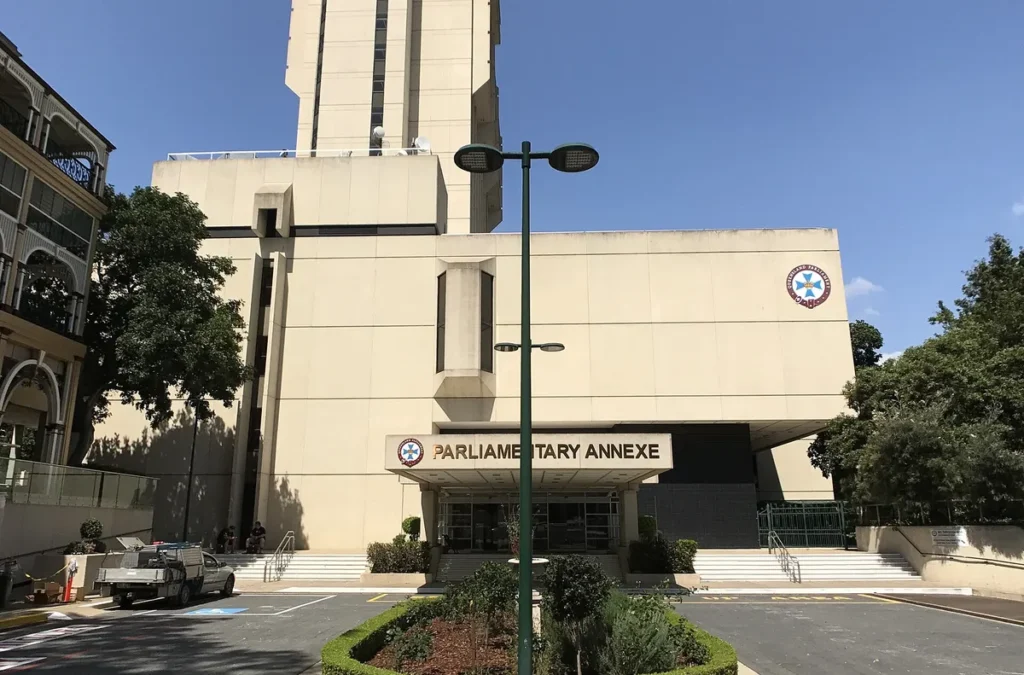
Image: Kgbo, Wikimedia Commons, CC BY-SA 4.0
How to use this in Mains
If asked: UPSC Mains 2023, GS-II: Explain the structure of the Parliamentary Committee system. How far have the financial committees helped in the institutionalisation of Indian Parliament?
Quote: “PRS Legislative Research data show that the share of Bills referred to committees fell sharply after the 15th Lok Sabha.”
Use it: Use as the concern about declining scrutiny.
In the news

Supreme Court: no prior approval under Section 17A needed to probe a bribe demand
In a judgment of 16 October 2026, a Supreme Court Bench of Justices S.V.N. Bhatti and N.V. Anjaria held that investigating a bribe demand by a public servant does not need prior approval under Section 17A of the Prevention of Corruption Act. Asking for a bribe, the court said, is not part of discharging official duties.
19 Oct 2026
CCPA acts against online sale of explosives: 3,940 sellers delisted from seven platforms
The Central Consumer Protection Authority (CCPA) said on 19 October 2026 that 3,940 sellers of regulated explosives such as ammonium nitrate, picric acid and PETN have been delisted from seven online platforms after its action. It has fined Dial4Trade and ExportersIndia ₹10 lakh per order, and other cases are under hearing or investigation.
19 Oct 2026
India to host 61st CIML meeting on legal metrology in New Delhi, 26–28 October
India will host the 61st meeting of the International Committee of Legal Metrology (CIML) for the first time, in New Delhi from 26 to 28 October 2026. The Department of Consumer Affairs is organising it with the International Organization of Legal Metrology (OIML), and more than 100 delegates are expected, PIB said on 19 October.
19 Oct 2026
NMC withdraws MSMER-2023: medical colleges lose the fixed penalty rulebook, annual disclosure stays
The National Medical Commission (NMC) has de-notified the Maintenance of Standards of Medical Education Regulations, 2023 (MSMER-2023) by a notification dated 14 October 2026, published in the Gazette on 16 October. Its fixed penalties, including seat cuts and fines of up to ₹5 lakh for false records, go with it. The Annual Disclosure Report stays.
19 Oct 2026