
UPSC Mains 2023 GS2 Q19: model answer
‘The expansion and strengthening of NATO and a stronger US-Europe strategic partnership works well for India.’ What is your opinion about this statement ? Give reasons and examples to support your answer.
What the question wants
A reasoned opinion on whether NATO expansion and US-Europe unity help India.
How to structure it
Intro: Finland (2023) and Sweden (2024) joined NATO after Russia's invasion of Ukraine. Body: (1) Works well: Western focus on Indo-Pacific and China, US-EU tech and supply chains (iCET, TTC), defence technology, IMEC, democracies' cooperation, rules-based order; (2) Concerns: strains India-Russia ties (defence supplies, oil), pushes Russia closer to China, pressure on India's neutrality, Europe's attention diverted from Indo-Pacific, sanctions affecting India, NATO-plus talk. Conclusion: mixed; India gains if it keeps strategic autonomy and multi-alignment.
- 1(1) Works well: Western focus on Indo-Pacific and China, US-EU tech and supply chains (iCET, TTC), defence technology, IMEC, democracies' cooperation, rules-based order
- 2(2) Concerns: strains India-Russia ties (defence supplies, oil), pushes Russia closer to China, pressure on India's neutrality, Europe's attention diverted from Indo-Pacific, sanctions affecting India, NATO-plus talk
Model answer
After Russia's invasion of Ukraine, NATO expanded with Finland (2023) and Sweden (2024), and the US-Europe partnership grew stronger. For India the effect is mixed.
Why it can work well for India
- Shared concern over China: NATO's 2022 Strategic Concept named China a challenge; a united West can balance Chinese assertiveness.
- Technology and supply chains: the US-India iCET, the India-EU Trade and Technology Council and 'China plus one' strategies bring investment.
- Defence ties: jet engine co-production (GE-HAL), and partnerships with France, Germany and others.
- Connectivity: the India-Middle East-Europe Economic Corridor (2023) links India with a united West.
- Rules-based order: support for freedom of navigation and democratic values.
Why it may not
- Russia ties: India still relies on Russian defence equipment and buys discounted Russian oil; Western pressure and sanctions complicate payments and supplies.
- Russia-China closeness: an isolated Russia leans on China, which is against India's interest.
- Divided focus: Western resources go to Europe, not the Indo-Pacific.
- Bloc politics: pressure to take sides in a new Cold War undermines strategic autonomy and India's Global South leadership.
- Food and fuel: the war and sanctions raised prices for developing countries.
My view
A strong US-Europe partnership is broadly good for India when it focuses on technology, trade and the Indo-Pacific. A NATO that drives Russia into China's arms is not. India should keep its multi-alignment: deepen ties with the West through the Quad and EU, while maintaining engagement with Russia and voicing the Global South's concerns.
Keywords, cases and data to drop in
NATO expansion strategic autonomy iCET IMEC multi-alignment
Where most answers lose marks
- One-sided opinion.
- No examples.
Fresh examples from current affairs
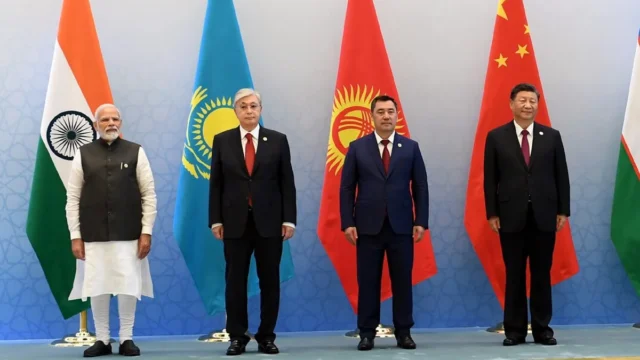
SCO Heads of Government meet in Dushanbe: Rajnath calls for dismantling the terror ecosystem
Defence Minister Rajnath Singh represented India at the 25th meeting of the SCO Council of Heads of Government in Dushanbe, Tajikistan, on 20 October 2026. With Pakistan’s Deputy Prime Minister in the room, he said there can be no justification and no double standards on terrorism. The meeting adopted the SCO budget for 2027 and a 2026–30 action plan for trade and economic cooperation.
UPSC angle: Prelims: SCO bodies and locations, new centres, INSTC. · Mains GS-II: SCO’s value for India; GS-III: terror financing.
21 Oct 2026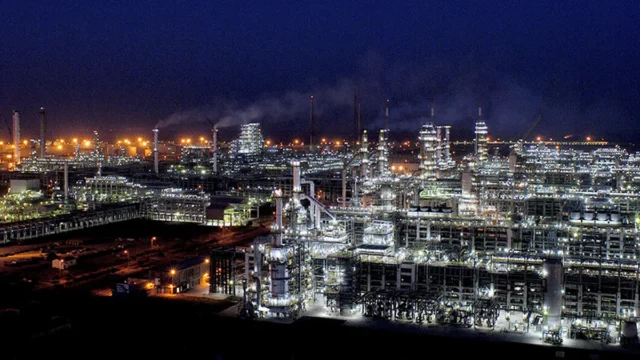
Rubio at Jamnagar: US pitches oil and Venezuelan crude to India’s ‘refining superpower’
US Secretary of State Marco Rubio visited Reliance’s Jamnagar refinery complex in Gujarat on 21 October 2026, a day after calling India a ‘refining superpower’. He wants India to buy more US oil and refine more Venezuelan crude. In Mumbai on 20 October, External Affairs Minister S. Jaishankar also held an unannounced India–US–UAE meeting on energy and connectivity, with the Strait of Hormuz blocked.
UPSC angle: Prelims: Jamnagar, Hormuz, I2U2, IMEC, SPR sites. · Mains GS-II/III: energy security vs strategic autonomy; India–US–UAE.
21 Oct 2026
US PERM freeze on Indian IT firms: what the skilled-migrant crackdown means for India
On 8 October 2026 the US Labor Department suspended Microsoft, Adobe, Infosys, TCS, Wipro, HCL, Cognizant and Capgemini from the PERM programme, the labour-certification step for most employment-based green cards. A Hindu data analysis on 21 October shows these firms filed only about 2,000 PERM applications this year, under 2% of the total. The direct hit is small, but the message to Indian talent is large.
UPSC angle: Prelims: PERM, H-1B, I-140, GATS Mode 4. · Mains GS-II: skilled migration and India–US ties; diaspora.
21 Oct 2026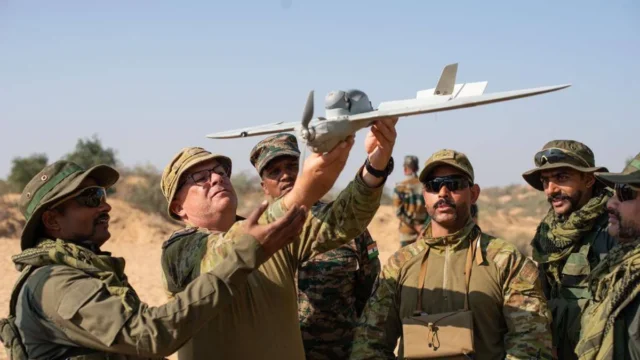
AUSTRAHIND 2026: fifth India–Australia Army exercise begins in Thiruvananthapuram
The fifth edition of the India–Australia joint military exercise AUSTRAHIND began on 19 October 2026 at the Foreign Training Node, Thiruvananthapuram, and runs till 1 November. About 120 soldiers from each army will train for sub-conventional operations in island and coastal terrain under a UN Chapter VII mandate. For the first time, New Zealand has sent observers.
UPSC angle: Prelims: exercise names, venues, partner countries, UN Chapter VII. · Mains GS-III: defence diplomacy in the Indo-Pacific.
20 Oct 2026Learn the concept
Question text as printed in the official UPSC question paper: https://www.upsc.gov.in/sites/default/files/QP-CSM-23-GENERAL-STUDIES-PAPER-II-180923.pdf The model answer is original Battle IAS work; use it to learn structure, not to memorise.