
ASEAN: Origin, Members, Institutions, ASEAN Centrality, India-ASEAN Relations, Trade Agreement and Act East Policy (UPSC Notes + PYQs)

UPSC has already asked about this. Read the story with these questions in mind.
Origin and members
ASEAN was born in the Cold War, when five non-communist States, Indonesia, Malaysia, the Philippines, Singapore and Thailand, signed the Bangkok Declaration to build regional peace and economic cooperation. It grew to ten by the end of the century and to eleven in October 2025, when Timor-Leste was admitted at the Kuala Lumpur summit.
The ASEAN Charter (in force 2008) gave the grouping legal personality. Decisions are taken by consultation and consensus, the so-called “ASEAN way”, and the chair rotates yearly in alphabetical order.
- 1967Founded by five
- 1984Brunei
- 1995Vietnam
- 1997Laos, Myanmar
- 1999Cambodia
- 2008ASEAN Charter in force
- 2025Timor-Leste, 11th member
Institutions and the forums it leads
ASEAN Summits are held twice a year. Three pillars, the Political-Security, Economic and Socio-Cultural Communities, were launched in 2015. ASEAN also sits at the centre of wider forums that include the big powers:
- ASEAN Regional Forum (1994): security dialogue of 27 members, including India.
- East Asia Summit (2005): leaders-led forum of 18; India is a founding member.
- ADMM-Plus (2010): defence ministers of ASEAN and eight partners.
- ASEAN+3 with China, Japan and South Korea, born of the 1997 Asian financial crisis.
This role is called ASEAN centrality: the big powers meet on ASEAN’s ground and under its rules. India’s Indo-Pacific vision formally backs it.
- ARF1994, security dialogue
- East Asia Summit2005, 18 leaders
- ADMM-Plus2010, defence
- ASEAN+3China, Japan, ROK
India and ASEAN: from Look East to Act East
After the 1991 crisis, India launched the Look East Policy under P.V. Narasimha Rao to tie its economy to fast-growing Southeast Asia. In 2014 it became Act East, adding security, connectivity and the North-East to the agenda.
India’s ties with ASEAN rose step by step, from a sectoral partner to a Comprehensive Strategic Partnership in 2022. Defence links have grown too: the Philippines bought BrahMos missiles in 2022, and India holds naval exercises with Singapore, Thailand, Indonesia and Vietnam. Connectivity projects include the India-Myanmar-Thailand Trilateral Highway and the Kaladan Multi-Modal Transit Transport Project, both delayed by conflict in Myanmar.
- 1991Look East Policy
- 1992Sectoral partner
- 1996Dialogue partner
- 2002Summit-level partner
- 2012Strategic partnership
- 2014Act East Policy
- 2022Comprehensive Strategic Partnership
Trade: AITIGA and the RCEP question
The ASEAN-India Trade in Goods Agreement was signed in 2009 and came into force in 2010; agreements on services and investment followed in 2014. Trade has grown past USD 120 billion, but India’s deficit with ASEAN has widened sharply. Indian industry complains of tariff concessions that favour ASEAN, weak rules of origin that let Chinese goods enter through ASEAN, and non-tariff barriers on Indian goods. A review of AITIGA began in 2023.
India negotiated the Regional Comprehensive Economic Partnership for seven years but walked out in November 2019, fearing a flood of Chinese imports and harm to farmers and dairy. RCEP came into force in 2022 without India.
Challenges for ASEAN
- South China Sea: four members have claims overlapping China’s; consensus rules let China’s friends in ASEAN block strong statements, and a Code of Conduct has been under negotiation for two decades.
- Myanmar: since the 2021 coup ASEAN’s Five-Point Consensus has achieved little.
- US-China rivalry pulls members in different directions.
- Large gaps in income between Singapore and the poorer members.
Way forward for India
India should finish the AITIGA review with stronger rules of origin, join ASEAN supply chains in electronics and pharmaceuticals, complete the Trilateral Highway and Kaladan, and deepen maritime and digital cooperation. Its North-East should become a gateway, not a dead end.
ASEAN Outlook on the Indo-Pacific
In 2019 ASEAN adopted its own Outlook on the Indo-Pacific (AOIP). It treats the Indian and Pacific Oceans as one connected region and lists four areas of cooperation: maritime cooperation, connectivity, the UN Sustainable Development Goals, and economic cooperation. The document is careful not to choose between the United States and China; it stresses openness, inclusiveness and a rules-based order with ASEAN in the centre. India welcomed the AOIP because it fits India’s own Indo-Pacific Oceans Initiative (2019), which has seven pillars, including maritime security, ecology, resources and disaster management. The two documents were formally linked in a joint statement in 2021. For India, the attraction is clear: an inclusive Indo-Pacific with ASEAN at its heart keeps the region open without forcing Southeast Asian States to pick a camp, and it gives India a respected place as a resident power rather than an outsider.
People, culture and the North-East
India’s links with Southeast Asia are older than any treaty. Buddhism, the Ramayana and Sanskrit travelled east; the temples of Angkor Wat in Cambodia and Prambanan in Indonesia show this heritage, and India has helped restore Angkor Wat and Ta Prohm and the My Son temples in Vietnam. Today the Indian diaspora in Singapore and Malaysia is large and influential. Nalanda University was re-founded with support from East Asia Summit members. India offers scholarships to ASEAN students, and the two sides have run quick-impact projects in Cambodia, Laos, Myanmar and Vietnam. The weak link is the land route. India’s North-East shares a border with Myanmar but has poor roads, few rail links and frequent unrest, so most India-ASEAN trade goes by sea. Making the North-East a real gateway would need better roads, border markets, and peace in Manipur and in Myanmar’s border regions, along with simpler customs at land ports such as Moreh and Zokhawthar.
Mekong-Ganga Cooperation
India also works with five mainland ASEAN members, Cambodia, Laos, Myanmar, Thailand and Vietnam, through the Mekong-Ganga Cooperation launched in Vientiane in 2000. It covers tourism, culture, education and transport, and funds quick-impact projects in the Mekong countries. Bangladesh is not a member, a point Prelims has tested.
PYQ trend
Prelims tests groupings and their declarations (for example, which body a declaration belongs to). Mains GS-II asks Act East, Indo-Pacific and India’s regional trade choices.
ASEAN: UPSC angle
For UPSC CSE
Prelims: members, dates, forums. Mains GS-II: Act East, Indo-Pacific, trade deficit and RCEP.
ASEAN UPSC PYQs (Prelims)
Questions UPSC has actually asked, from the official papers. Pick an option to check yourself.
In the Mekong-Ganga Cooperation, an initiative of six countries, which of the following is/are not a participant/participants?
– 1. Bangladesh
– 2. Cambodia
– 3. China
– 4. Myanmar
– 5. Thailand
Select the correct answer using the code given below.
Mekong–Ganga Cooperation (2000, Vientiane) joins India with five Mekong countries: Thailand, Myanmar, Cambodia, Laos and Vietnam. It covers tourism, culture, education and transport. Bangladesh and China are not part of it. China leads its own Lancang–Mekong forum. Answer as per the official UPSC key · Battle IAS PYQ bankAnswer (c) & why
The Global Infrastructure Facility is a/an
The Global Infrastructure Facility (2014) is a G20 initiative hosted by the World Bank. It helps governments prepare and structure complex infrastructure PPPs, so that private and institutional investors such as pension funds will put money into them. Answer as per the official UPSC key · Battle IAS PYQ bankAnswer (b) & why
Mains PYQs on this topic
Questions from the official UPSC Mains papers (2023-2026 in the Battle IAS Mains bank), newest first. Each links to a model answer.
- UPSC Mains 2026 · GS Paper I · Q16 · 15 marks
“The centre of global trade is gradually shifting from the Atlantic region to the Indo-Pacific region.” Examine this statement.
Quick quiz
Which of these was NOT a founding member of ASEAN?
Vietnam joined in 1995.Answer (c)
ASEAN’s secretariat is located in
Jakarta, Indonesia.Answer (d)
India and ASEAN upgraded ties to a Comprehensive Strategic Partnership in
In November 2022.Answer (d)
FAQs
How many members does ASEAN have?
Eleven, after Timor-Leste joined in October 2025.
What is ASEAN centrality?
The idea that ASEAN should sit at the centre of the region’s forums, such as the East Asia Summit and ARF, so the big powers engage on its terms.
Is India a member of ASEAN?
No. India is a dialogue partner and Comprehensive Strategic Partner, and a member of ASEAN-led forums such as the EAS and ARF.
Why did India leave RCEP?
Fear of cheap Chinese imports, a widening trade deficit and harm to farmers, dairy and small industry.
What is the difference between Look East and Act East?
Look East (1991) was mainly economic; Act East (2014) added security, connectivity and the North-East.
Spotted an error? Tell us. We correct within 48 hours.
Image: Kaliper1, Wikimedia Commons, CC BY-SA 4.0
How to use this in Mains
If asked: UPSC Mains 2026, GS-I: “The centre of global trade is gradually shifting from the Atlantic region to the Indo-Pacific region.” Examine this statement.
Quote: “India should finish the AITIGA review with stronger rules of origin, join ASEAN supply chains in electronics and pharmaceuticals, complete the Trilateral Highway and Kaladan, and deepen maritime and digital cooperation.”
Use it: Use it as India's way forward in the Indo-Pacific trade shift.
In the news
India to host 61st CIML meeting on legal metrology in New Delhi, 26–28 October
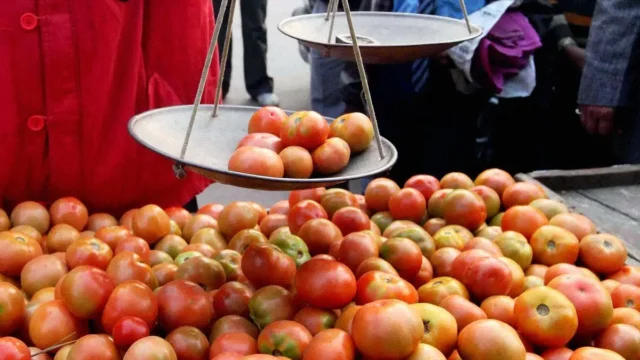
India will host the 61st meeting of the International Committee of Legal Metrology (CIML) for the first time, in New Delhi from 26 to 28 October 2026. The Department of Consumer Affairs is organising it with the International Organization of Legal Metrology (OIML), and more than 100 delegates are expected, PIB said on 19 October.
19 Oct 2026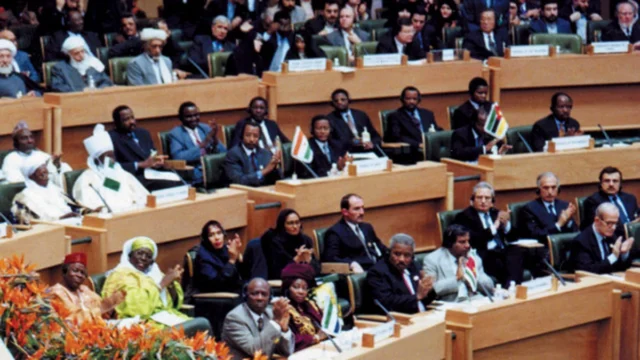
India rejects OIC’s Baghdad resolutions on Jammu and Kashmir as ‘malicious, biased and false’
On 19 October 2026 the Ministry of External Affairs rejected references to India in resolutions adopted at the Organisation of Islamic Cooperation (OIC) Council of Foreign Ministers in Baghdad on 17–18 October. It called them ‘malicious, biased and false’, said Pakistan orchestrated them, and said the OIC has no locus standi on India’s internal matters.
19 Oct 2026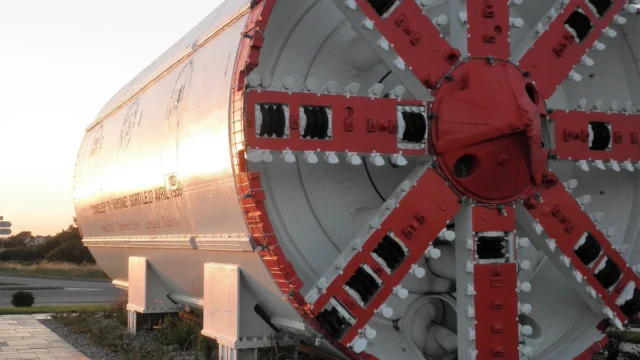
China to impose export controls on tunnel boring machines from 18 November: what it means for India
On 19 October 2026 China’s Commerce Ministry announced export controls on tunnel boring machines (TBMs) and related items from 18 November, calling them clearly dual-use. India imports TBMs for metro, rail and border tunnels and has faced customs delays on Chinese machines since 2024. China also announced controls on some drones.
19 Oct 2026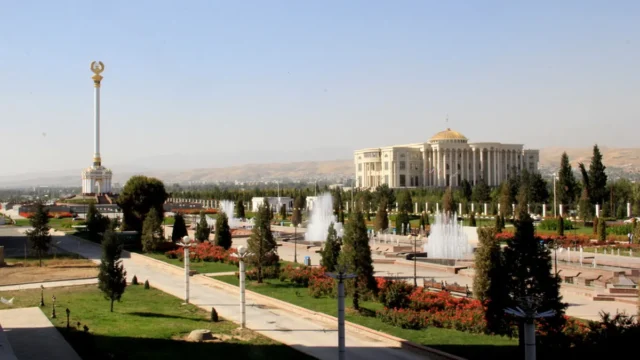
SCO Heads of Government meet in Dushanbe on 19–20 October: Rajnath Singh to represent India
Defence Minister Rajnath Singh will represent India at the 25th meeting of the SCO Council of Heads of Government (CHG) in Dushanbe, Tajikistan, on 19–20 October 2026. This is the SCO’s second-highest body, and it looks after trade, economy, connectivity and the Organisation’s budget. The last CHG met in Moscow on 18 November 2025, where External Affairs Minister S. Jaishankar spoke for India.
18 Oct 2026