
NITI Aayog’s Data Centre Evaluation Framework: five pillars to help States plan sustainable growth
Next story · 15 OctMoD signs ₹4,106 crore contracts for GSAT-7C satellite and Varunastra torpedoes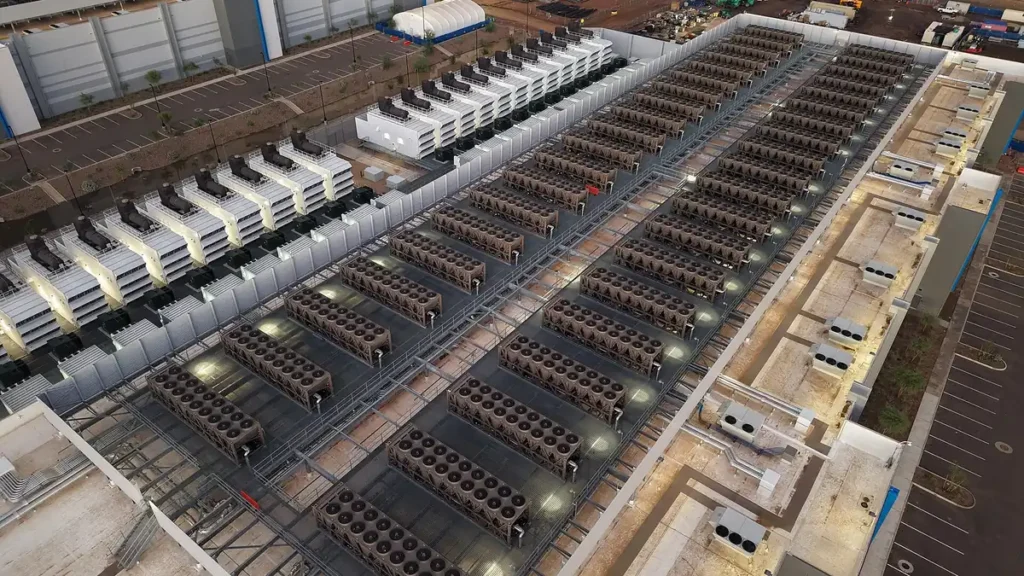
UPSC has already asked about this. Read the story with these questions in mind.
- Prelims 2015The Government of India has established NITI Aayog to replace theSolve with answer →
- Mains 2025 · GS3Explain how the Fiscal Health Index (FHI) can be used as a tool for assessing the fiscal performance of states in India. In what…See model answer →
See all 5 PYQs
- Prelims 2016With reference to 'Financial Stability and Development Council', consider the following statementsSolve with answer →
- Prelims 2017With reference to 'National Investment and Infrastructure Fund', which of the following statements is/are correct ?Solve with answer →
- Prelims 2026Consider the following statements about Multidimensional Poverty Index (MPI): MPI is calculated using Alkire-Foster methodology. …Solve with answer →
NITI Aayog’s Frontier Tech Hub released a Data Centre Evaluation Framework on 14 October 2026 (PIB, 15 October). It gives States a structured way to judge data-centre proposals on power, water, siting, economic value and governance. India’s data-centre capacity has grown from about 375 MW in 2020 to about 1.5 GW, driven by AI and cloud demand. The message is to move from attracting investment to being ready for it.
- Released
- 14 Oct 2026
- Capacity 2020
- ~375 MW
- Capacity now
- ~1.5 GW
- Pillars
- Five
Data Centre Evaluation Framework: what happened?
A data centre looks like a quiet warehouse, but inside it uses as much power as a small town and needs a lot of water for cooling. When States compete to attract these projects, someone has to ask whether the grid, the water and the land can really support them. That is the question this framework helps States answer.
- Released in the presence of NITI Member Abhay Karandikar, CEO Anurag Jain and Distinguished Fellow Debjani Ghosh (PIB).
- It was developed with inputs from industry, MeitY, the Ministry of Power and DPIIT.
- It is a decision-support tool for States and not a new layer of regulation.
- The Centre has offered a tax holiday until 2047 to eligible foreign cloud service providers using India-based data centres.
Why do data centres need special planning?
- AI, cloud computing and high-performance computing need large server farms that run round the clock.
- They draw heavily on electricity and on water for cooling, and they need land and fibre connectivity.
- States offer land, power and tax incentives, which can set off a costly race to the bottom.
- ‘Colocation’ rents space to many clients, while ‘active compute’ provides processing power. The two create different value.
What are the five pillars?
| Pillar | What States should check |
|---|---|
| Power and Energy | Grid readiness, net grid draw, renewables with storage |
| Water and Cooling | Basin-level water stress, effect on public supply |
| Siting and Sustainability | Rainwater harvesting, on-site treatment, e-waste and battery plans |
| Economic and Strategic Value | Data-centre zones, incentives linked to outcomes, Make in India |
| Policy, Governance, Implementation | Time-bound approvals, accountability, monitoring |
Which laws and policies apply?
- Digital Personal Data Protection Act, 2023: rules on processing personal data, including transfers abroad.
- Energy Conservation Act, 2001: energy-efficiency norms for large consumers and buildings.
- Water and land are State subjects (State List Entries 17 and 18), which is why State-level planning matters.
- E-Waste (Management) Rules and Battery Waste Management Rules govern disposal of hardware and batteries.
What are the risks?
- Large projects in water-stressed basins can compete with drinking water and farming.
- Coal-heavy grids can raise emissions as AI demand grows.
- States may give away more in incentives than they gain in jobs, which are few once a centre is built.
- Most of the hardware is still imported, so less value stays in India.
What should be done next?
- Steer projects to zones with surplus renewable power and low water stress.
- Link incentives to measurable outcomes such as local jobs, renewable use and domestic sourcing.
- Back Indian R&D in advanced cooling and energy-efficient computing, as NITI suggests.
- Publish water and power use data for large facilities.
What can Prelims ask?
- Framework by NITI Aayog’s Frontier Tech Hub, released on 14 October 2026.
- India’s data-centre capacity: about 375 MW (2020) to about 1.5 GW (2026).
- Five pillars: power, water, siting, economic value, governance.
- Tax holiday until 2047 for eligible foreign cloud service providers using Indian data centres.
How to write about digital infrastructure in Mains
Practice question (10 marks, 150 words): Data centres are critical infrastructure, but they also put pressure on natural resources. How should India plan their growth? (GS-III)
- Intro: capacity has risen from 375 MW to 1.5 GW; NITI framework, Oct 2026.
- Why: AI, cloud, data sovereignty, investment.
- Pressures: power, water, land, e-waste.
- Framework: five pillars; incentives tied to outcomes.
- Conclusion: be ready for investment, not just attract it.
Image: Cooling units on a data centre roof. Rsparks3, Wikimedia Commons, CC0
How to use this in Mains
If asked: Discuss the environmental challenges posed by the growth of data centres in India. (GS-III)
Quote: “Data centres at increasing scale also place substantial demands on electricity, water, land, connectivity and local infrastructure.”
Use it: Quote it, then give the five pillars as the answer.
If asked: How does NITI Aayog promote cooperative federalism? (GS-II)
Quote: “The Framework provides a structured approach to help States make informed decisions, anticipate constraints and facilitate faster, more predictable project execution without creating an additional layer of regulation.”
Use it: Use it as an example of NITI acting as a knowledge partner to States.
Exam angle
Prelims: NITI Frontier Tech Hub, capacity numbers. · Mains GS-III: infrastructure and sustainability; GS-II: role of NITI Aayog.
Practice MCQs
Original practice questions (not PYQs).
The Data Centre Evaluation Framework released in October 2026 was prepared by
Answer (b) & explanation
It was released by NITI Aayog’s Frontier Tech Hub with inputs from MeitY, the Ministry of Power and DPIIT.
Consider the following statements:
1. India’s data-centre capacity is about 1.5 GW.
2. The framework is a new statutory regulation binding on all States.
Which of the statements given above is/are correct?
Answer (a) & explanation
The framework is a decision-support tool and does not add a layer of regulation.
In the context of data centres, ‘colocation’ means
Answer (a) & explanation
Colocation providers rent space, power and cooling for clients’ servers; active compute sells processing power.
Questions students ask about this
What is the Data Centre Evaluation Framework?
A NITI Aayog tool to help States assess data-centre proposals on power, water, siting, economic value and governance.
How big is India’s data-centre capacity?
About 1.5 GW, up from about 375 MW in 2020.
Is it a regulation?
No. It is a decision-support tool for States.
Why water?
Data centres need large amounts of water for cooling, which can strain local supply.
Keep studying
Go deeper
Official source: PIB, 15 Oct 2026: NITI Aayog’s Frontier Tech Hub Unveils Data Centre Evaluation Framework to Help States Plan for Sustainable Growth
facts from cited sources only; faculty review pending