
IITM Pune holds first consultation of the Climate Science into Services for India Forum
Next story · 17 OctFirst Training Squadron ends Seychelles visit: PASSEX, training and MAHASAGAR in action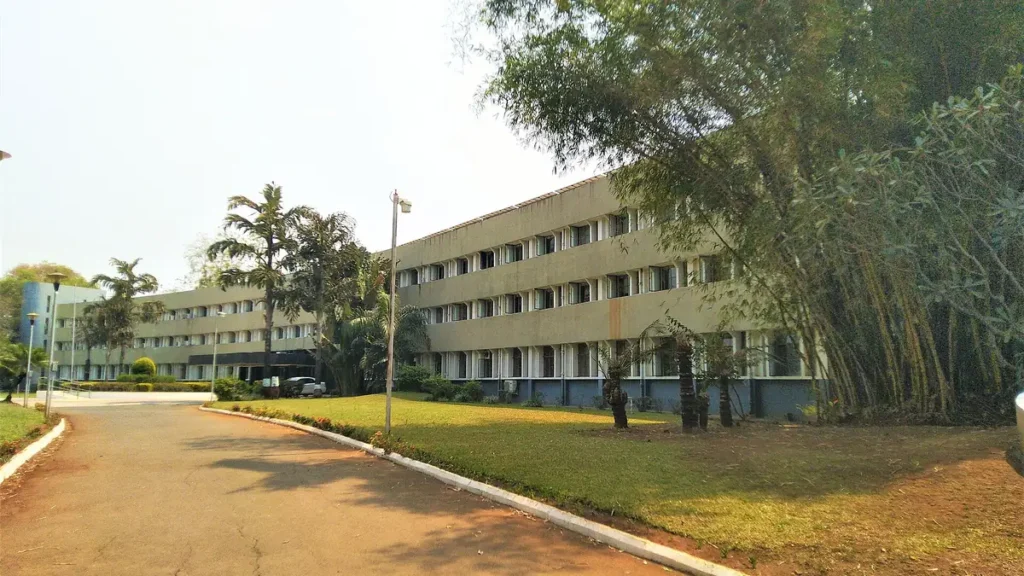
The Indian Institute of Tropical Meteorology (IITM), Pune, under the Ministry of Earth Sciences, held the first stakeholder consultation of the Climate Science into Services for India Forum (CSSIF) on 17 October 2026. More than 150 participants from over 80 institutions, including RBI, NDRF, NIDM and State climate cells, discussed what climate information each sector needs. Speakers stressed the need for a national Climate Services Information System (CSIS).
- Host
- IITM Pune (MoES)
- Participants
- 150+ from 80+ institutions
- Key idea
- Climate Services Information System
- Date
- 17 October 2026
CSSIF: what happened?
A farmer, a dam engineer and a bank all need climate data, but each needs it in a different shape. A forecast is only useful when it answers someone’s real question. CSSIF is an attempt to make that link between science and users.
- Welcome by Dr A. Suryachandra Rao, Director, IITM; Prof. V.K. Dadhwal, former Director of IIST, was chief guest (PIB).
- Dr Rupa Kumar Kolli, former chief of WMO’s Climate Applications and Services Division, spoke on the need for a CSIS.
- Groups covered water, agriculture, disasters, health and extremes, energy and finance, and climate projections, including marine heatwaves.
- Participants included MoES, MoEFCC, IMD, Naval HQ, NDRF, NIDM, RBI, INCOIS, ICAR institutes and State agencies.
What are climate services?
- Climate services turn climate data and projections into information people can use to make decisions.
- Examples: heat action plans, crop advisories, flood planning and insurance pricing.
- WMO’s Global Framework for Climate Services (GFCS) was set up after the World Climate Conference-3 in 2009.
- IITM’s Centre for Climate Change Research (CCCR) builds India’s earth system models and projections.
Who needs what?
| Sector | Example need |
|---|---|
| Water | Rainfall and river flow projections |
| Agriculture | Seasonal outlooks and crop advisories |
| Disaster management | Early warning for heat, extreme rain and wildfires |
| Energy and finance | Climate risk for renewables, insurance and banks |
| Coasts and oceans | Marine heatwaves and coastal vulnerability |
Which policies apply?
- National Action Plan on Climate Change, 2008 includes a National Mission on Strategic Knowledge for Climate Change.
- Disaster Management Act, 2005: NDMA, SDMAs and DDMAs rely on early warnings.
- Mission Mausam (2024) aims to improve India’s weather and climate services.
- India’s updated NDC under the Paris Agreement includes adaptation goals.
What are the gaps?
- Data often stays with research bodies and is not easy for users to access.
- District-level projections are still uncertain.
- Many users do not have the skills to read probabilistic forecasts.
- Agencies collect data in different formats, which makes sharing hard.
What should be done next?
- Build the CSIS as a single, open climate data platform.
- Co-design services with users such as farmers, SDMAs and banks.
- Train officials and journalists to communicate climate risk.
- Link climate services to finance, such as crop insurance and RBI’s climate risk rules.
What can Prelims ask?
- IITM Pune: autonomous institute under the Ministry of Earth Sciences.
- GFCS: WMO-led framework for climate services, since 2009.
- INCOIS (Hyderabad): ocean information and tsunami warnings.
- NAPCC: eight national missions, launched in 2008.
How to write about climate adaptation in Mains
Practice question (10 marks, 150 words): Climate services can make adaptation more effective. Discuss with reference to India. (GS-III)
- Intro: CSSIF first consultation, IITM Pune, Oct 2026.
- Meaning: data turned into decisions.
- Uses: water, farms, heat, finance, coasts.
- Gaps: access, scale, skills, formats.
- Conclusion: one open system built with users.
Image: Main building of the Indian Institute of Tropical Meteorology, Pune. DesiBoy101, Wikimedia Commons, CC BY 4.0
How to use this in Mains
If asked: How can climate science be made useful for policy? (GS-III)
Quote: “The key recommendations emerging from the consultation will help strengthen the interface between climate science, services, policy and societal needs.”
Use it: Quote it, then give two sector examples.
If asked: Discuss the importance of user-oriented climate information for India. (GS-III)
Quote: “The meeting marks the beginning of sustained engagement under CSSIF towards developing scientifically robust, user-oriented and sector-relevant climate information and services for India.”
Use it: Use it to argue for services designed with users.
Exam angle
Prelims: IITM, GFCS, INCOIS, NAPCC. · Mains GS-III: climate adaptation and services.
Practice MCQs
Original practice questions (not PYQs).
The Indian Institute of Tropical Meteorology (IITM), Pune, functions under the
Answer (b) & explanation
IITM is an autonomous institute under MoES.
The Global Framework for Climate Services (GFCS) is led by
Answer (b) & explanation
GFCS is led by the World Meteorological Organization.
Consider the following statements about CSSIF’s first meeting:
1. It was held at IITM Pune on 17 October 2026.
2. It discussed the need for a national Climate Services Information System.
Which of the statements given above is/are correct?
Answer (c) & explanation
Both are correct.
Questions students ask about this
What is CSSIF?
The Climate Science into Services for India Forum, which links climate science with sector users.
Who hosted the first meeting?
IITM Pune, under the Ministry of Earth Sciences, on 17 October 2026.
What is a Climate Services Information System?
A national system to turn climate data into usable information for different sectors.
Which sectors were covered?
Water, agriculture, disasters, health, energy and finance, and climate projections.
Keep studying
Go deeper
Official source: PIB, 17 Oct 2026: IITM hosts First Stakeholder Consultation Meeting on Climate Science into Services for India Forum (CSSIF)
facts from cited sources only; faculty review pending