
Emissions Gap Report 2026 ‘The Point of Return’: 1.5°C will be crossed, but can be regained by 2100
Next story · 22 OctCooperative federalism and law reform: Law Commission proposes a ‘citizen friction test’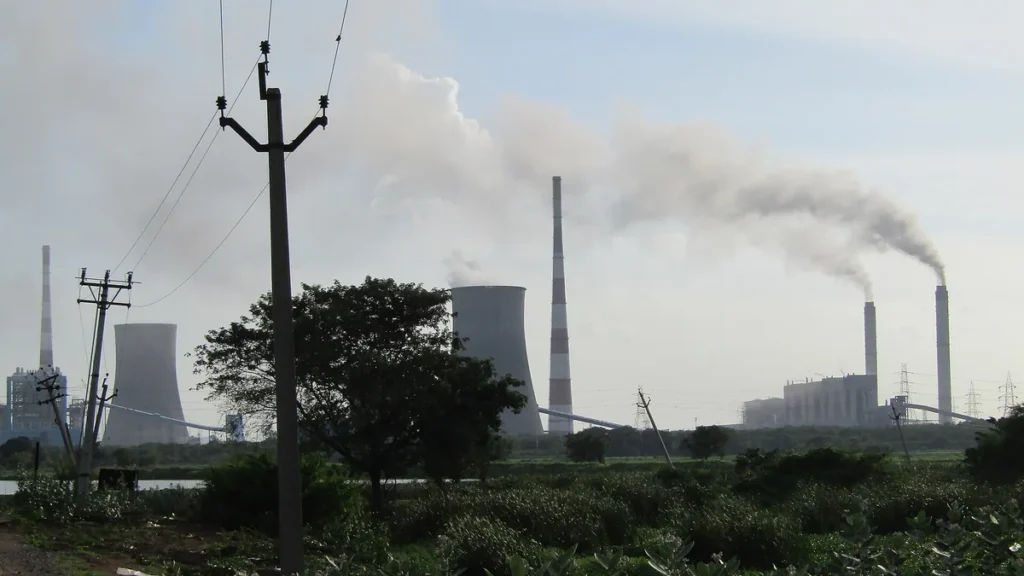
UNEP’s Emissions Gap Report 2026, ‘The Point of Return’, released on 21 October 2026, says warming will now exceed 1.5°C. Current policies point to 2.8°C, and even full delivery of national pledges gives 2.6°C. But if emissions fall 18% by 2030, 45% by 2035 and 69% by 2040 from 2025 levels, warming could peak at 1.7–1.8°C and return to 1.5°C by 2100, with about a 50% chance.
- Released
- 21 Oct 2026, UNEP
- Current policies
- Up to 2.8°C
- All NDCs met
- 2.6°C
- Cut by 2035
- 45% (vs 2025)
Emissions Gap Report 2026: what did it find?
For ten years the world talked about ‘keeping 1.5°C alive’. This report quietly changes the question: since we will overshoot, how small and how short can we keep that overshoot?
- Warming is set to exceed 1.5°C above pre-industrial levels (The Hindu, 22 Oct 2026).
- Current policies: up to 2.8°C this century, rising after that. All NDCs met: 2.6°C. NDCs plus net-zero pledges: 2.1°C.
- New NDCs since last year’s report made a ‘negligible difference’.
- UN Secretary-General Guterres: ‘Overshoot is not surrender.’
What do ‘emissions gap’ and ‘overshoot’ mean?
- Emissions gap: the difference between where emissions are heading under pledges and where they must be for 1.5°C or 2°C.
- Overshoot: warming rises above 1.5°C for some decades and is then brought back down.
- Bringing it down needs deep cuts plus removal of CO₂ from the air.
- UNEP publishes the report every year before the UN climate summit (COP).
What is the way back to 1.5°C?
| Year | Cut needed (vs 2025) | Peak and return |
|---|---|---|
| 2030 | 18% | Peak warming 1.7–1.8°C around mid-century |
| 2035 | 45% | — |
| 2040 | 69% | Back to 1.5°C by 2100, ~50% chance |
Which legal frameworks apply?
- Paris Agreement (2015), Article 2: hold warming well below 2°C and pursue 1.5°C.
- Article 4: each country submits an NDC every five years, each more ambitious than the last.
- Article 14: the Global Stocktake every five years reviews collective progress.
- India: Energy Conservation (Amendment) Act, 2022 created the legal base for a carbon market.
What are the challenges?
- Pledges are not matched by policies, and new NDCs barely moved the numbers.
- Every extra fraction of a degree raises heat, flood and crop risks.
- Carbon removal at scale is unproven and costly.
- Developing countries need finance and technology to cut faster.
What should be done next?
- Turn NDCs into sector policies with dates, not only targets.
- Deliver climate finance promised to developing countries.
- Cut methane fast; it gives quick cooling benefits.
- India: scale renewables, storage and its carbon market while protecting growth.
What can Prelims ask on the emissions gap?
- Emissions Gap Report: by UNEP (headquarters Nairobi).
- 2026 title: ‘The Point of Return’.
- Paris Agreement: adopted 2015 at COP21; NDCs every five years.
- Global Stocktake: Article 14; first concluded at COP28 (2023).
- India’s new NDC: a 47% emission-intensity reduction target for 2035, approved by the Cabinet (as reported).
How to write about the 1.5°C goal in Mains
Practice question (10 marks, 150 words): ‘Overshoot is not surrender.’ Discuss the implications of crossing 1.5°C for global climate action and India. (GS-III)
- Intro: UNEP EGR 2026, The Point of Return.
- Findings: 2.8°C, 2.6°C, 2.1°C pathways.
- Path back: 18/45/69% cuts.
- Equity: finance and technology for the Global South.
- Conclusion: smaller, shorter overshoot.
Image: Chimneys and smoke at the Narla Tata Rao Thermal Power Station, Vijayawada. PJeganathan, Wikimedia Commons, CC BY-SA 4.0
How to use this in Mains
If asked: Critically evaluate the progress of the Paris Agreement in limiting global warming. (GS-III)
Quote: “New NDCs submitted since last year’s report have made a negligible difference for these projections.”
Use it: Use it as evidence that pledges are falling short.
If asked: Discuss the concept of temperature overshoot and its implications. (GS-III)
Quote: “Overshoot is not surrender. We can still keep it as small and as short as possible.”
Use it: Quote Guterres, then explain the 1.7–1.8°C peak.
Exam angle
Prelims: UNEP, EGR, Paris Agreement articles, Global Stocktake. · Mains GS-III: overshoot, equity, India’s NDC.
Practice MCQs
Original practice questions (not PYQs).
The ‘Emissions Gap Report’ is published by
Answer (b) & explanation
UNEP publishes the Emissions Gap Report every year.
Consider the following statements about the Paris Agreement:
1. Countries must submit NDCs every five years.
2. The Global Stocktake is held every year.
Which of the statements given above is/are correct?
Answer (a) & explanation
NDCs are due every five years; the Global Stocktake is also every five years, not yearly.
According to the Emissions Gap Report 2026, if all NDCs are delivered, warming this century will be limited to about
Answer (c) & explanation
Full NDC delivery gives 2.6°C; current policies give up to 2.8°C; adding net-zero pledges gives 2.1°C.
Questions students ask about this
What is the title of the 2026 report?
‘The Point of Return’.
Will warming exceed 1.5°C?
Yes, the report says it will; the aim now is to return to 1.5°C by 2100.
What cuts are needed?
18% by 2030, 45% by 2035 and 69% by 2040, from 2025 levels.
What is overshoot?
A period when warming goes above 1.5°C before being brought back down.
Keep studying
Go deeper
facts from cited sources only; faculty review pending