
Too many special leave petitions burden the Supreme Court
The Supreme Court has more than 96,000 pending cases, even after its strength was raised from 34 to 38 judges in May. A big reason is special leave petitions (SLPs): appeals the Court may choose to hear, which now make up about 80% of fresh filings. Read it to revise Article 136, the Court’s jurisdiction and ideas to cut the load without shutting the door to justice.
- Pending cases
- More than 96,000
- Judges
- 38 (raised from 34 in May)
- Load per judge
- About 2,500 cases
- SLP share
- About 80% of fresh filings
Special leave petitions: what is the problem?
A top court is meant to settle big questions of law for the whole country. When it spends most of its time on ordinary appeals, those big questions wait.
- The Supreme Court has more than 96,000 pending cases, about 2,500 per judge, as per the National Judicial Data Grid.
- Its strength was raised from 34 to 38 judges in May, but cases keep piling up.
- Special leave petitions are about 80% of fresh filings.
- Experts say clearer filters are needed, without shutting the door to justice.
- By comparison, the United States Supreme Court hears about 70–80 cases a year, and the United Kingdom’s Supreme Court granted 45 of 207 requests in 2025-26.
What is a special leave petition?
Article 136 gives the Supreme Court a special power: it may grant ‘special leave’ (permission) to appeal against any judgment or order of any court or tribunal in India, except military tribunals.
This power is discretionary, which means the Court may or may not hear the appeal. It was meant for exceptional cases where grave injustice or an important legal question is involved.
In the Constituent Assembly, H V Pataskar said India needed a “fountainhead of all justice” in place of the King, to whom appeals once went. Over time, however, SLPs became a routine second or third appeal.
Parliament decides the number of judges by law under Article 124. The Supreme Court (Number of Judges) Act, 1956 has been amended many times to raise the number.
Main jurisdictions of the Supreme Court
| Type | Article | What it covers |
|---|---|---|
| Original | Article 131 | Disputes between Centre and States, or between States |
| Writ | Article 32 | Enforcing Fundamental Rights |
| Appellate | Articles 132–134 | Appeals in constitutional, civil and criminal cases |
| Special leave | Article 136 | Discretionary appeal from any court or tribunal |
Which laws and Articles apply?
- Article 124: composition of the Supreme Court; Parliament fixes the number of judges.
- Article 136: special leave to appeal (discretionary).
- Article 137: review of its own judgments; curative petition created in Rupa Ashok Hurra case (2002).
- Article 142: power to pass any order for ‘complete justice’.
Why does special leave petitions matter?
| Angle | What to note |
|---|---|
| Backlog | Over 96,000 pending cases delay justice. |
| Role of the Court | A constitutional court should focus on key questions of law. |
| Access | Poor litigants see the SLP as their last hope. |
| Reform | Filters must be fair and clear. |
What are the problems with special leave petitions?
- SLPs have become a routine appeal, not an exceptional remedy.
- Government is the biggest litigant and appeals too often.
- Adding judges alone does not cut the backlog.
- Strict filters could deny justice to poor people.
What should be done next on special leave petitions?
- Set clear, published criteria for admitting SLPs.
- Create regional benches or a National Court of Appeal, as the Law Commission’s 229th Report (2009) suggested.
- Reduce government appeals through a strong litigation policy.
- Strengthen High Courts so fewer cases need to go higher.
What can Prelims ask on special leave petitions?
Prelims probability: Expect a statement question: Article 136 gives the Supreme Court discretionary power to grant special leave to appeal; Parliament decides the number of judges.
- Article 136: discretionary special leave to appeal; not for military tribunals.
- Article 124: Parliament decides the number of judges; now 38.
- Article 131: original jurisdiction (Centre–State and inter-State disputes).
- Curative petition: Rupa Ashok Hurra v. Ashok Hurra (2002).
- National Judicial Data Grid tracks pending cases.
How to write about special leave petitions in Mains
Practice question (15 marks, 250 words): Special leave petitions under Article 136 were meant to be an exceptional remedy but now dominate the Supreme Court’s docket. Examine the problem and suggest reforms.
- Intro: 96,000+ pending cases; SLPs 80% of filings.
- Purpose of Article 136 vs present use.
- Effects: delay, less time for constitutional questions.
- Reforms: admission criteria, regional benches, government litigation policy, stronger High Courts.
- Conclusion: filter wisely without closing the door to justice.
Ready lines for your answer
- India needed a “fountainhead of all justice” in place of the King (H V Pataskar, Constituent Assembly).
- A court that hears everything risks deciding nothing quickly.
Quotable data pointSLPs are about 80% of fresh filings; the Court has more than 96,000 pending cases.
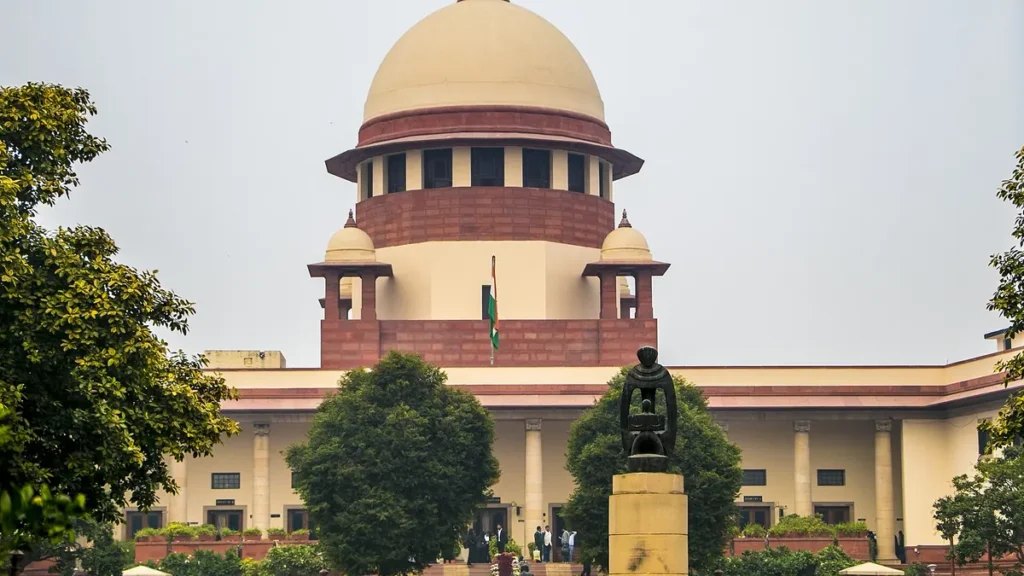
Photo: Subhashish Panigrahi, CC BY-SA 4.0, via Wikimedia Commons
Exam angle
Prelims: Articles 124, 131, 136, 137, 142; curative petition. · Mains GS-II: judicial backlog and reforms.
Practice MCQs
Original practice questions (not PYQs).
Consider the following statements:
1. Under Article 136, the Supreme Court is bound to hear every appeal against a High Court judgment.
2. Parliament can increase the number of Supreme Court judges by law.
3. A dispute between two States falls under the Supreme Court's original jurisdiction.
How many of the above statements are correct?
Answer (b) & explanation
Statements 2 and 3 are correct. Article 136 is discretionary: the Court may or may not grant special leave.
The curative petition, a remedy after a review petition is dismissed, was created by the Supreme Court in which case?
Answer (c) & explanation
The Supreme Court created the curative petition in Rupa Ashok Hurra versus Ashok Hurra (2002).
Questions students ask about this
What is a special leave petition?
An appeal under Article 136 that the Supreme Court may choose to hear against any judgment of a court or tribunal, except military tribunals.
How many cases are pending in the Supreme Court?
More than 96,000, about 2,500 per judge.
Who decides the number of Supreme Court judges?
Parliament, by law, under Article 124.
What share of fresh filings are SLPs?
About 80%.